
Hidden at the foot of Dai Mountain, belonging to O Lam commune (An Giang), Ta Miet Tren Pagoda is one of the Khmer Southern Buddhist pagodas with many special imprints of the That Son region. According to Khmer cultural researchers, Ta Miet Tren Pagoda was formed in 1940, initially located in a low-lying rice field area, so later it was moved to a higher location to ensure safety against the attacks of war.
From this relocation, the pagoda has 2 quite unique names. In addition to the main name Ta Miet, people are familiar with calling it "Ta Miet Tren Pagoda" to distinguish it from the old pagoda below. At the same time, the pagoda is also known as "Ta Nap Mango Pagoda", associated with the story of a Buddhist donating mango garden land to build a pagoda.
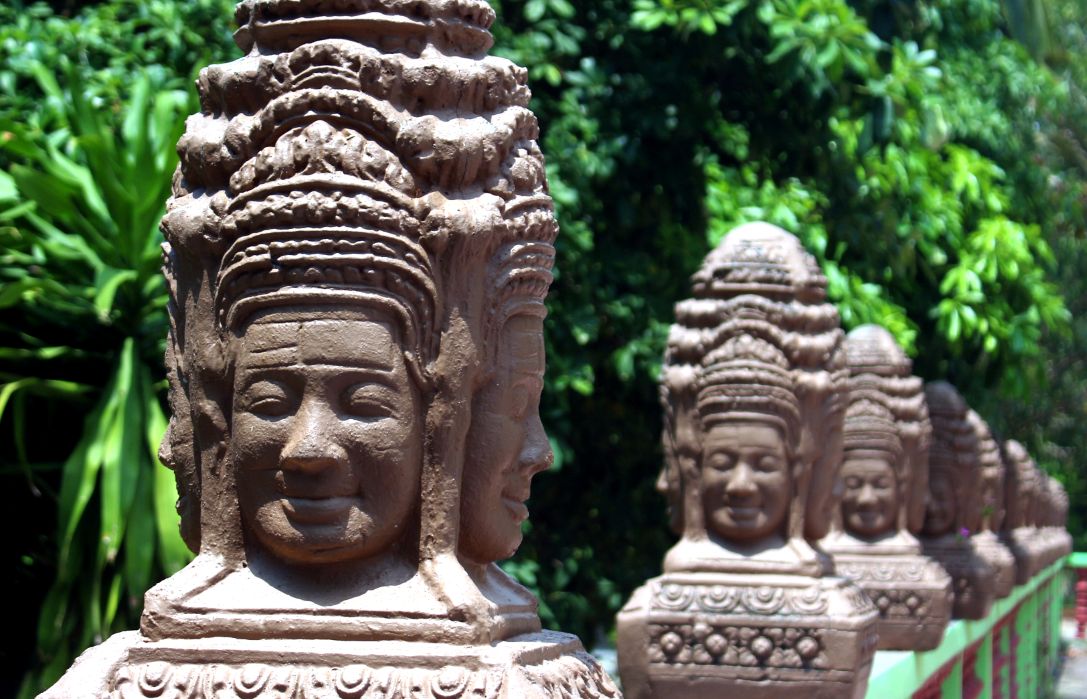
During the Southwestern border war, the Ta Miet area was heavily devastated, and people had to evacuate deep into the inland. After peace was restored, from 1981, people gradually returned, starting the journey to restore their homeland. Ta Miet Tren Pagoda was also rebuilt in 1982 with very simple conditions with wooden pillars, leaf roofs, and bamboo walls.
By 2005, thanks to the joint efforts of the government and Buddhists, the pagoda was built more spaciously with solid items such as the main hall, salad, and monk's quarter. The new architecture is imbued with the typical Khmer Southern style, contributing to creating a prominent appearance in the mountainous area of That Son.
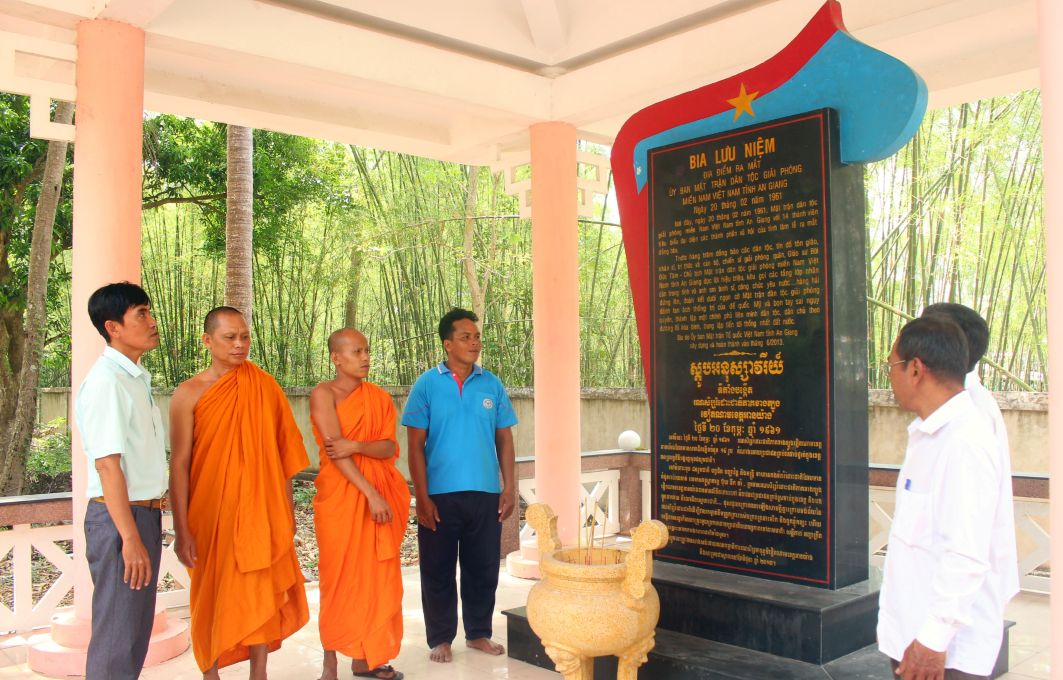
Not only is it a religious facility, the pagoda is also associated with an important historical event. In 1961, the launching ceremony of the National Liberation Front of South Vietnam of An Giang province took place here. In 2013, a memorial stele was erected to mark this milestone.
Today, Ta Miet Tren Pagoda is both a place for learning and a space for cultural and religious activities of the Khmer people. Traditional festivals and Buddhist activities are maintained regularly, contributing to preserving identity and strengthening community cohesion in the border area.


