
Located on a land area of nearly 10 acres in the North in Co Le commune (Ninh Binh), Co Le Pagoda (Than Quang Tu) is one of the Buddhist works with typical historical and architectural value in the Northern Delta region. The pagoda was built in the 12th century under King Ly Than Ton, associated with the worship of Buddha and Saint Ancestor Nguyen Minh Khong.
Initially, the pagoda was built entirely of wood. After a long period of weathering, the structure gradually deteriorated. In 1902, First Patriarch Pham Quang Tuyen carried out a large-scale restoration and reconstruction of the pagoda in a new architectural style called "Nhat Thoc Lau Dai", a rare style in Vietnamese Buddhist architecture.
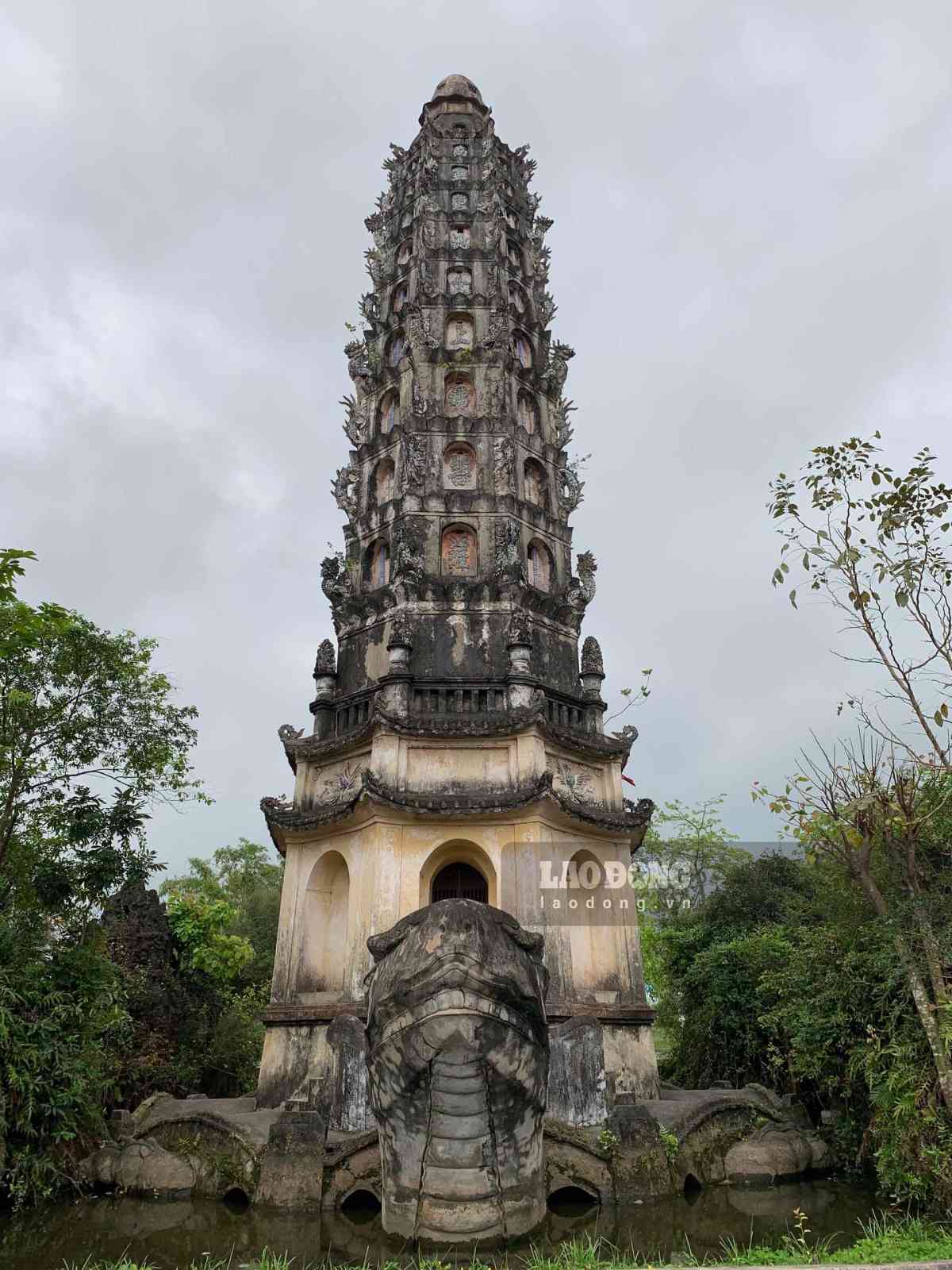
The overall pagoda is harmoniously planned with rows of houses, lakes and bridges, when viewed from above, it forms the shape of the word "Thien" in Han script. The highlight is the Cửu Phẩm Liên Hoa tower, 32m high, consisting of 9 layers of stacked lotus flowers, symbolizing the "nine layers" which are 9 heavens. The tower has 8 sides, built in 1927, placed on the back of a large stone turtle in the middle of the lake, with a spiral staircase of 98 steps leading to the top.
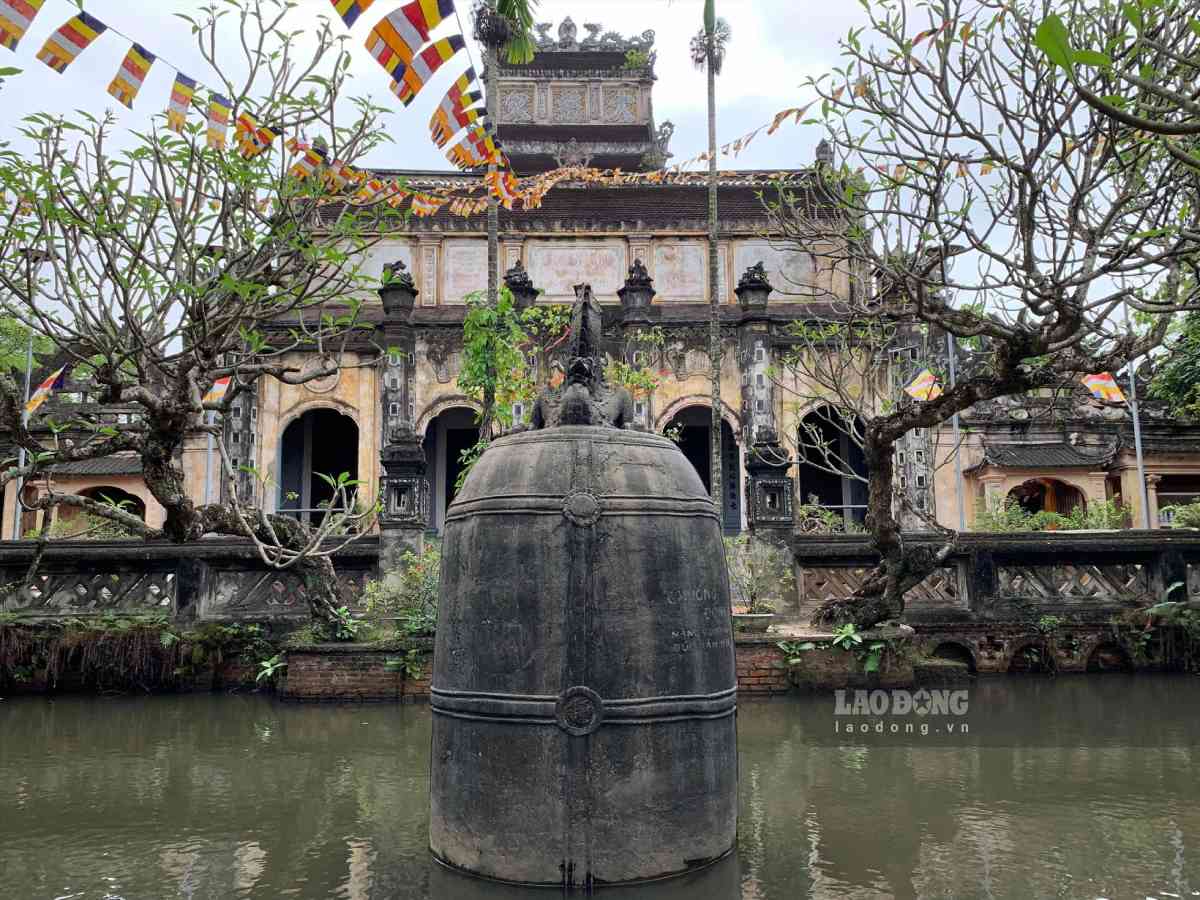
Another notable work is Dai Hong Chung weighing 9 tons, placed in the middle of the lake in front of the main hall. The bell was hand-cast in 1936, more than 4m high, showing the sophisticated technique of ancient artisans.
Not only outstanding in architecture, Co Le Pagoda is also a long-standing cultural and spiritual activity center. The main festival takes place in mid-September of the lunar calendar, commemorating the birth of Saint Nguyen Minh Khong, which was recognized as a National Intangible Cultural Heritage in 2023.
In 2025, Co Le Pagoda was officially ranked as a National Special Relic, affirming its outstanding historical, architectural and spiritual life values. Currently, the locality is promoting the conservation, restoration and promotion of the relic, contributing to preserving a long-standing cultural symbol of Ninh Binh.


