
The pagoda was built in 1049 under the reign of King Ly Thai Tong, stemming from the king's dream of seeing the Buddha Quan Am residing on the lotus pedestal. From this dream, the work was erected with the image of a lotus flower reaching out of the water, expressing the aspiration for purity, peace and prosperity. This is also the reason why the pagoda also has the letter name Dien Huu Tu, meaning long-lasting blessings.
The special feature that makes the unique value of One Pillar Pagoda lies in the rare architectural structure: the entire pagoda is placed on a single stone pillar in the middle of Linh Chieu Lake. On the stone pillar about 4m high is Lien Hoa tower - a small wooden hall, soft curved roof, four winding corners, shaped like a lotus blooming on the water surface. This is a typical architectural detail, creating the unique value of One Pillar Pagoda.
Experiencing many historical upheavals, especially the period in 1954 when the project was destroyed, One Pillar Pagoda was restored to its almost original state in 1955. Since then, the relic has been continuously restored and preserved, becoming a typical cultural and spiritual destination of Hanoi.
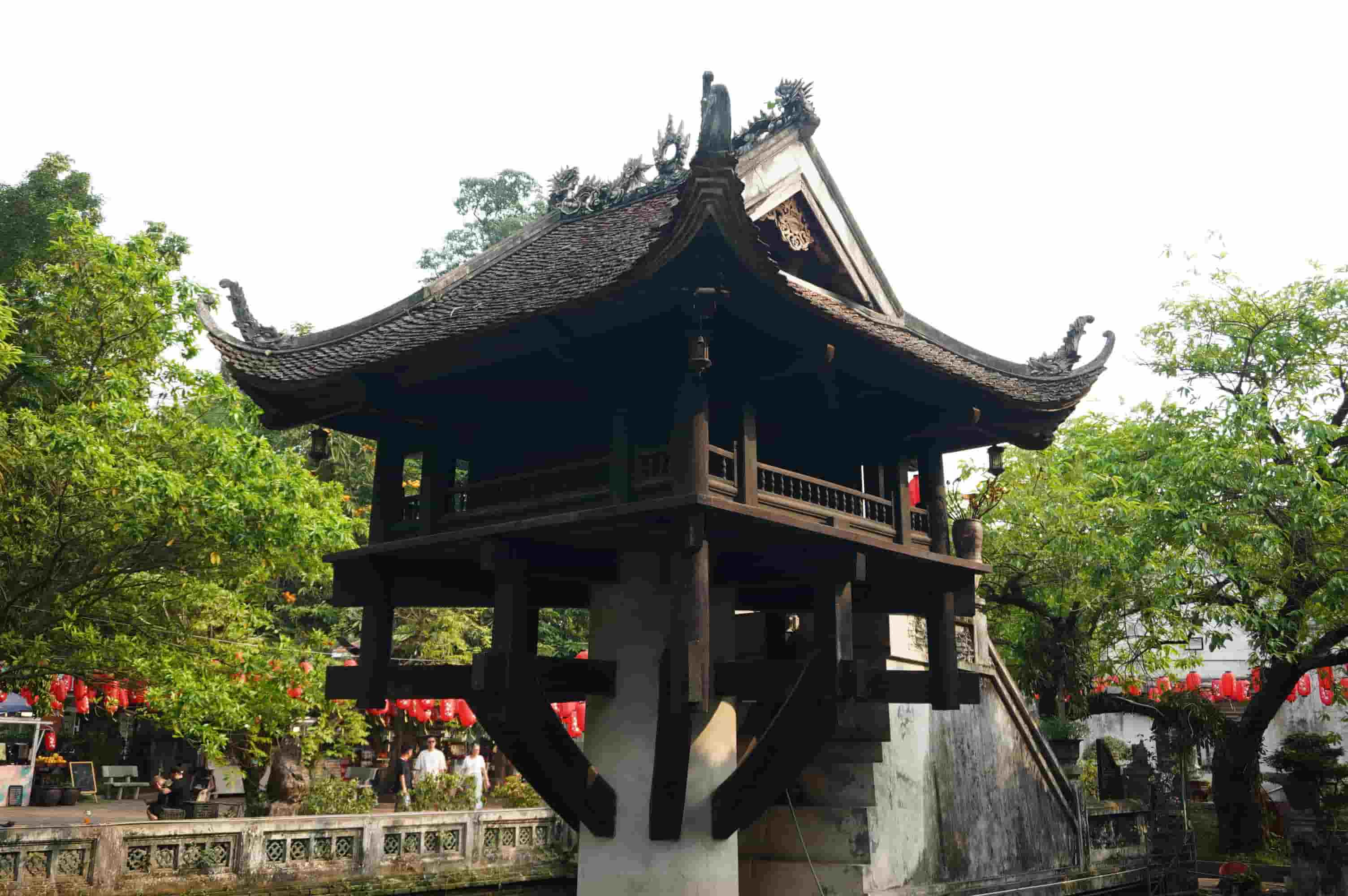
Many people and tourists when visiting expressed their impression of the historical and architectural value of the project.
Ms. Nguyen Thu Ha (Lang ward, Hanoi) said that although she has visited many times, every time she returns, she still feels the tranquility and very unique ancient beauty of the pagoda.
The space is not large but creates a feeling of peace. The architecture of a column in the middle of the lake is really special," Ms. Ha shared.
Meanwhile, Mr. Tran Minh Duc (tourist from Ho Chi Minh City) said that One Pillar Pagoda is not only a tourist attraction but also has symbolic value: "Before, I only saw it through images, but when I came to the place, I clearly saw the sophistication in architecture. A work containing great cultural and historical significance.
Not only possessing architectural value, One Pillar Pagoda is also a cultural and spiritual symbol of Hanoi people. Every year, this place welcomes a large number of domestic and foreign tourists to visit and worship, especially on holidays and Tet. The image of the pagoda also appears widely on stamps, books and cultural publications, contributing to promoting Vietnam's image to the world.
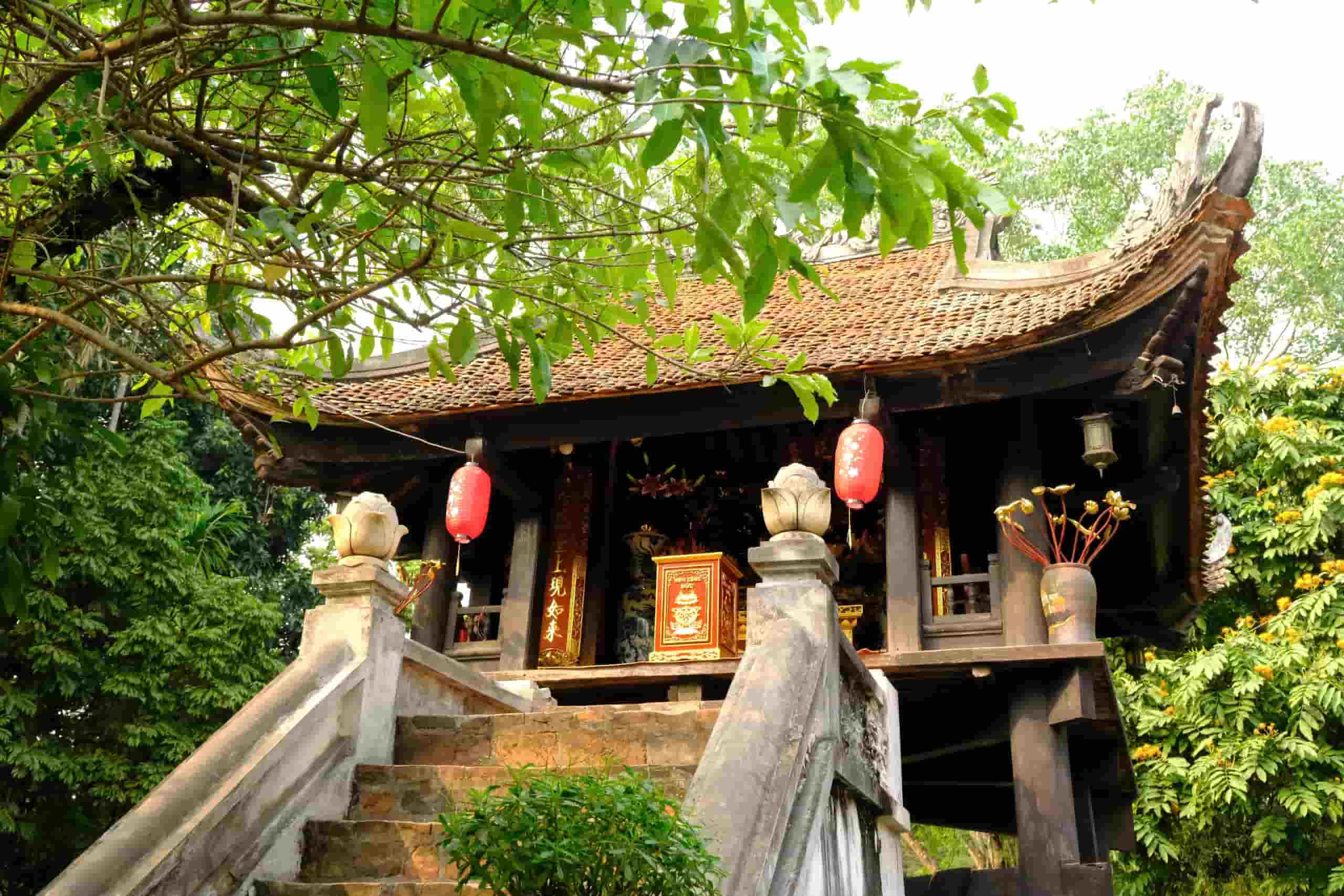
In the modern flow, amidst the rapid development of urban areas, One Pillar Pagoda still retains its quiet, ancient beauty, as a historical witness and a sustainable symbol of Thang Long - Hanoi cultural identity.


