
Trung Hanh Pagoda, initially named Hung Khanh Tu, is located in Hai An ward, Hai Phong city. According to legend, the pagoda was started from the Ly - Tran dynasties (1010 - 1400), initially just a small pagoda built of bamboo and rattan. By the Mac Dynasty (16th century), the pagoda was restored and expanded, gradually becoming a famous Buddhist site in the region.
Legend has it that the ancient Trung Hanh region was once famous for its "four treasures" including ancient temples, pagodas, communal houses and village halls of the whole district. Although over time, war and nature have caused one of the 4 works to be no longer intact, the overall relic complex here is still considered a precious heritage, clearly reflecting the cultural and religious life of local residents.
These works have been ranked by the Ministry of Culture and Information as National Historical and Architectural Relics according to Decision No. 57 VH/QD dated January 18, 1993.
The Trung Hanh Pagoda complex with many rows of horizontal and vertical houses still retains its almost original appearance from the prosperous period under the Mac Dynasty, although some items have deteriorated or been damaged over time.
This is a typical work of Vietnamese village pagoda architecture, and also preserves many precious artifacts in terms of history and art.
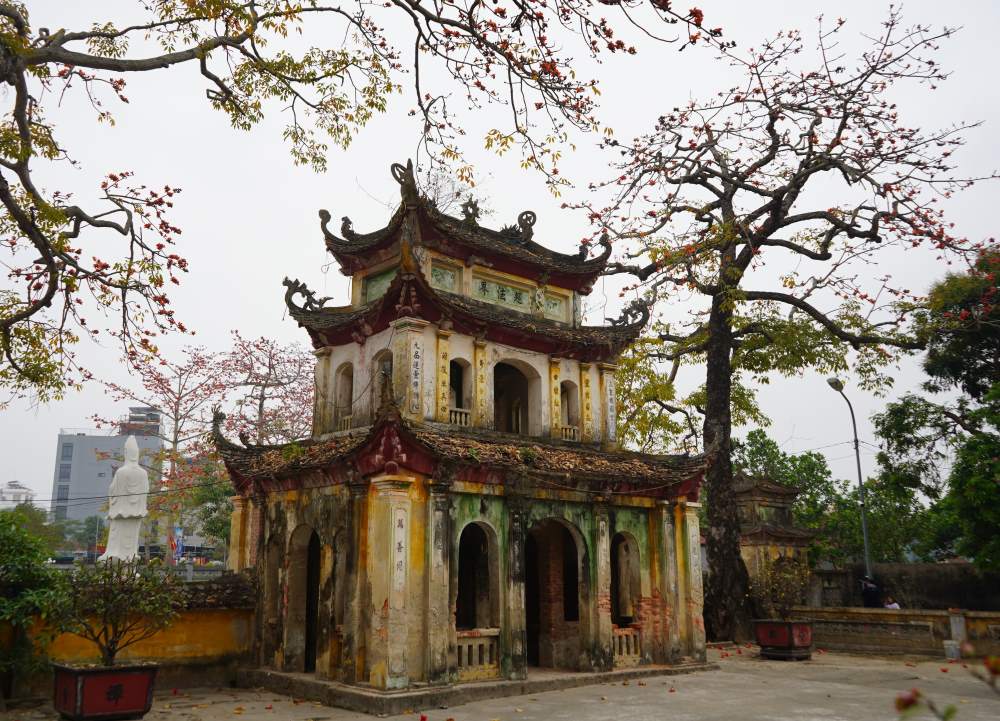
The first highlight when entering the pagoda is the massive three-entrance gate, shaped like ancient palace gates. The two auxiliary gates are designed with 2 floors, 8 roofs, with familiar arched walkways.
The main door is 3 stories high, 12 roofs, symbolizing the three talents: Heaven - Earth - Human. The three-entrance gate is also a place to hang a large bronze bell, about 1.4 meters high, with a mouth diameter of 70cm, cast from 1822.
Passing the three-entrance gate is a wide brick yard, leading to the front hall. On the left is an ancient tower garden consisting of 8 ancient towers.
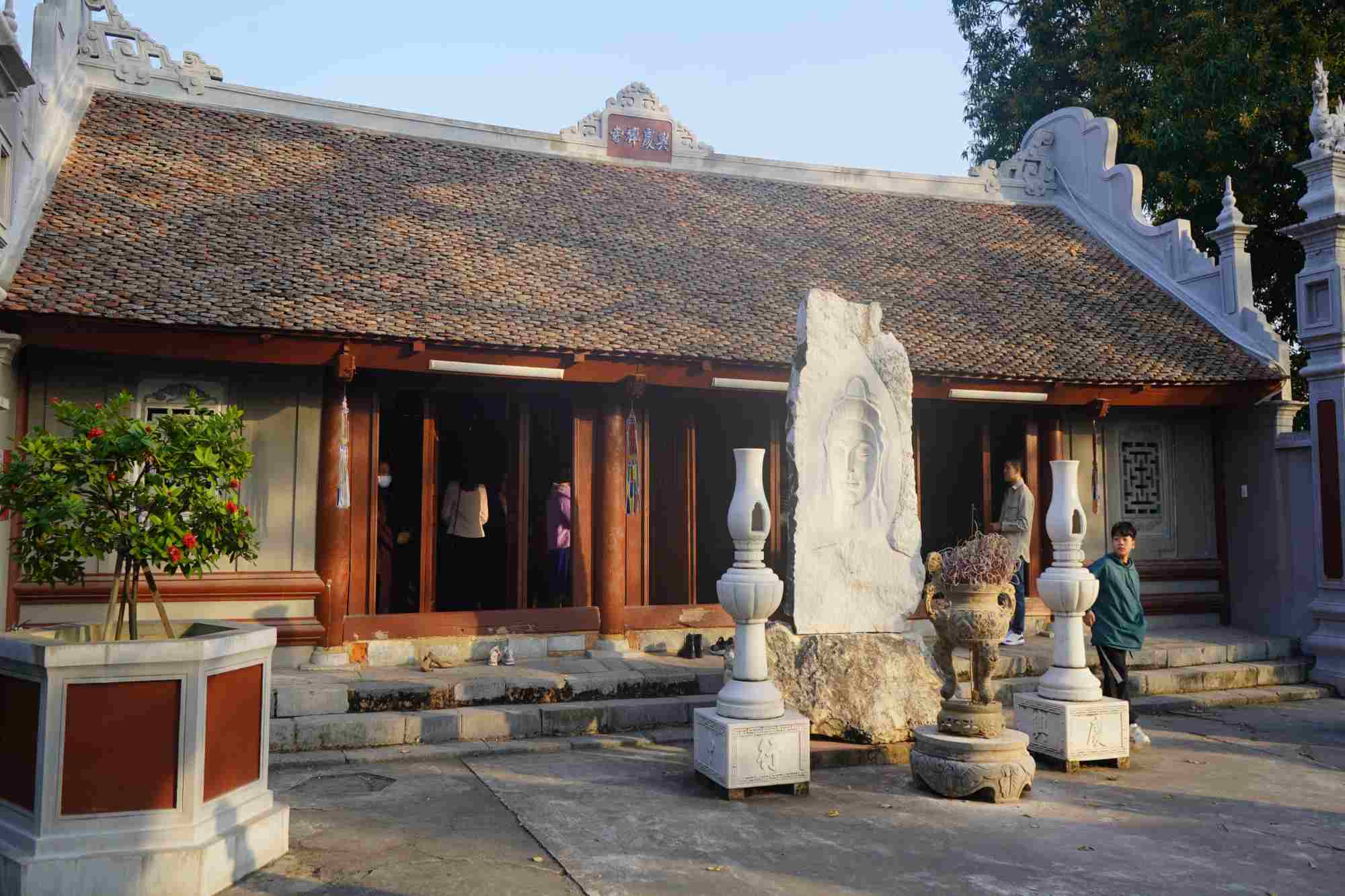
The front hall consists of 5 compartments, built of brick walls, softly curved eaves in the style of pan-handles, on the roof ridge stands out the large "Hung Khanh Tu" in Chinese characters. Behind is a 3-compartment bamboo pipe building connecting the front hall with the rear palace, creating a tight and harmonious architectural layout.
Not only impressing with its architecture, Trung Hanh Pagoda is also famous for its system of centuries-old ancient trees. Prominent on both sides of the pagoda's three-entrance gate are 2 kapok trees over 100m high, with a trunk diameter of about 2-3m, imprinted with traces of time.
Trung Hanh Pagoda is a place of religious activities for people, and also preserves memories of a golden age, where the past and present blend in each tiled roof, tree root, imbued with the soul of the ancient Pagoda of Hai Phong.


