
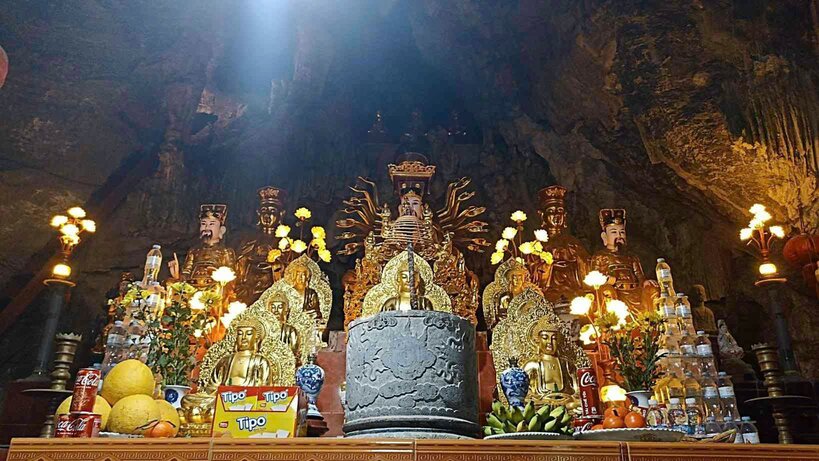
Located in the heart of Ban Long cave in Dai Tuong mountain (Hoa Lu ward, Ninh Binh), Ban Long Pagoda is known as a spiritual site associated with a long history.
The pagoda was formed from the Dinh - Tien Le period, located in a stone cave more than 20m long and about 10m wide, creating a unique worship space in nature.
According to legend, the cave was discovered by woodcutters when they went into the forest to cut firewood. Realizing that there were stalactites in the cave shaped like dragons, they built a pagoda to worship Buddha and named it Ban Long.
An ancient stele carved on a cliff from the 16th century once recorded that this place was a famous scenic spot from a very early time. Through the dynasties of Dinh, Le, Ly and Tran, the pagoda became increasingly widely known.
The name Ban Long is also associated with the imprint of Lord Trinh Sam. Legend has it that during a visit, he wrote 3 words "Ban Long Tu" right at the cave entrance, implying comparing this place to a stone pedestal with dragons curling around. Inside the cave, natural stalactite blocks in the shape of dragons make this name even more mysterious.
Local people also pass on the miraculous story: When the "dragon scales" in the cave shine brightly, it is a sign of rain, even in drought seasons. Therefore, the rain praying ritual is still maintained annually at the pagoda.
The worship space in the cave is decorated according to Buddhist tradition, but the special feature lies in the natural stalactite system surrounding it. The stone blocks shaped like the mascots Dragon, Ly, Quy, Phuong, bearing the shape of vivid sculptures of nature.
In particular, on the high cliff in the middle of the cave, there is a stalactite block that people compare to the image of Buddha riding a white horse, contributing to increasing the mystery of this place. The combination of belief and landscape has made Ban Long Pagoda a familiar pilgrimage destination for tourists.
During the resistance war, on February 8, 1947, this place was used as the K1 To Hieu engineering workshop and weapons depot of the 34th Tat Thang Regiment, serving repair and production of equipment for the battlefield.
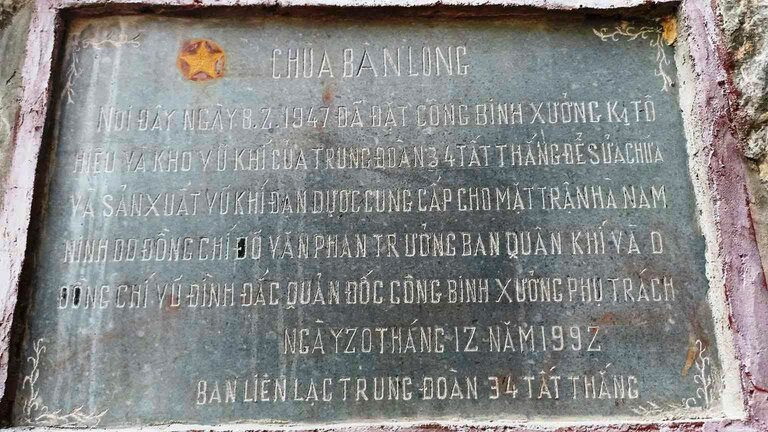
Currently, the pagoda and Ban Long cave complex has 3 main items: Pagoda in the cave, the area worshiping the Three Holy Mothers and the ancestral house. Inside, there are still many steles of Chinese characters carved directly on the cliffs, carrying special historical and cultural value.
With those values, Ban Long Pagoda has been recognized as a National Historical and Cultural Relic since 1994, becoming a destination that is both sacred and bears many imprints of time in Ninh Binh land.


