
Located in Tay Ho ward (Hanoi), Kim Lien Pagoda is a long-standing ancient pagoda, which is also considered one of the architectural works with unique architectural imprints of Vietnamese Buddhism.
According to old history, the pagoda was formerly called Go Hanh Cung or Go Cung. Under King Ly Thanh Tong, Quan Ngu Palace was once built for the king to admire the scenery and watch fish in the famous West Lake scenic area of Thang Long capital.
During the reign of King Ly Than Tong, Princess Tu Hoa asked to come to this region to establish a mulberry farm and raise silkworms with local people. After that, she built Tu Hoa Palace on that land.
Therefore, Kim Lien Pagoda today still worships Princess Tu Hoa as a person who made great contributions to the ancient Nghi Tam region. Through the Tran Dynasty, this land was renamed Tich Ma camp and then Tich Ma ward.
According to the book "Tay Ho Chi", at the end of the Tran Dynasty, people built Dong Long Pagoda on the old Tu Hoa Palace foundation. In the Le Dynasty, the pagoda was renamed Dai Bi Pagoda, and Tich Ma ward was renamed Nghi Tam.
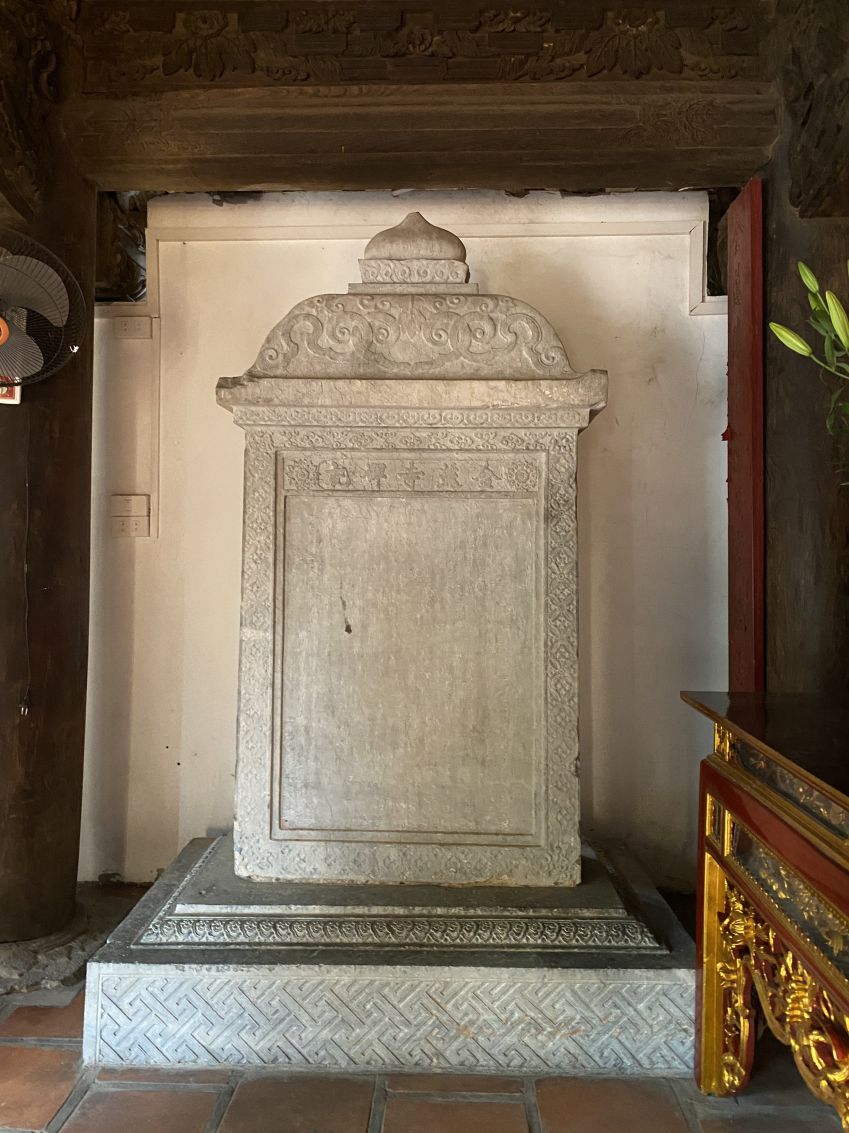
Although it is believed to date from the late Tran Dynasty, the earliest remaining trace of the pagoda today is the stele "Dai Bi Tu Bi Ky" erected in 1443 under King Le Nhan Tong's reign, placed on the left side of Tam Quan.
Over more than 5 centuries, Kim Lien Pagoda has been restored many times. In 1638, Tam Quan and Tien Duong were repaired, adding Thieu Huong and Thuong Dien.
In 1771, Lord Trinh Sam ordered the transfer of wood from Bao Lam Pagoda to the Great Renovation of Dai Bi Pagoda and renamed it Kim Lien Pagoda. Most of the current architectural appearance still bears the artistic style of the Tay Son Dynasty.
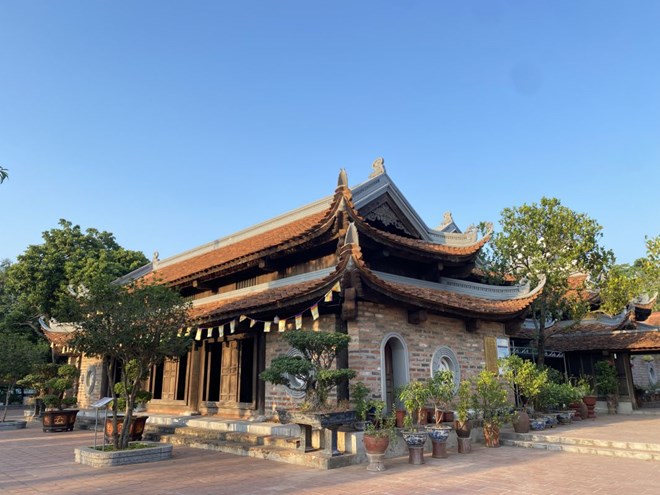
The special feature of Kim Lien Pagoda lies in the architectural style of the palace, which is rare in the system of ancient Vietnamese pagodas. Educator Hoang Dao Thuy once commented that the pagoda is "sparkling palace-like", from the curved roof system to the structure of beams, beams, and columns, all are elaborately crafted like forbidden palace architecture.
The pagoda's three-entrance gate is built in the style of "three mountains and four pillars", currently considered a unique pagoda gate almost uniquely left in Vietnam. Through the gate is a large yard leading to the main worship area consisting of 3 houses connected close together in the shape of the letter "Tam", including Ha Pagoda, Trung Pagoda and Thuong Pagoda. The Trung Pagoda building is shorter than the other 2 buildings, creating an overall architectural structure similar to the letter "Cong".
The 3 main buildings are all built in a 2-story, 8-roof "compass" style, a popular architectural style of the Le - Mac dynasties but rarely remains intact.
Bare brick walls, round doors and decorative details with the spirit of "no color, no sharpness" create an ancient and solemn look for the entire project.
In addition to its architectural value, Kim Lien Pagoda also preserves many precious artifacts such as the Tay Phuong Tam Thanh statue, Van Thu statue, Pho Hien statue and a system of steles from the 15th to the 20th centuries.
In particular, in the upper hall, there are still statues of Princess Tu Hoa and Princess Trinh - figures associated with the history of formation and restoration of the pagoda.
In 1962, Kim Lien Pagoda was recognized as a National-level architectural and artistic relic, becoming one of the typical ancient temples of ancient Thang Long land.


