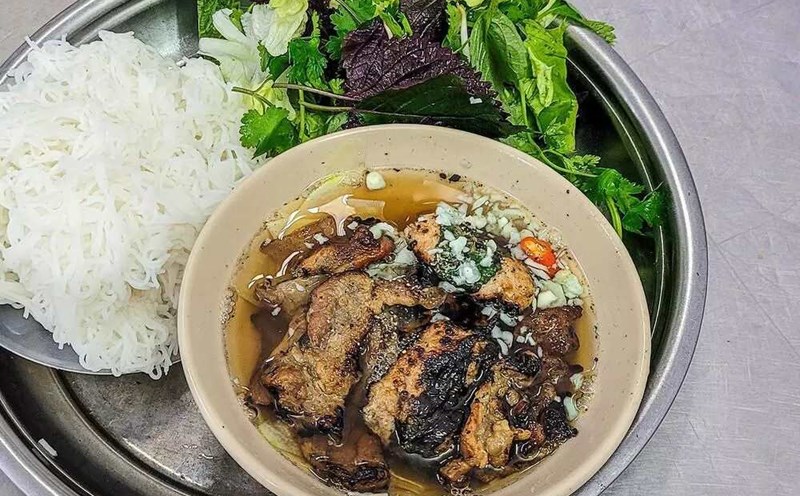
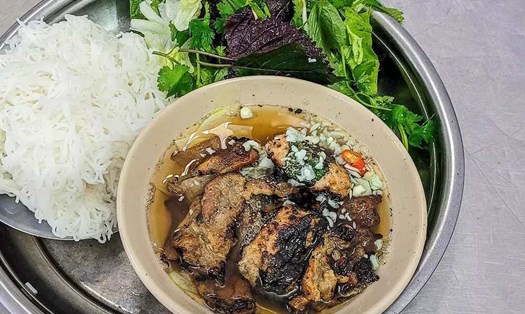
Located on Mai Hac De street (Hanoi), the bun cha chan restaurant has long become a familiar address for many diners. Not heavily promoted, but after three consecutive years of being recognized by Michelin, the restaurant is still regularly fully booked, especially during peak hours, many customers have to sit and wait in the adjacent area.
Ms. Nguyen Thi Hong - the owner of the restaurant said that what makes the dish attractive is not the elaborate recipe but the preservation of the original traditional flavor and careful selection of ingredients.
Ms. Hong revealed that a bowl of bun cha chan includes familiar ingredients such as pork with a balanced lean-fat ratio, vermicelli, onions, pepper, chili and basic spices. The difference of bun cha chan is that the broth is poured directly into the bowl, combined with grilled spring rolls and raw vegetables, instead of being separated like traditional Hanoi bun cha.
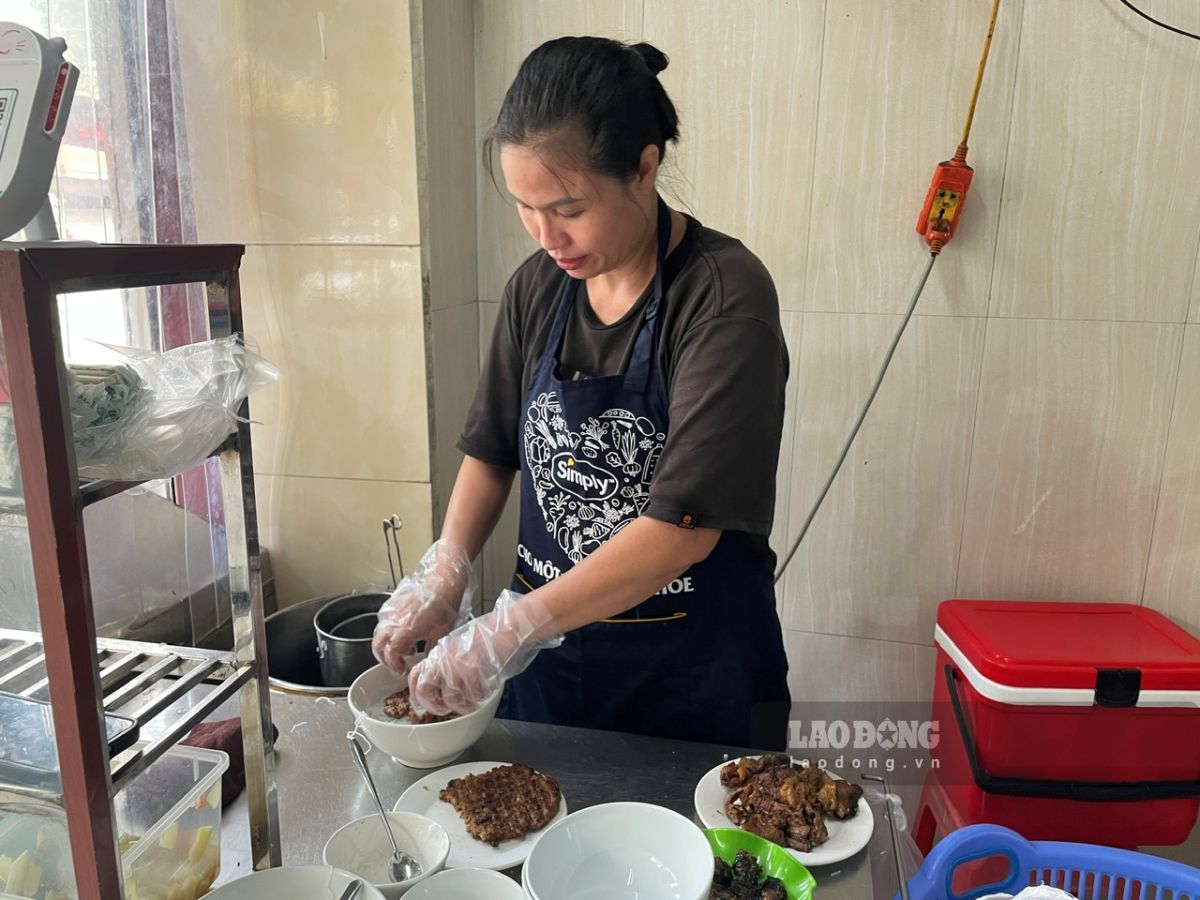
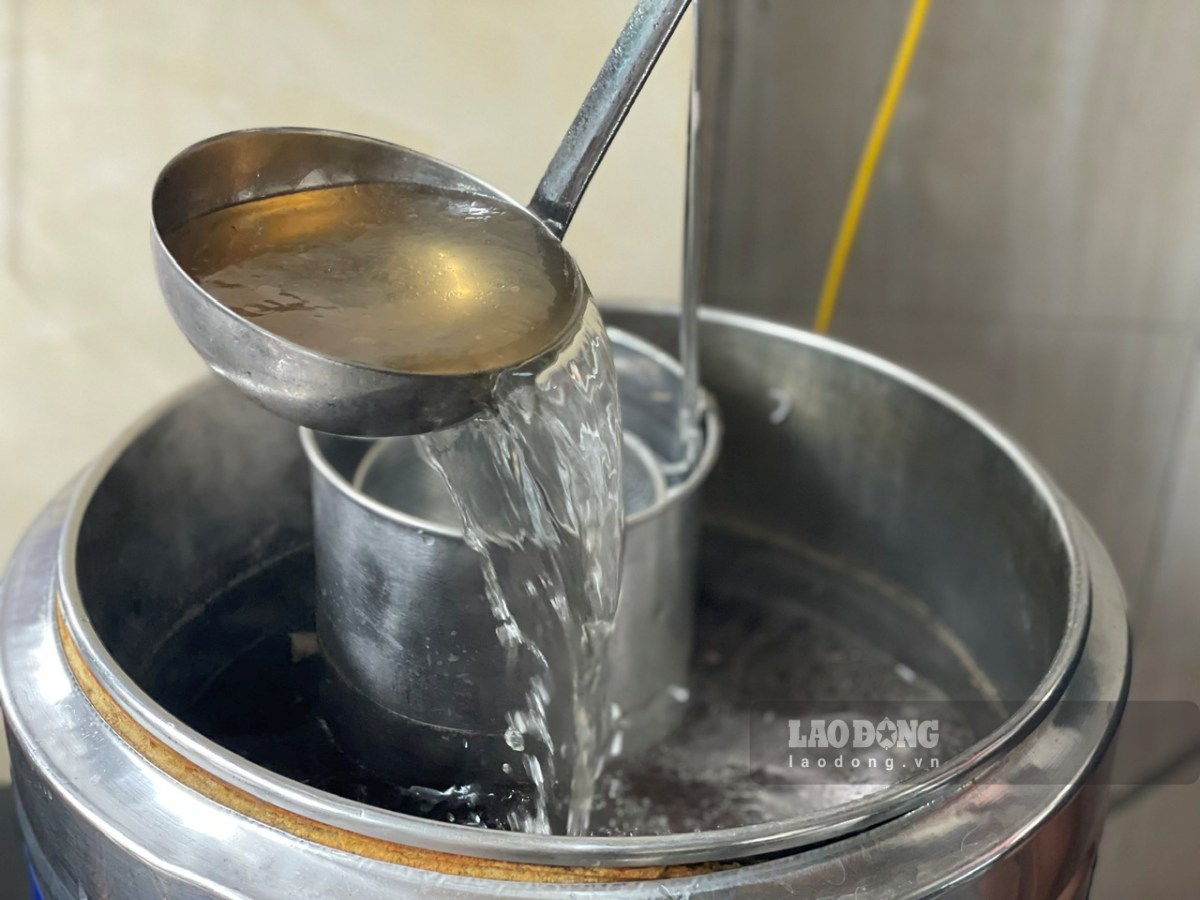
The restaurant also does not use tomatoes to color or flavor the broth. Instead, the broth is simmered from meat and bones for many hours to create a natural sweetness.
My family often simmers broth from meat and bones to produce a natural sweetness, then only adds basic spices to round the flavor without using any strong flavors. Therefore, the bowl of bun cha is always clear, clearly sweet, and does not create a strange feeling when enjoying it," Ms. Hong shared.
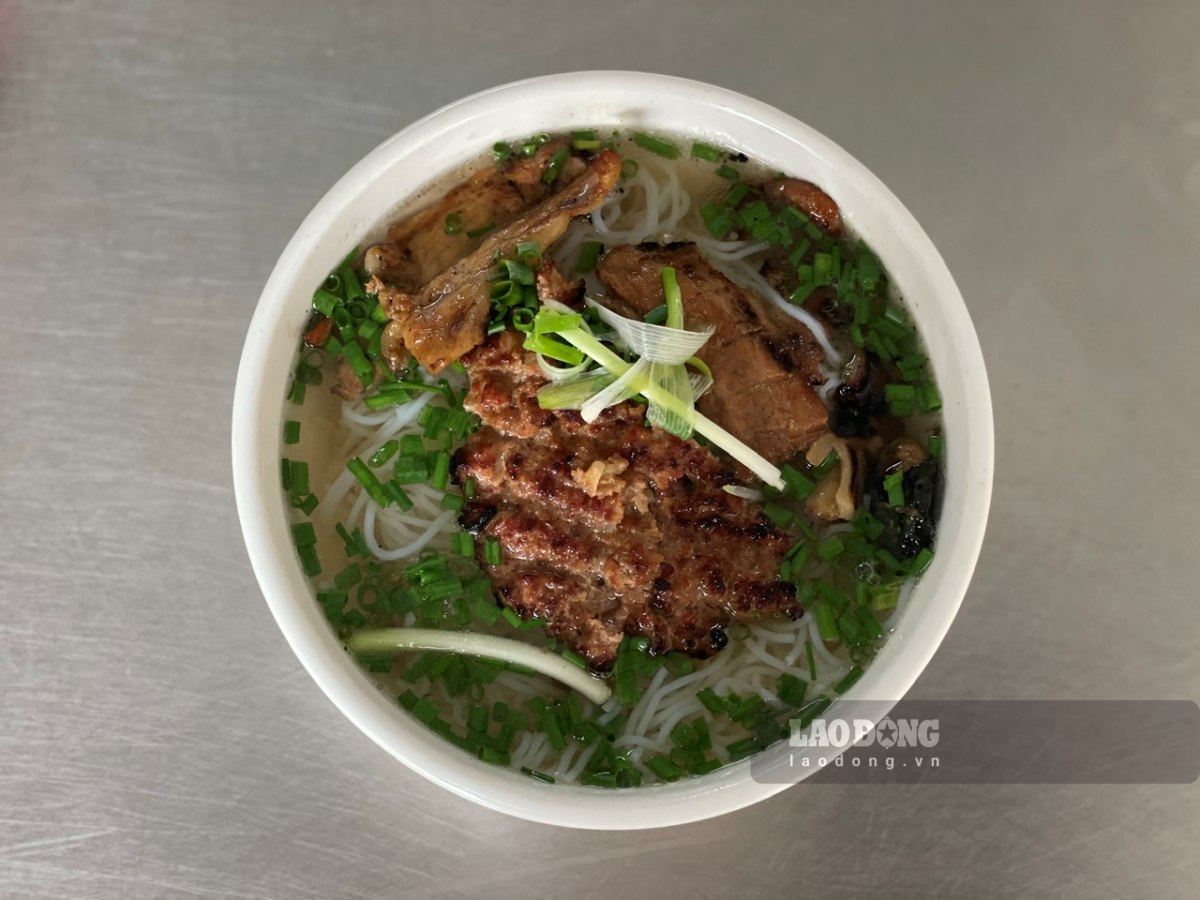
The processing of the sausage is also meticulously done. The meat after selection is sliced, marinated and then shaped into balls or slices before grilling on a charcoal stove.
Currently, the restaurant serves three types of spring rolls including grilled spring rolls, sliced spring rolls and Xuong Song leaf spring rolls. With minced spring rolls, the meat is pressed into large pieces to cook evenly, maintaining softness and juicyness. The spring rolls are wrapped in Xuong Song leaves to retain moisture and create a distinctive aroma.
According to Ms. Hong, the restaurant still maintains the grilling method with charcoal, although it takes more time and effort.
My family still maintains the traditional grilling method on a charcoal stove. Although quite hard and hot, in return, the cake has a characteristic aroma, and customers always enjoy quality meals," she said.
Having been attached to the profession for many years, Ms. Hong said that what worries her the most is that fewer and fewer young people want to pursue the culinary profession, especially with dishes that require many manual steps.
All technical stages at the restaurant are mainly done by me directly, from squeezing meat, grilling meat to mixing broth. The staff support ordering dishes and serving, but the important steps I still do myself to maintain uniform quality," she shared.
According to the restaurant owner, along with the development of technology, many kitchens are switching to using modern equipment to save time. However, she believes that this also poses a risk of fading traditional values.
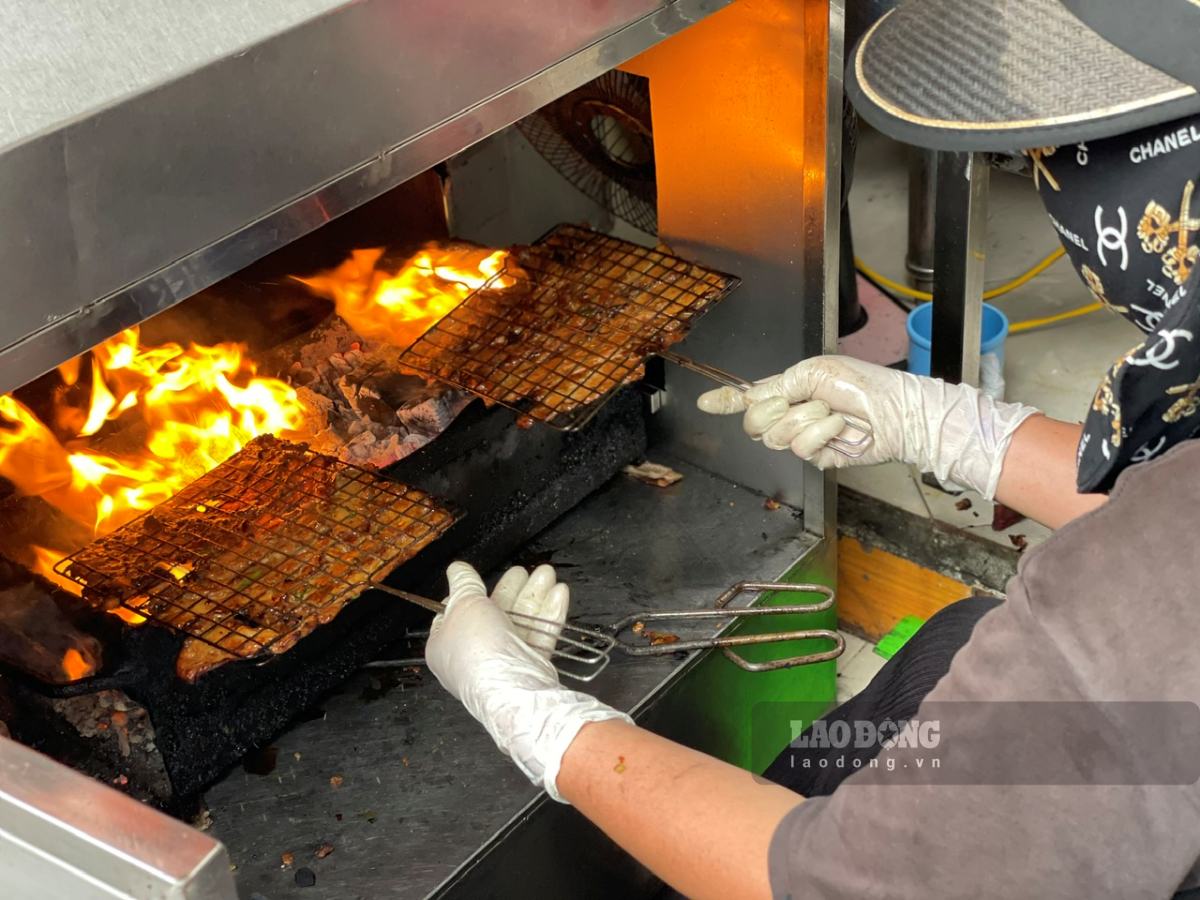
I am worried that traditional dishes will gradually disappear when many people switch to using electric stoves instead of charcoal stoves. Electric stoves are more convenient but do not create a characteristic aroma, making the dish lack its inherent soul," she expressed.
Currently, the dishes at the restaurant are priced from about 40,000 VND per serving, in addition, there are special meals according to the needs of diners. The restaurant serves from 11:00 AM to 4:00 PM daily and has a free parking area for customers.