
Hotpot is a rustic dish of fishermen in the coastal area of Mui Ne - Phan Thiet, formerly belonging to Binh Thuan province, now Mui Ne ward (Lam Dong province). The dish was formed from the livelihood of coastal people during the period when local tourism was not developed.
Previously, fishermen often put the caught ingredients in a pot, added water and cooked them into hotpot. The name "lau tha" also originated from that rustic processing method.
Over time, the dish has been transformed and more perfected. From a rustic dish, hot pot gradually becomes a specialty appearing in the menus of many restaurants and eateries, meeting the diverse taste needs of tourists.
As one of the first chefs to bring hot pot to participate in culinary competitions and win many awards, chef Truong Thi Thu Lieu said that since the 2000s, people in Phan Thiet have been familiar with this dish.
According to her, Phan Thiet sea area has mai fish with chewy, fragrant meat and this is also the main ingredient that creates the characteristic flavor of the hot pot dish.
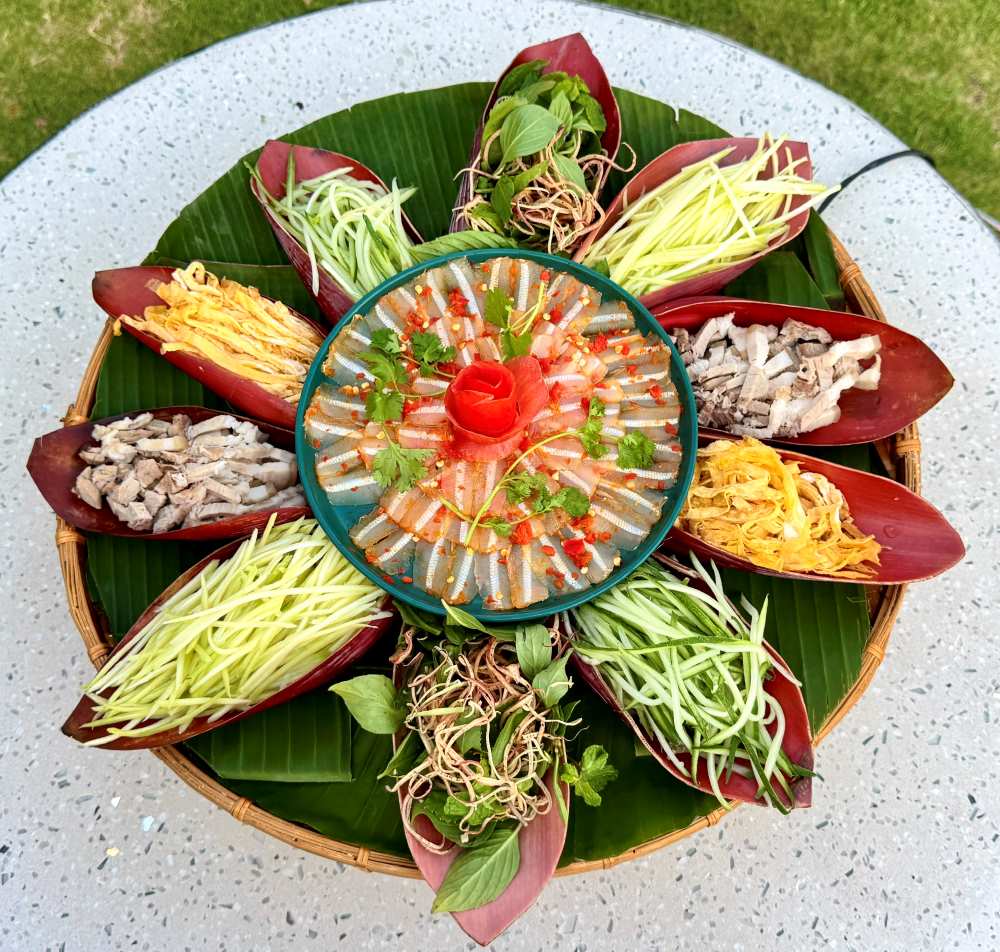
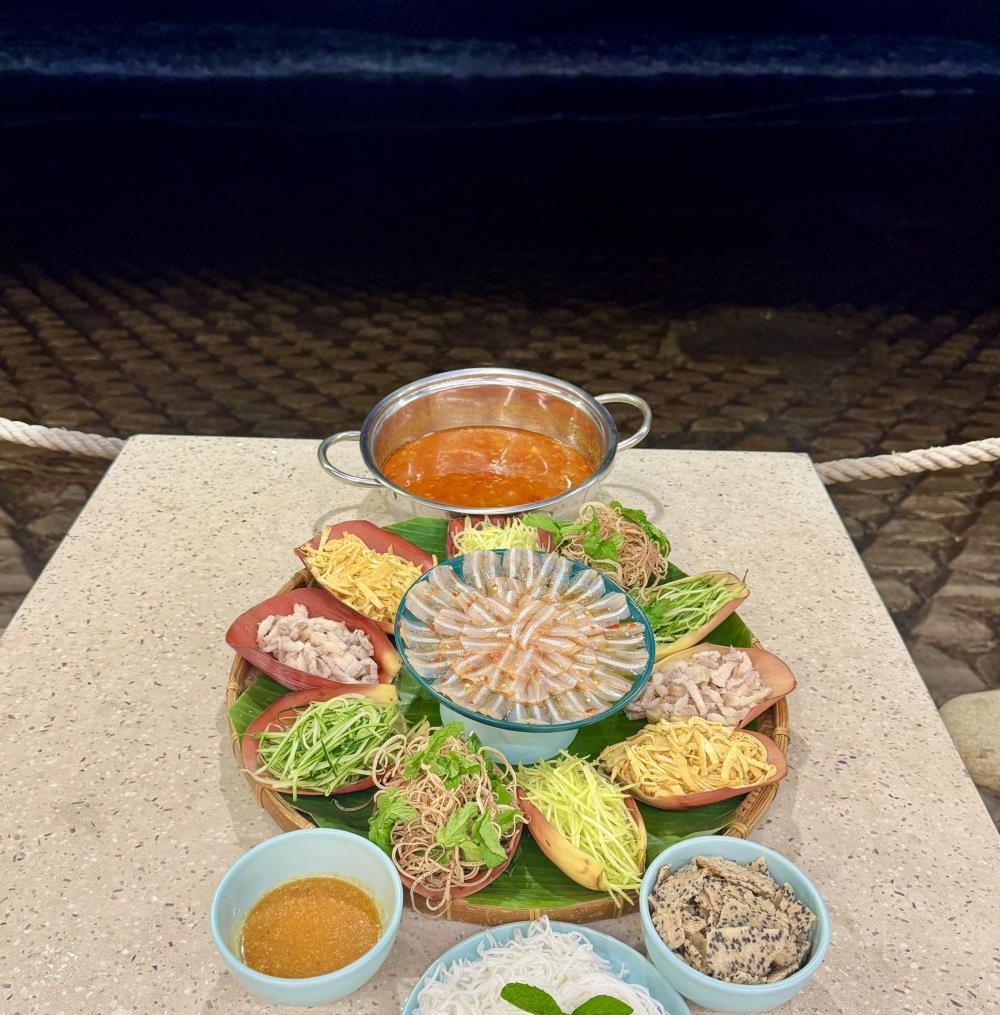
The special feature of the dish lies in the elaborate presentation. On the bamboo tray shaped like a flower, the ingredients are neatly arranged in layers of red-pink banana leaves including grated mango, cucumber, shredded fried duck eggs, boiled and chopped pork belly, herbs and the central part is fresh mai fish. Accompanied by vermicelli, broth, sauce and peanut fish sauce.
Not only creating eye-catchingness, this arrangement also evokes images of basket boats associated with the lives of coastal fishermen in Mui Ne.
Some chefs believe that the dish is also arranged according to the yin-yang and five elements philosophy including metal, wood, water, fire, earth; corresponding to five colors white, blue, black, red, yellow and five spicy, sour, salty, bitter, sweet flavors.
The secret of the hotpot broth pot is stewed with pork bones, the light sweetness of tomatoes, onions, and adding pear juice for a light sweetness," chef Truong Thi Thu Lieu shared.
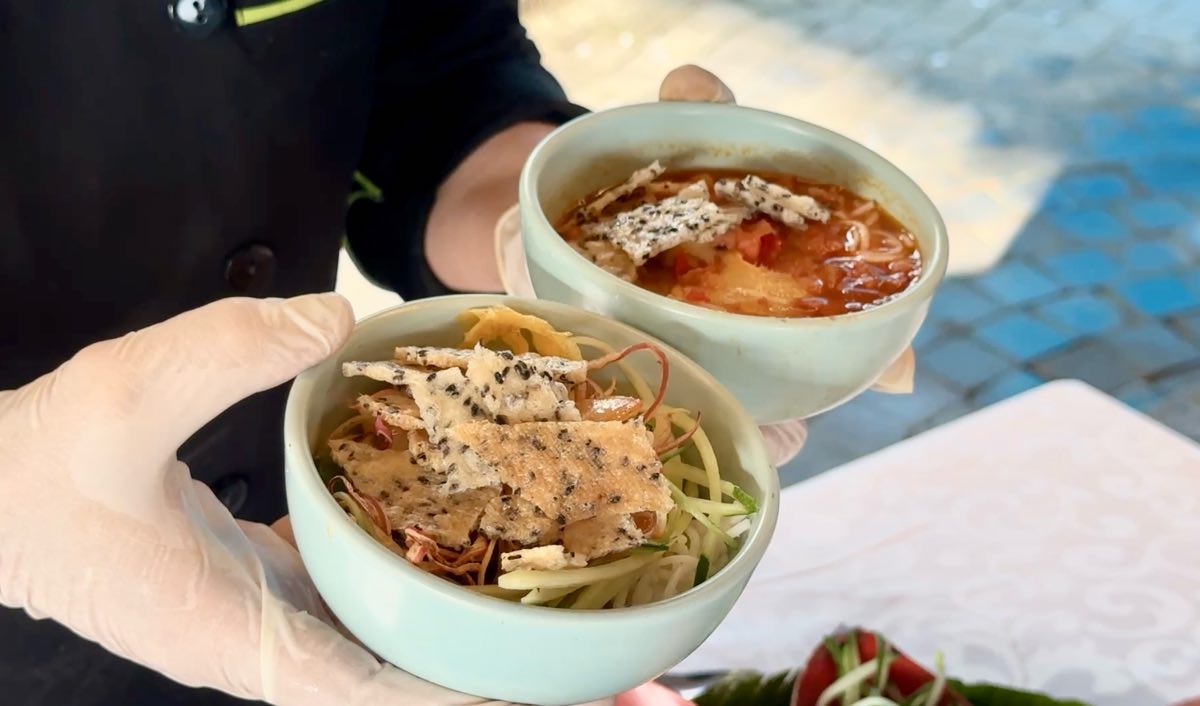
Currently, each restaurant has its own recipe for mixing sauces and processing broth, creating a different flavor.
Some places replace mai fish with turtle or snakehead fish, types of fish with white, fresh meat are often used to make fish salad.
Not just a simple dish, hot pot also brings diners stories about life, culture and people of the coastal region.
While enjoying the dish and listening to the origin of the hot pot name, visitors can clearly feel the sincerity and hospitality of the local people.
In the context of increasingly developed tourism, hot pot is going beyond the value of a simple specialty. The dish becomes a highlight in the journey to explore indigenous culture for tourists.
The combination of sea flavor, decoration art and life stories has helped hot pot create its own mark. This is also a way for the locality to promote images, people and cultural beauty to domestic and international tourists.


