
More than 50 years attached to the woodworking profession, Mr. Mai Kien (75 years old, Soc Trang ward, Can Tho city) has encountered many large tree stumps, but the ancient stone banyan tree stump at Phung Tuong communal house (Nhon My commune, Can Tho city) left a special impression on him.
According to the story, in 2014, while passing by the communal house, Mr. Kien saw that the banyan tree had died and dried. Looking at the root system and natural veins, he realized this was a special wood block.
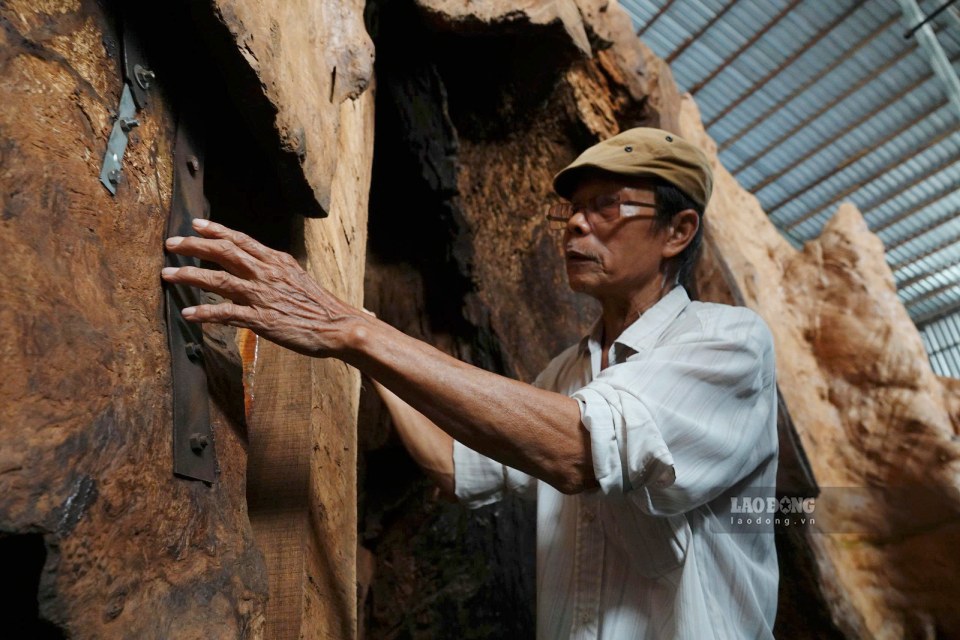
After learning and knowing that the tree was estimated by local people to have existed for more than 400 years, he decided to buy it back for 35 million VND.
To bring the tree root out of the ground, he hired more than 10 workers to dig deep around and along each large root. The work lasted about a month. Because the tree root was too large, he continued to rent land from people to open a path for heavy-duty cranes to access.
The wood block was then transported by specialized vehicles to Soc Trang ward, Can Tho city. According to Mr. Kien, the banyan tree root is estimated to weigh about 50 tons. Including the costs of cutting down trees, digging roots, transportation and arising expenses, he spent more than 1 billion VND.
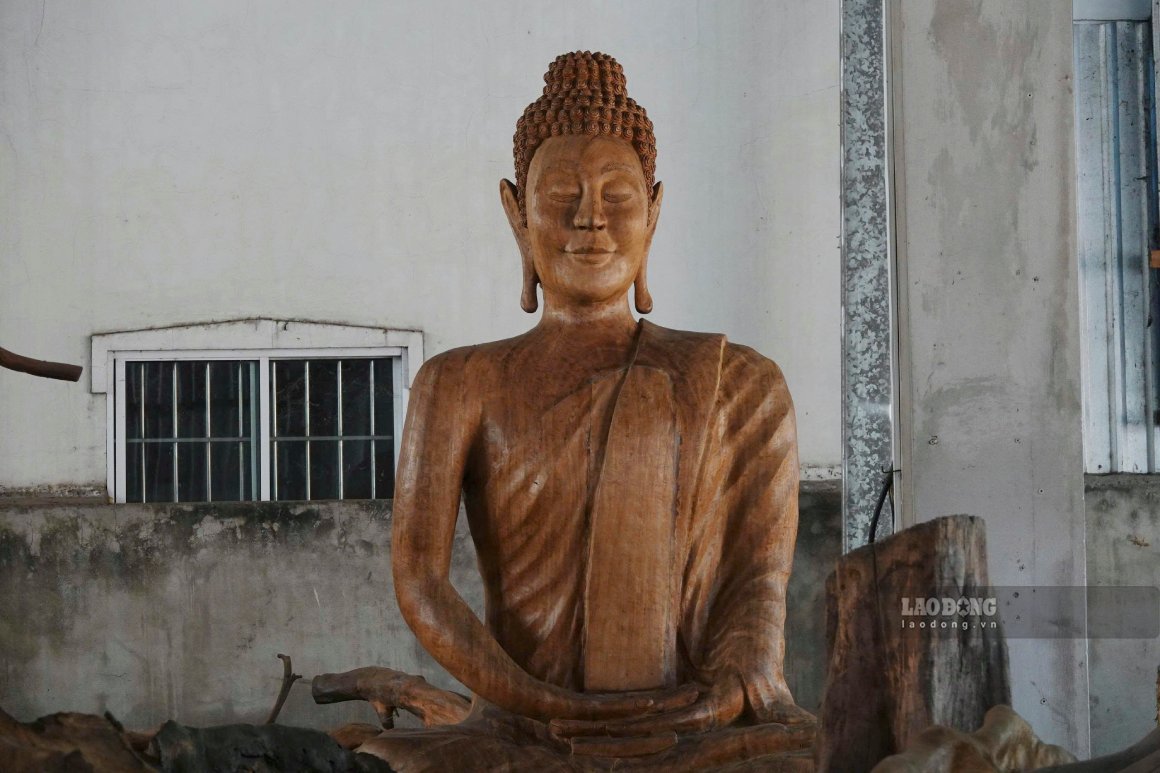
From the giant wood block, Mr. Kien takes advantage of the veins, root system and natural holes to create many works. Many large holes inside the tree root look like caves. Prominent is the Shakyamuni Buddha statue about 3m high standing on the lotus pedestal, along with images of tigers, birds, people and many animals.
Mr. Huynh Hong Lac (65 years old), the manager of the exhibition area, said that he usually cleans, polishes and paints the surface daily to limit termites. To clean the inside, he has to use a flashlight to crawl deep into the large holes of the tree roots.
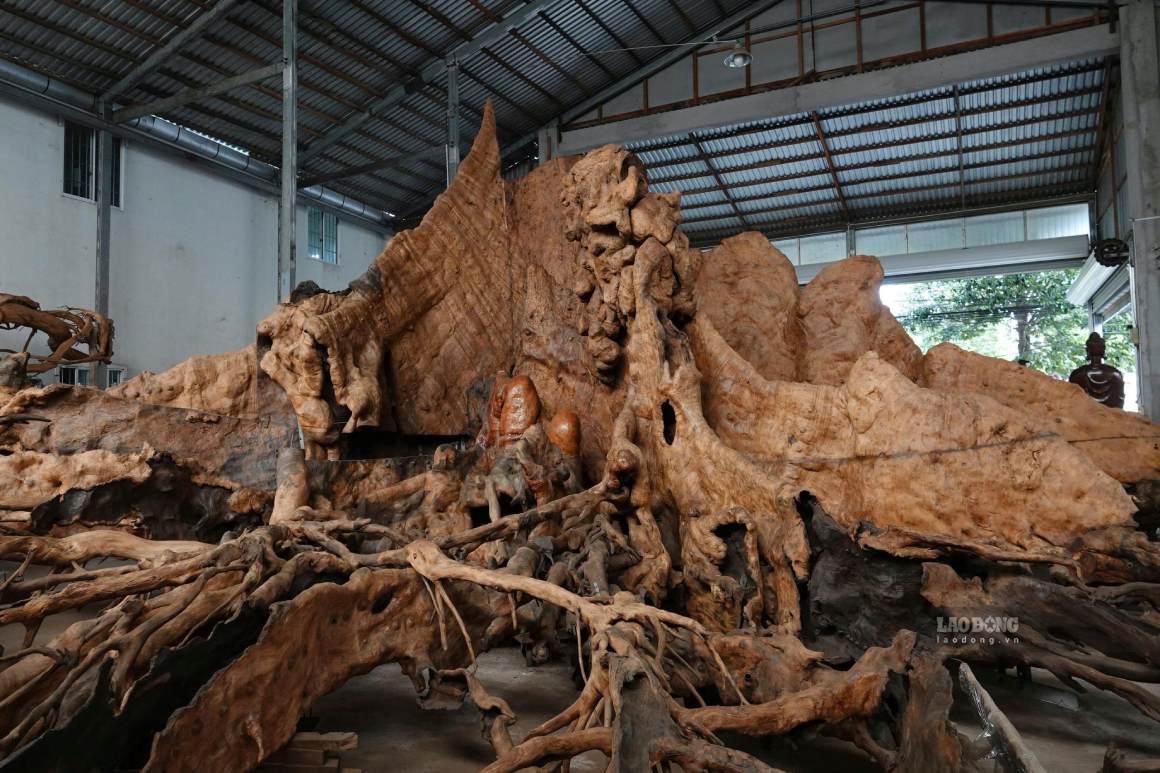
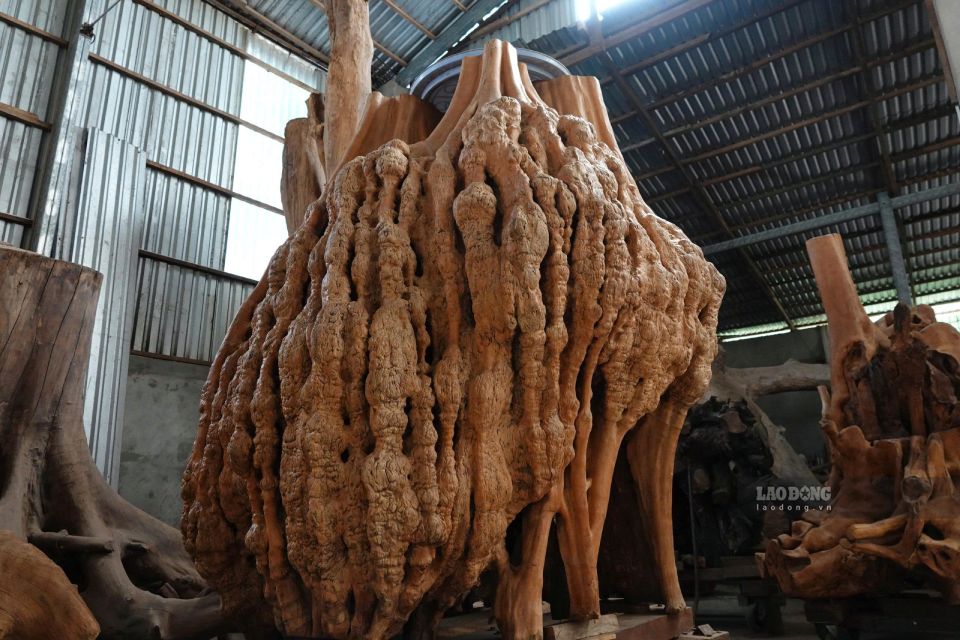
Phung Tuong communal house used to have a pair of ancient stone banyan trees, which local people affectionately call "bàng ông" and "bàng bà". The two trees have been associated with the communal house for many generations and people estimate that they have existed for more than 400 years.
Currently, "bàng bà" is still green and lush, more than 40m high, body circumference over 10m, with a large root system floating on the ground. Meanwhile, "bàng ông" has died after a period of waterlogging. The roots are then removed from the ground, creating works of art and continue to be preserved.


