
According to the climate trend assessment of the National Center for Hydro-Meteorological Forecasting from now until the end of January 2027, the global atmosphere-ocean system will have many fluctuations.
The ENSO phenomenon is currently identified as being in a weak La Nina phase, with sea surface temperatures in the central Pacific region about half a degree Celsius lower than average.
However, in the next three months, it is highly likely that ENSO will gradually shift to a neutral state, with an estimated probability of 75 to 85%. The probability of maintaining La Nina is reduced to about 15-25%, lower than previous forecasts.
ENSO is considered one of the important factors dominating global climate trends, especially related to the storm, heavy rain and flood season in Vietnam.
From May to July 2026, ENSO is mainly assessed as neutral, with a probability of about 55-65%. At the same time, the possibility of transitioning to the hot phase (El Nino) tends to increase, fluctuating in the range of 35-45%, while the probability of returning to La Nina is very low.
Entering the late summer and early autumn of 2026, ENSO is likely to remain neutral but shows signs of leaning towards the hot phase. The meteorological agency also does not rule out the possibility that this phenomenon will shift to El Nino in the last months of 2026 and early 2027.
The National Center for Hydro-Meteorological Forecasting forecasts that in 2026, the atmosphere-ocean system may undergo many consecutive phase transitions. This large-scale phase transition makes the climate become less stable, thereby increasing the risk of extreme weather phenomena such as strong storms or heavy rain.
Regarding storm activity, from February to July 2026, the number of storms and tropical depressions in the East Sea is likely to be equivalent to the multi-year average. According to climate data, this period has an average of about 3.8 storms in the East Sea, of which about 1.2 storms directly affect the mainland.
From July 2026 to January 2027, the number of storms and tropical depressions is forecast to tend to be lower than the multi-year average. However, the meteorological agency notes that it is still necessary to be wary of strong storms.
According to climate statistics, on average this period there are about 9.6 storms in the East Sea and about 3.8 storms landing inland.
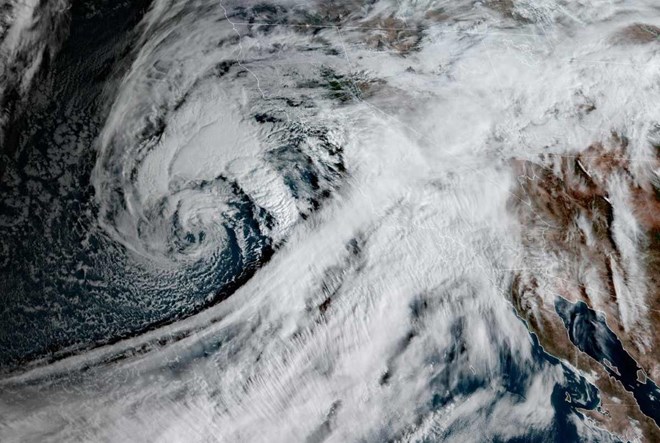
Regarding the scope of impact, in August and September 2026, storms and tropical depressions tend to have a lot of impact on the Northern region. From September to December 2026, the focus of impact may shift to the Central and Southern regions. In the first months of 2027, the possibility of storms or tropical depressions appearing in the East Sea is assessed as low.
The meteorological agency also warned that climate change is making weather phenomena more extreme, unusual and unpredictable. Although it is not possible to accurately determine the timing of major natural disasters, the trend of increasing frequency and intensity of dangerous weather phenomena in the future is something to consider.
Due to storms and low pressures concentrated in the second half of the year, tourists planning sea and island tours during this time should pay attention to monitoring meteorological developments. Regularly update weather forecast bulletins, especially short-term forecasts before departure.


