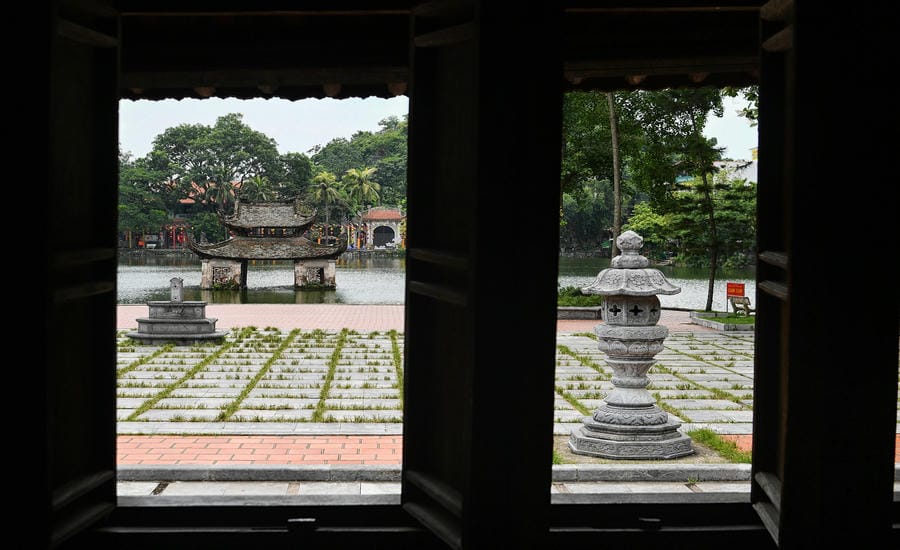
From the outside, the pagoda appears in the green of trees and leaves, the silver gray of the moss-covered tiled roof and the deep brown of the wood that has passed through many rainy and sunny seasons. The pagoda roof is low and wide, the curves at the top seem to retain an architectural shape of centuries ago. The surrounding trees make the pagoda not stand separate from nature but seem to be embraced and protected by nature. But the beauty of Thay Pagoda is not only in the architecture.
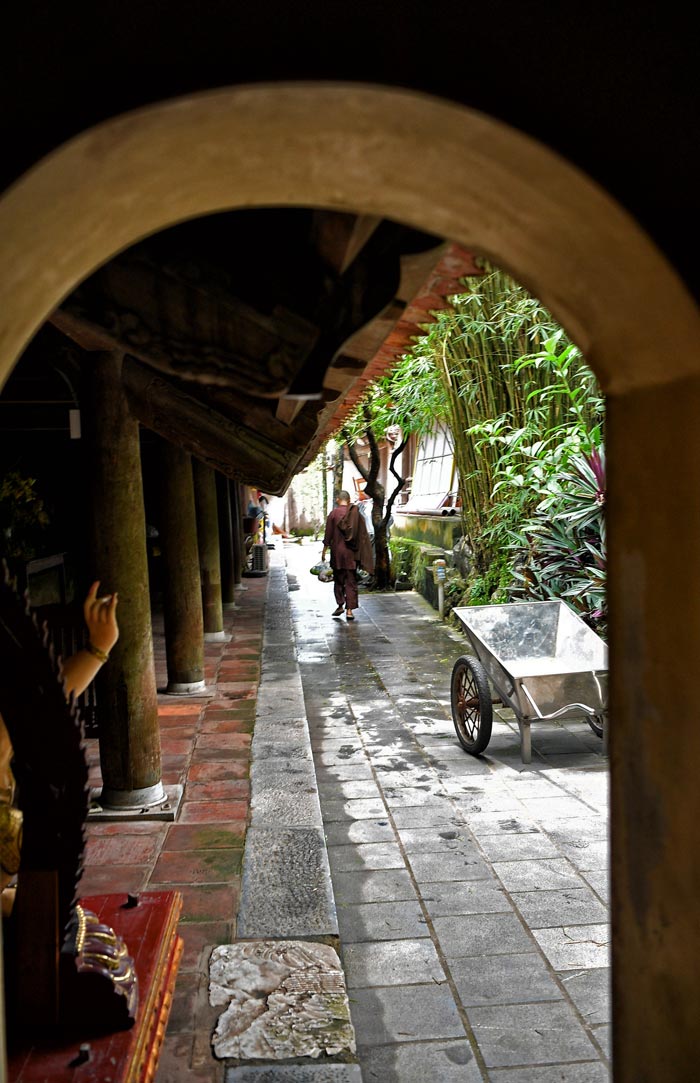
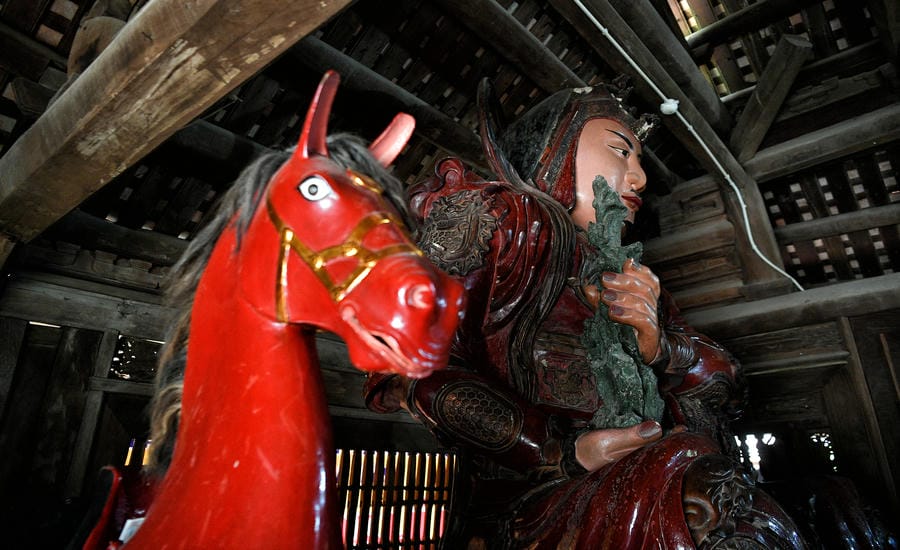
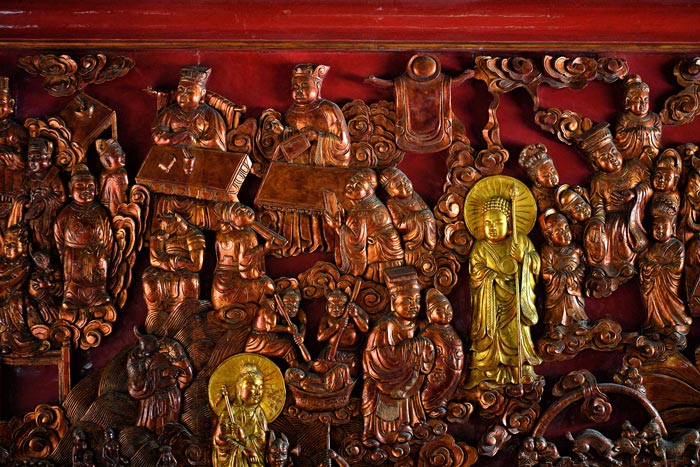
Stepping through the wooden doors, in the dark space of wood, the statues appear with many shades, seemingly contemplative, with a majestic look, with faces as if silently looking down at people. The carvings, the layers of gold-plated lacquer, the images jostling each other in a world that is both real and magical. These are not only works of art but also traces of a spiritual life that has been passed down from generation to generation.
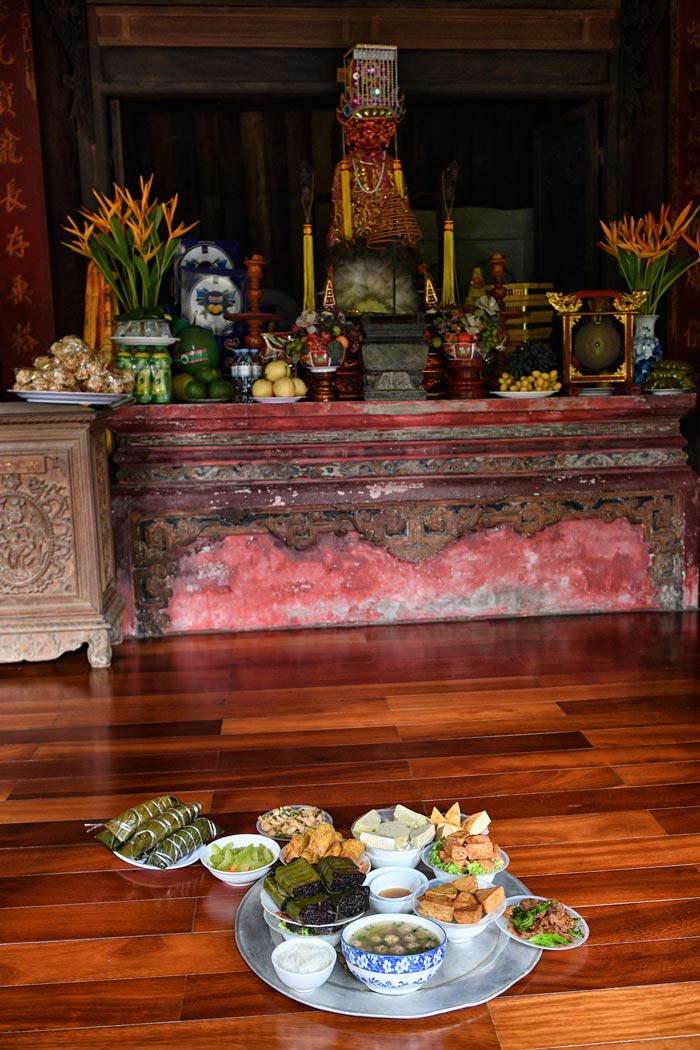
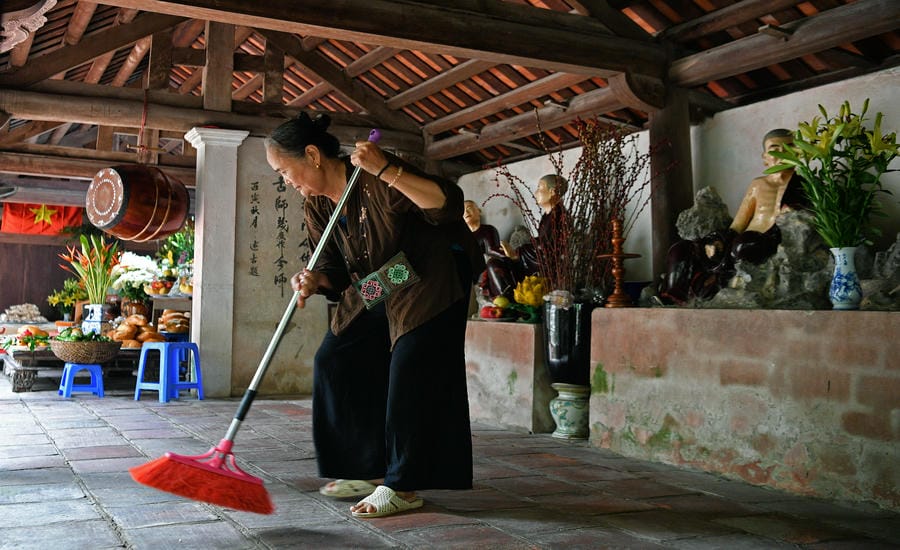
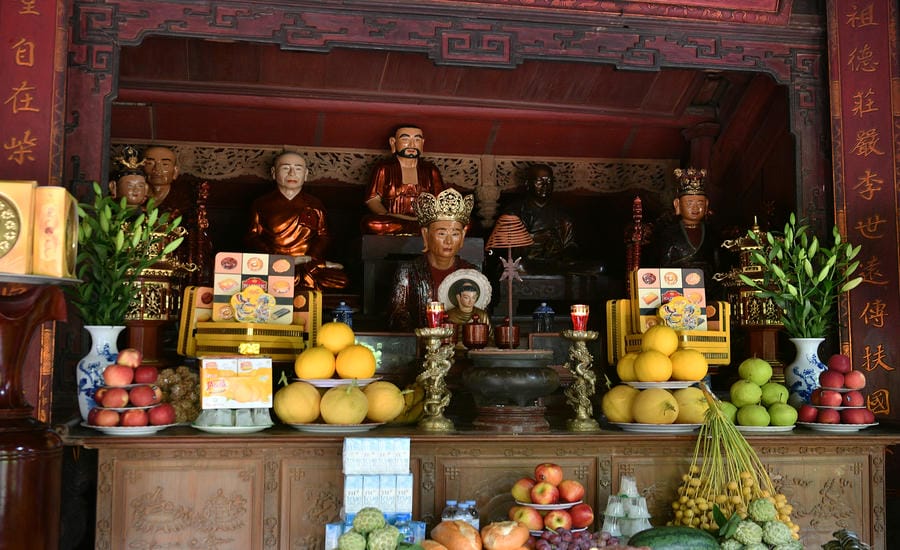
In front of the altar are offering trays full of fruits, cakes, and incense and lamps. Those very ordinary things, when placed in a sacred space, suddenly have a different meaning when people bring what they have, what they cherish, to a greater belief than themselves. A young woman humbles herself in front of the altar, an elderly woman sits calmly with a string of beads in her hand. In another corner, a woman in a brown robe quietly sweeps the pagoda's yard. Perhaps it is these ordinary people who keep the pagoda warm. People come to worship, people come to pray, people take care of incense, people sweep every yard. Each person does one thing, but together contribute to maintaining a life that has existed through time.
Amidst an increasingly hurried life, where new buildings are constantly appearing and old memories are easily overshadowed, an ancient pagoda still exists, without having to be noisy to prove its age. It just quietly stands there, with mossy tiled roofs, dark wooden pillars, ancient statues and the footsteps of passersby.
Thay Pagoda is not just a relic, it is a living memory of Vietnamese people, where time does not disappear, but slowly subsides in each tile roof, wood grain, statue face and human footsteps.