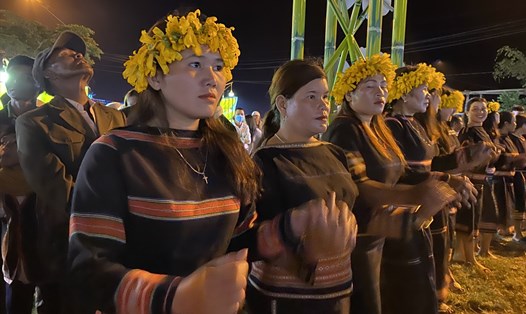
On February 5, Gia Lai Provincial People's Committee determined the goal of preserving and promoting the sustainable value of the Gong Cultural Space, ensuring compliance with socio-economic development, and at the same time associated with local tourism development.
The focus of this plan is to preserve, maintain and promote the traditional cultural values of ethnic minorities in the area, gradually making gong music a typical cultural and tourist product of the province.
According to the plan, every year Gia Lai will restore and maintain the organization of 1-2 typical traditional festivals using gongs, suitable to the characteristics of each locality.
Along with that, practical activities, teaching and performing gongs in the community will be maintained regularly through clubs, gong teams and folk art teams at the grassroots level.
Along with that, the digitization of documents, images, sounds, and videos about gongs will be promoted to build a digital data warehouse to serve research, promotion, education and long-term preservation.
In addition, Gia Lai will deploy inventory, overall survey and digitize the database on the Gong Cultural Space to fully preserve heritage values before the risk of fading.
It is expected that the province will propose considering awarding the titles of People's Artisan, Meritorious Artisan in the field of intangible cultural heritage to at least 10 gong practitioners.
On February 3, the Prime Minister issued Decision No. 236/QD-TTg on recognizing national treasures (Round 14).
Among the 30 artifacts, the group of artifacts recognized as national treasures, Gia Lai province has 2 groups of artifacts: Collection of gold worship items at Cham An Phu tower (dating from the 9th - 10th centuries) and Set of Ko Do gongs (dating from the early 20th century). Both of these treasures are currently kept at the Pleiku Museum, Gia Lai province.