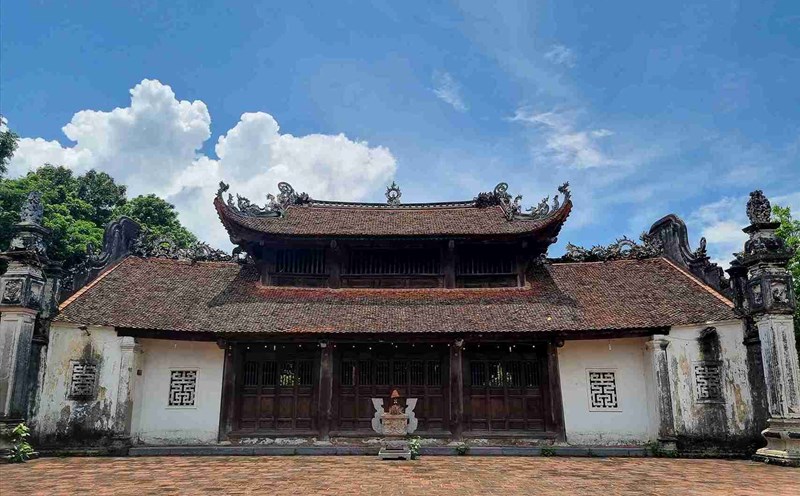
The Vietnam National Fine Arts Museum currently preserves and promotes a huge treasure of cultural and artistic heritage with nearly 20,000 artifacts.
The museum owns a valuable collection of Indochinese Fine Arts Artists - a typical period of Vietnamese fine arts. Many of these works have been recognized as National Treasures, typically "Two Girls and a Baby" by To Ngoc Van and "Em Thuy" by Tran Van Can.
The painting "Two Girls and a Baby" depicts Hanoi women in the 1940s
The work "Two Girls and a Baby" by painter To Ngoc Van, created in 1944, is considered one of the pinnacle works of Vietnamese oil painting.
As one of the "Four pillars" of modern Vietnamese painting, including "Nguyen Gia Tri, To Ngoc Van, Nguyen Tuong Lan, Tran Van Can", painter To Ngoc Van is one of the most typical painters, making fundamental contributions to the color of Vietnamese oil paintings.
According to information from the Vietnam Fine Arts Museum, painter To Ngoc Van (1906-1954) graduated from Indochina College of Fine Arts (promotion 1926-1931). Not only is he a talented painter, he is also a respected fine arts teacher. He was the first principal of the Resistance Artist Course (1950 - 1954) and also the author of many art criticism articles that attracted public attention.
The oil painting "Two Girls and a Baby" is one of the typical works of the early stages of his artistic career. The painting truthfully depicts a corner of Hanoi's social life in the 30s - 40s of the 20th century. At the corner of the porch, where the bamboo curtain is rolled high to reveal the Phu Dung tree in the garden blooming with pale pink flowers, two girls sit and confide intimately, next to them is a boy.
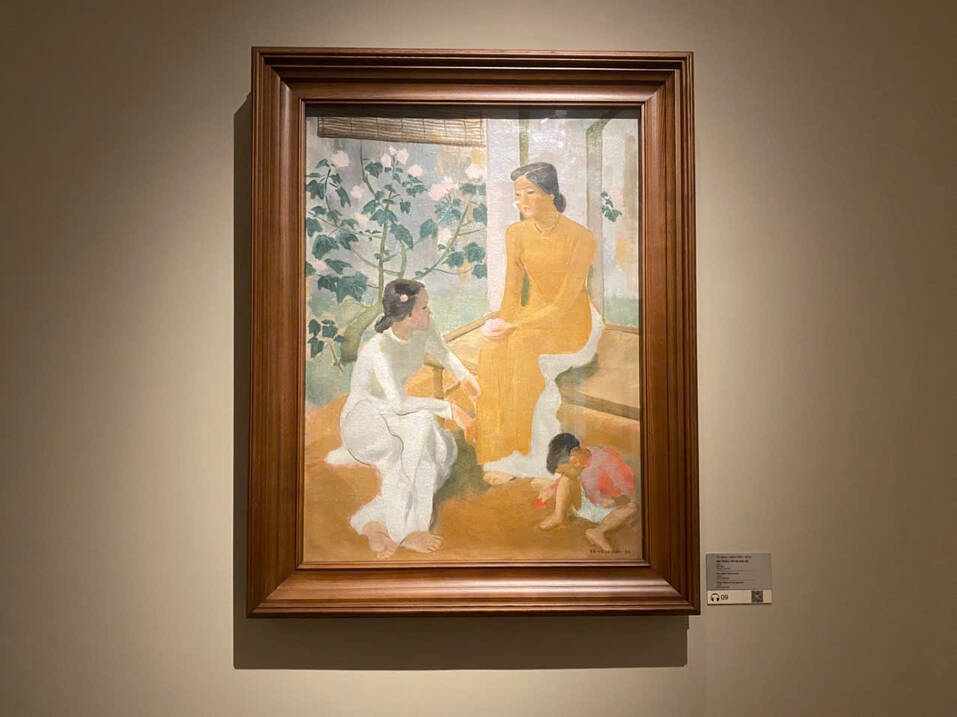
The painter uses a flat color painting style, not playful, clear curves and straight lines. Earth yellow mixed with a bit of warm orange as the main color harmoniously combined with white, light pink, green and pink lotus petals. The painting combines the emotional soul of the East and the painting style learned from the Western era.
Childhood beauty through the work "Em Thuy
Em Thuy" is one of the typical works of painter Tran Van Can (1910-1994), one of the "four great painters" Tri - Van - Lan - Can of modern Vietnamese fine arts.
Artist Tran Van Can graduated valedictorian from Indochina College of Fine Arts in 1937 and made many important contributions to training, activities of the Fine Arts Association as well as artistic creation. Throughout his career, Tran Van Can left his mark through many genres: lacquer painting, silk painting, wood carving and especially portrait painting.
The work "Em Thuy" was created by him in 1943 in Hanoi on a early autumn day in a painter's room on Hang Cot street. The character in the painting is baby Thuy - a girl who was only 8 years old at that time, studying at École Brieux Primary School for Girls (now Thanh Quan Secondary School).
The painting depicts a half-body portrait with a slender figure, slightly tilted head, two hands intertwined, somewhat shy with a bright white ao dai. Hair flowing behind her shoulders, lips slightly closed naturally, and most prominently black eyes. Contrary to that slightly shy look, there are innocent black eyes with a direct look at the viewer. Those eyes make a deep impression, haunting the person opposite.
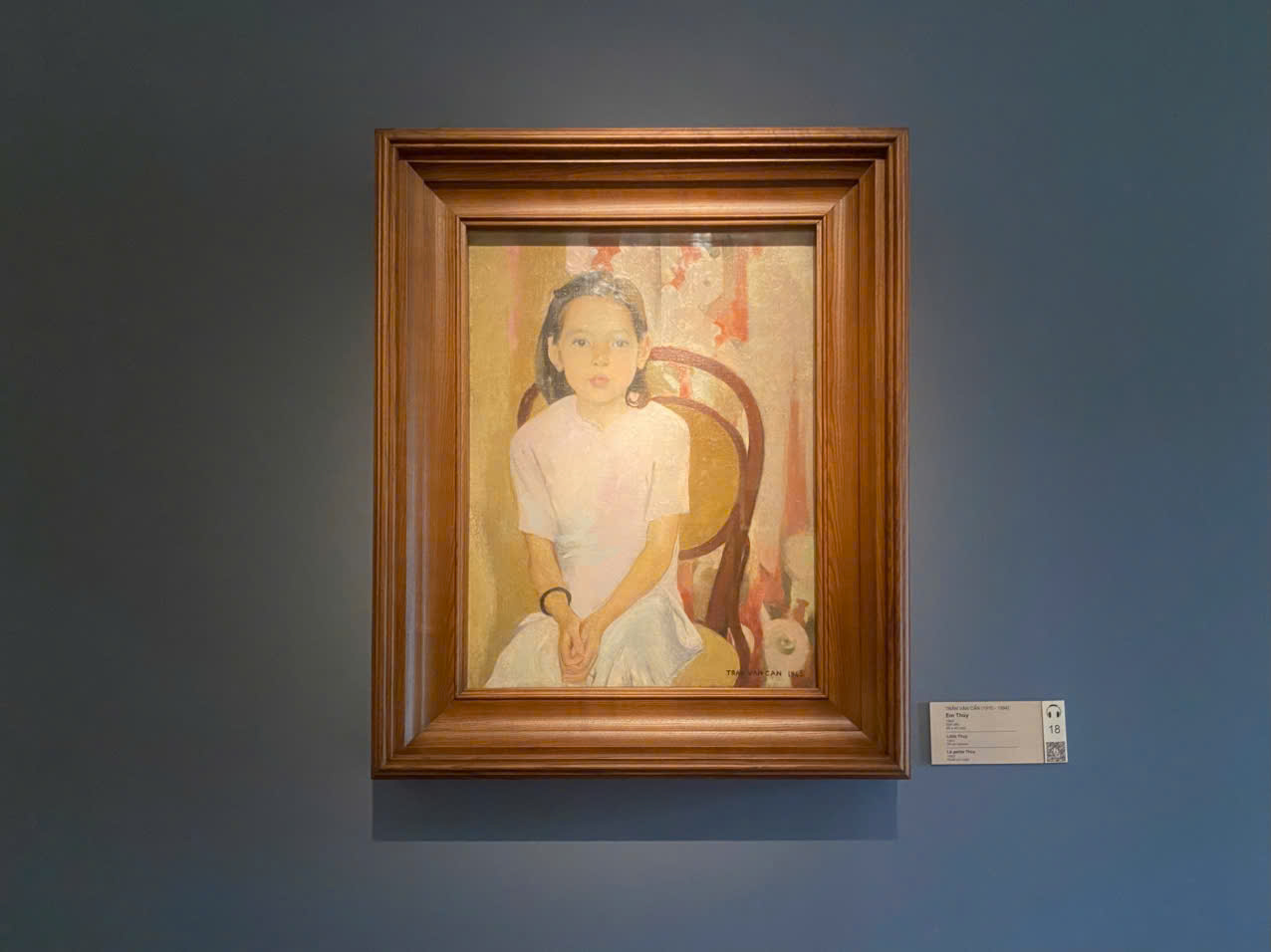
Baby Thuy at that time was wearing a light pink Ha Dong silk shirt, sitting on a rattan chair, her eyes facing the window frame where there was an old banyan tree. The leaves of the banyan tree swaying in the wind like butterflies, making children's imaginations more soaring. Behind her is a bright flower curtain expressed by red and yellow patches of warm earth. That context contributed to creating poetry and dreaminess in the painting.
During the war, baby Thuy's family evacuated, and the painting was lost for a long time. It was not until 1964 that the Vietnam Museum of Fine Arts bought the work from photographer Do Huan's family, for 300 VND.
According to the Heritage Records (documents of the Department of Cultural Heritage), the work "Em Thuy" is a continuation of Western shaping style but is blended in a clear Eastern spirit. With oil paint material, the work is typical of portrait art, as well as typical of the Vietnamese portrait painting genre in the early 20th century.