Visiting the National Museum of History, visitors can admire Vo Canh stele at the end of the outdoor display row. This ancient stele is a cylindrical stone block 2.7m high, 1.1m wide, 0.8m thick, one of the oldest stele in Southeast Asia, showing the absorption of Sanskrit and the influence of Buddhist (Indian) thought on the ancient Champa Kingdom in particular and Southeast Asia in general.
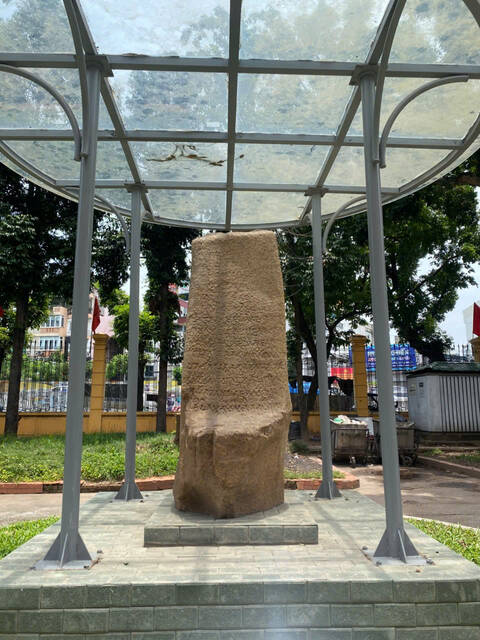
Vo Canh stele was discovered in 1910 near a brick tower ruin in Vo Canh village, old Vinh Trung commune of old Nha Trang city - now Tay Nha Trang ward, Khanh Hoa province. The ancient stone stele quickly attracted the attention of scholars from the French Institute of Far Eastern History. The stele was later brought for preservation at the Louis Finot Museum (now the National Museum of History, Hanoi).
Vo Canh stone steles are carved with ancient Sanskrit characters, including 15 lines on the front and 7 lines on the back, some lines have faded over time. Among them, there are two verses written in the form of Vasantatilaka poetry, the rest are prose. The typeface on the steles is similar to the characters of Amaravati (India) steles from the 3rd - 4th centuries. This is the oldest evidence of the introduction of Sanskrit into the Kingdom of Champa.
According to the National Museum of History, the epigraph mentions a king of the Sri Mara lineage - the founder of the Champa dynasty.


The stele has sentences such as "lokasyasya gatagati" (life and death reciprocate), or tolerance, compassion and compassion for sentient beings "prajanan karuna". The content shows the profound influence of Indian Buddhism on Champa residents, especially on the monks, from the early centuries of the Common Era.
According to the Heritage Records in documents of the Department of Cultural Heritage, records of Louis Finot's engraving, p. 4 in "Etude epigraphique sur le pays chams in Paris", 1995 by author Claude Jacques, there is a passage: "The idea of stability, coming and going, in this world, tolerance to people. Sacrifice for the benefit of others, all these features highlight the liberality in Cri-Mara, stemming from a clear Buddhist spirit that makes people escape the idea that this leader preaches the doctrine of tolerance and generosity".
Vo Canh stele is not only an antique, it is also a thousand-year message engraved in stone, recounting an important opening chapter in the history of cultural and ideological transformation of Southeast Asia. Vo Canh stele is a treasure with great historical and cultural value, bearing the beauty of the Champa language.
With its precious values, Vo Canh Beer has been recognized as a national treasure under Decision No. 2599/QD-TTg dated December 30, 2013 of the Prime Minister.