
Below are the sacred temples and pagodas in the South for spring travel and New Year worship:
Ba Thien Hau Pagoda (HCMC)
Ba Thien Hau Pagoda is one of the oldest temples of the Chinese community in Ho Chi Minh City, built in the 19th century. The pagoda worships Thien Hau Thanh Mau - the goddess who protects seafarers according to South China beliefs.
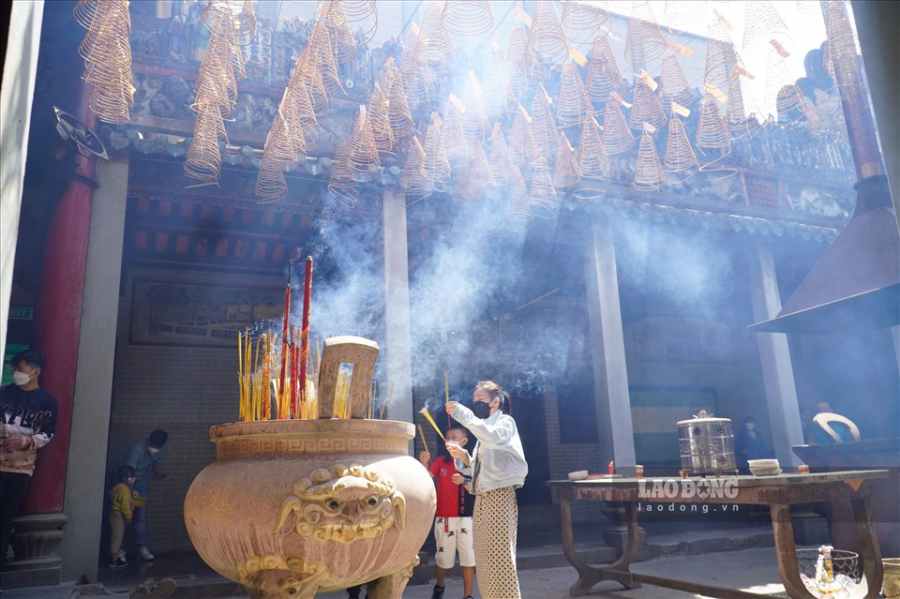
The pagoda's architecture is full of Chinese style with yin and yang tiled roofs, ceramic reliefs, and sophisticated carved panels. The interior space is filled with incense smoke, especially impressive with large incense coils hanging high - where people send New Year's prayers.
In the early spring days, people and tourists come here to pray for peace and prosperous business. Ba Via Festival (March 23rd of the lunar calendar) is also a major cultural event attracting a large number of pilgrims.
Vinh Nghiem Pagoda (HCMC)
Vinh Nghiem Pagoda was started construction in 1964, is one of the largest and largest pagodas in Ho Chi Minh City. The project has a Northern Buddhist architectural style combined with Vietnamese traditional elements.
The highlight of the pagoda is a seven-story stone tower 40 m high - one of the tallest stone towers in Vietnam. Spacious and airy campus, many green trees create a peaceful space in the heart of a vibrant city.
At the beginning of the year, thousands of Buddhists come to worship Buddha, pray for peace, and participate in spring festivals. The atmosphere is bustling but still retains the solemnity and majesty of the pagoda that has existed for more than half a century.
Ba Chua Xu Temple of Nui Sam
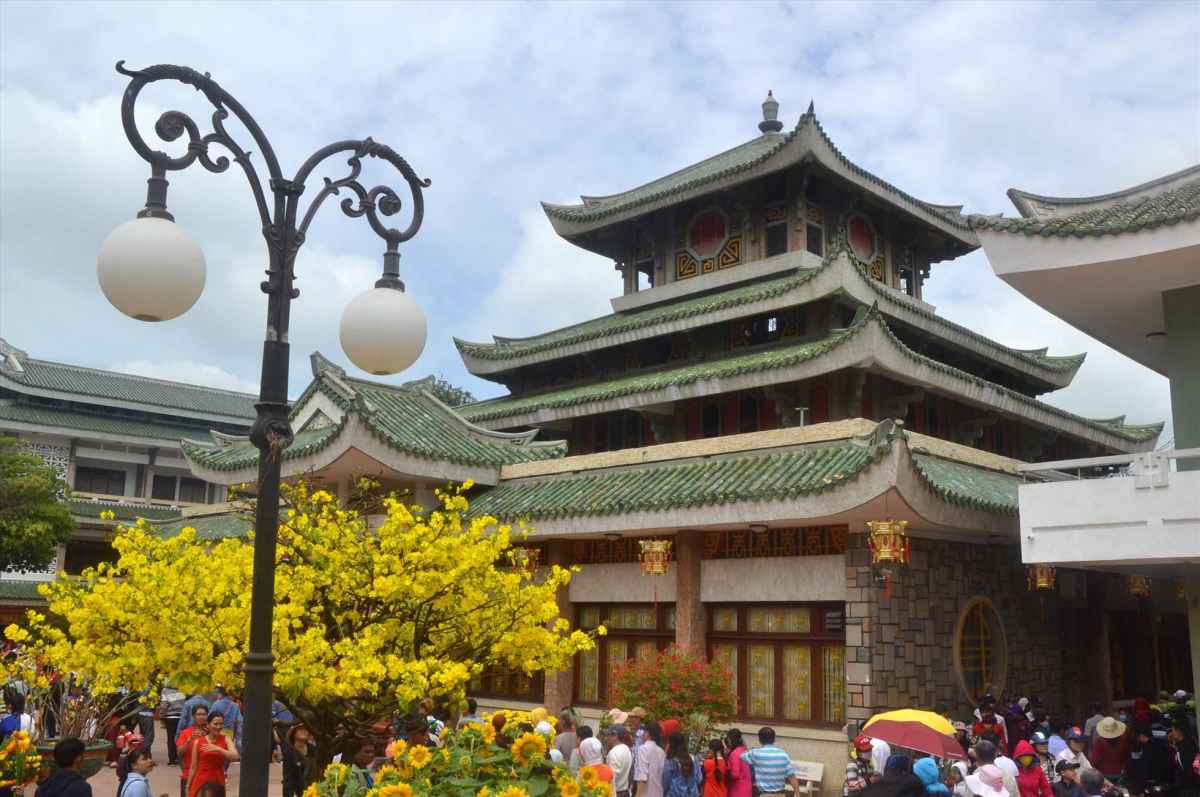
Located at the foot of Sam Mountain (Chau Doc ward), Ba Chua Xu Temple is one of the largest pilgrimage sites in the Southwest region. The statue of Ba made of sandstone is believed to date back to the 6th-7th centuries, associated with many sacred legends.
The temple is built spaciously with a three-level roof architecture, imbued with Southern tradition. People believe that Ba Chua Xu blesses business, health and family life.
The main festival takes place from April 23-27 of the lunar calendar. However, right from the beginning of the new year, tourists have come here to pray for fortune and wealth. In recent years, the locality has strengthened the organization of festivals and management to ensure order and maintain the aesthetics of the relic site.
Buu Long Pagoda (HCMC)
Buu Long Pagoda (Thu Duc ward) stands out with its architecture in the Southern Buddhist style combined with Thai influence. The white-yellow Gotama Cetiya stupa, soaring in the blue sky, is a special highlight.
Unlike many traditional Vietnamese pagodas, Buu Long Pagoda does not worship the Buddha statue of Maitreya or Avalokiteśvara, but focuses on the image of Buddha Shakyamuni according to the Southern sect. The pagoda space is spacious, the surrounding lake creates a peaceful feeling. At the beginning of spring, this place attracts a large number of people to worship Buddha and take photos.
Tay Ninh Holy See (Tay Ninh)
Tay Ninh Holy See is the center of Cao Dai religion - a religion born in Vietnam at the beginning of the 20th century. The building has a unique architecture, combining Eastern and Western elements, brilliant colors, and the "Swan Eye" symbol stands out in the main hall.
Every beginning of the year, Cao Dai believers and pilgrims from all directions come to worship, praying for a peaceful year. The solemn worship ceremony, white ao dai uniforms of believers create a unique space rarely seen in other religious establishments. Not only is it a place for worship, this Holy See is also a famous cultural and architectural attraction of the South.
Doi Pagoda (Soc Trang)
Doi Pagoda (also known as Mahatup Pagoda, Phu Loi ward, Soc Trang) is a typical Khmer pagoda in Soc Trang, with a history of hundreds of years. The pagoda is imbued with the Southern Khmer Buddhist architectural style with curved roofs, brilliant patterns, and the characteristic Naga snake god statue.
The special feature of the pagoda is that the campus has thousands of native bats living naturally on the canopies of ancient trees. At the beginning of the year, Khmer people and tourists come here to offer incense, pray for peace, and learn about the unique culture of the indigenous community.


