
The extended holiday of the Ancestral Day and April 30 - May 1 is a suitable time for people to travel and experience the regions of the Fatherland. If you are passionate about Northwest cuisine, tourists cannot miss Son La. That land has a fruit that is unique, which is mắc nhung.
Every year, from the end of October, mac nhung (also known as bitter fruit) enters the season, the mac nhung crop lasts until the end of April. The tree usually grows naturally in Muong Coi, Muong Bang, Suoi To communes, and Suoi Pai, Suoi Nhung villages of Phu Yen commune.
*Mắc nhung* belongs to the climbing tree family, clinging to forest trees on swidden fields or along humid forests. The fruit is small, round, growing in clusters, when young it is dark green, when ripe it gradually turns orange or red.
According to local people, mắc nhung is suitable for cool climates and high humidity, often growing well under the canopy. Previously, this fruit was mainly harvested to serve family meals.
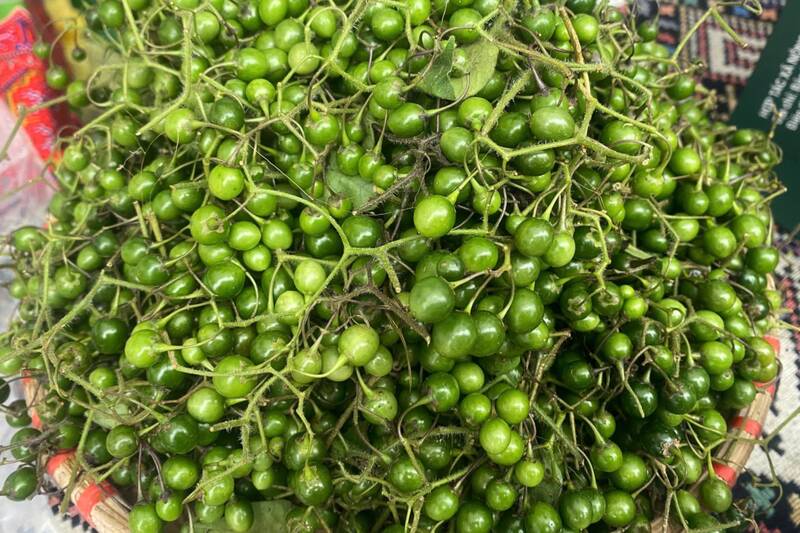
But in recent years, mac nhung has been brought to the market for sale, becoming a product that many people seek to buy, with prices ranging from 200,000-300,000 VND/kg.
The special feature of mắc nhung lies in its flavor. When processed, the fruit has a mild bitter taste but not harsh, then leaves a buttery and sweet taste.
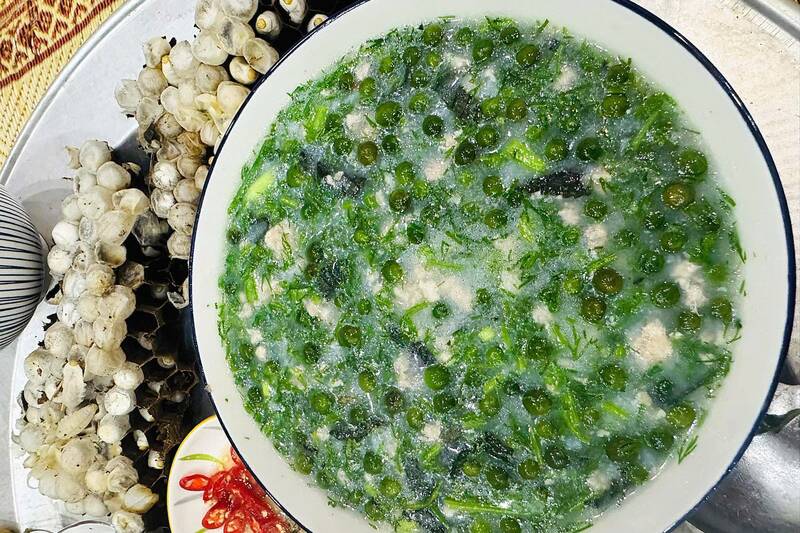
Thanks to this, mắc nhung can be combined with many other ingredients to create unique dishes of the highlands such as mắc nhung porridge, mắc nhung soup, mắc nhung stir-fried with meat or mắc nhung braised beef.
Among them, mắc nhung porridge is the most popular dish. Sticky rice is soaked and then crushed, cooked with minced meat or chicken giblets. mắc nhung is added later, stirred lightly to keep the whole fruit. When the porridge is cooked, the aroma of ginger and spices blends together, creating a dish that is both rich and easy to eat.
Ms. Luong Phuong Thao, Han 2 village, Muong Bang commune shared: "My family grows mắc nhung on high hills, where there is shade and good humidity. The tree grows naturally, requires little care but still bears fruit evenly. Each year my family harvests about 2 quintals of fresh fruit.
In addition to porridge, mắc nhung is also used to prepare mọ - a traditional dish of the people. Minced meat mixed with rice flour, mắc nhung fruit and spices, wrapped in banana leaves or dong leaves and then grilled or cooked.
The finished product has a thickness, slightly bitter taste mixed with the fatty taste of the meat, often used in family meals or gatherings.
Mr. Phan Ngoc Linh - Chairman of Muong Coi Commune People's Committee, said: "Some households have proactively planted mắc nhung for sale, but it is still small-scale and fragmented. The locality is encouraging the expansion of mắc nhung planting area, while also linking it with culinary promotion to enhance the value of local typical products.
Not only serving on the spot, mắc nhung is also chosen by many people as a gift. Ms. Lo Thi Thao Vy, To Hieu ward, said: "My family often buy mắc nhung to cook porridge. The bitter taste was initially a bit strange, but after getting used to it, I found it attractive. Later, I also bought it as a gift for colleagues and relatives, storing it in the refrigerator to use gradually when the fruit season ends.
The combination of natural ingredients and traditional processing methods has created a unique feature for dishes from mắc nhung.
Although not elaborate, these dishes still contribute to enriching the culinary picture of the highlands of Phu Hoa, while opening up directions for developing typical products associated with local tourism.


