
Special cultural address
As a tradition, for the past 15 years, since its completion and commissioning, every year when the year ends and Tet comes, Son Nam Memorial House (1926-2008), located in Dao Thanh ward (Dong Thap province), is bustling with people coming to offer incense. In that crowd, there are not only writers and researchers, but also students and a large number of ordinary readers.
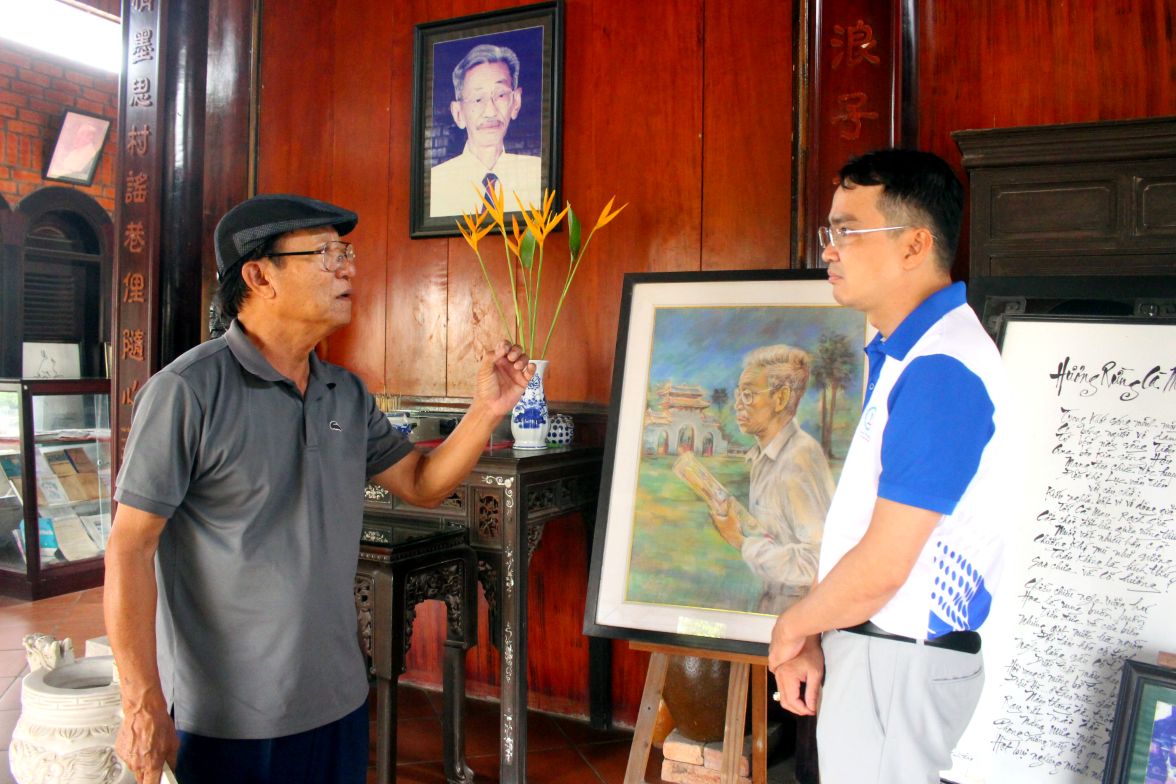
This is a rare phenomenon, because during his lifetime, writer Son Nam did not hold high power or important positions. He came not to "get images", but sincerely expressed his respect for a great researcher, who dedicated his whole life to writing and encouraging many people to write about the reclamation and opening up of the Southern land, about the civilization of the Southern orchards.
The attraction of the Memorial House also comes from the care in every detail of the project, making this place not only a place of worship, but also a vibrant cultural space, evoking memories and emotions for visitors.
Mr. Tran Duc Nghi (born in 1951, son-in-law of writer Son Nam), who directly took over the entire project package from investment, design ideas to construction supervision, shared: "To form Son Nam Memorial House is a journey of contemplation, thinking and creativity".
According to Mr. Nghi, during his lifetime, writer Son Nam lived very simply, but his writing and research career was immense. Therefore, he and his wife had to spend a lot of time trying to harmonize between his father's simple life and the academic stature of a Southern scholar.
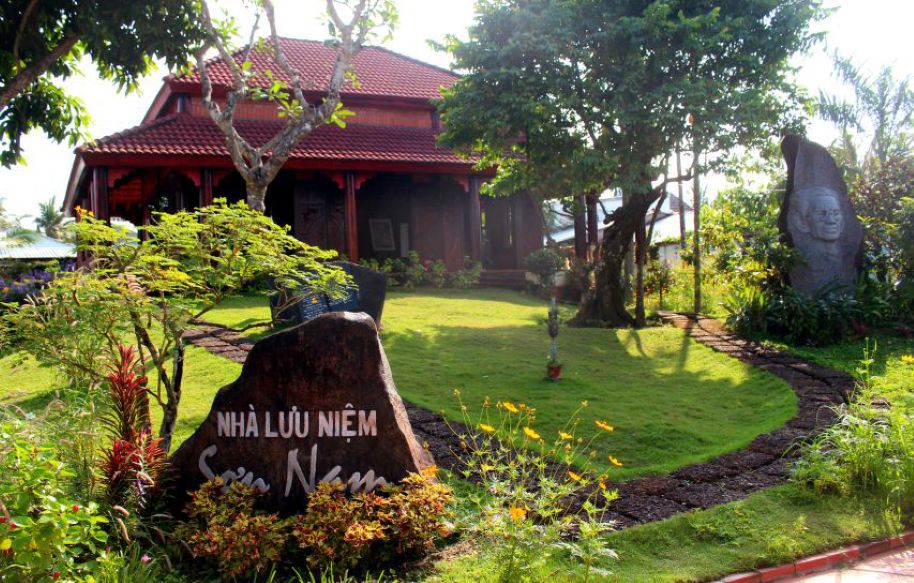
My father was born and raised in Miet Thu (Rach Gia, old Kien Giang - now An Giang), where houses are often built on high hills to avoid floods. Therefore, the first idea was to create a high foundation for the house," Mr. Nghi said. On that land, a three-compartment tiled house in traditional Southern architecture was built: the middle compartment for worship, one compartment for displaying works and artifacts of the writer, and one compartment for research and criticism works written about him.
The yard space in front of the house is designed like a "memory map". 82 honeycomb stone slabs, symbolizing the writer's lifespan, are connected into a model of Ca Mau peninsula - where he was born.
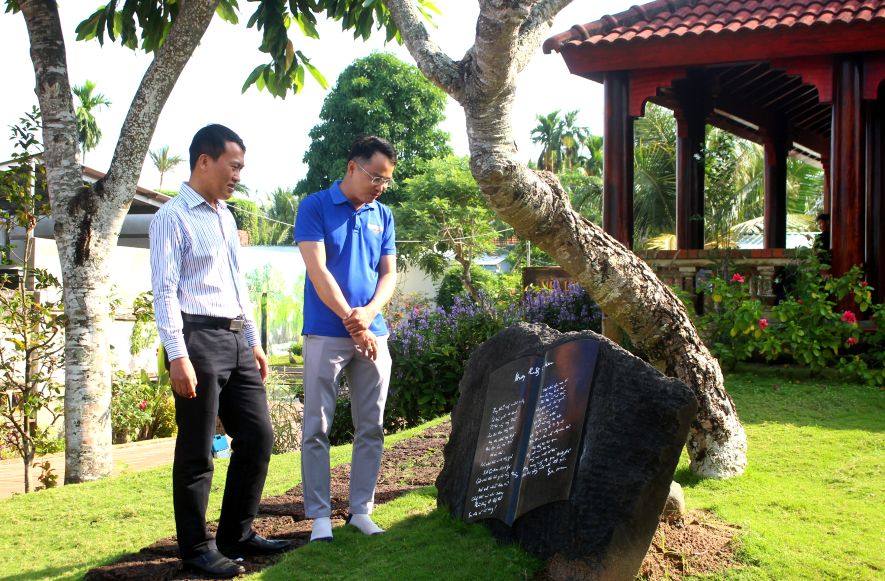
In the area corresponding to Miet Thu, a stone slab is arranged carved with Son Nam handwriting copying a poem from the collection "Ca Mau Forest Fragrance", with verses that many generations of readers remember forever: "How many degrees of wind and dew pass through the streets; Dust tilts its head, remembering the homeland".
On the porch are bamboo, bần, water coconut, sú vẹt, monkey bridge, water lily pond... as a sketch of the ecosystem and cultural space associated with Son Nam's birthplace and writing.
Places that mark filial piety
Many people wonder why writer Son Nam was born in Miet Thu, lived and composed for more than half his life in Saigon - Ho Chi Minh City, but after his death had a Memorial House in My Tho. The answer lies in the filial piety of his daughter and first son-in-law - Ms. Dao Thuy Hang and Mr. Tran Duc Nghi - for their father who had a life full of ups and downs in a period of historical upheaval.
After 1954, writer Son Nam went to Saigon to work as a journalist and write. The "resistance history" caused him to be monitored and harassed, and his family life was always in a state of insecurity. His wife had to take her children elsewhere to avoid being implicated. There was a period when her children did not dare to bear their father's surname, and the couple was often separated.
In that situation, My Tho - not too close but not too far from Saigon - became a suitable shelter for the family. His wife came here to teach, and his children started a career. My Tho gradually became a "second hometown", where his wife and children settled down so that he could feel secure in making a living and continue to write in Saigon city.
Therefore, for Ms. Hang, writer Son Nam is not only a father with a fate of many hardships, but also a writer and researcher whom she wholeheartedly respects. These two feelings - blood ties and intellectual admiration - have motivated her to choose a special way of filial piety: to build a space to show gratitude to her father and for him to continue "living" with readers.
Both loving my wife and respecting my father-in-law's literary life, so when I heard my wife express her intention, I agreed and accepted the task of directly constructing the whole package," Mr. Tran Duc Nghi recalled.
After collecting land from many households to create ground on the banks of the Bao Dinh canal, the couple spent a lot of effort and money on the Memorial House project.
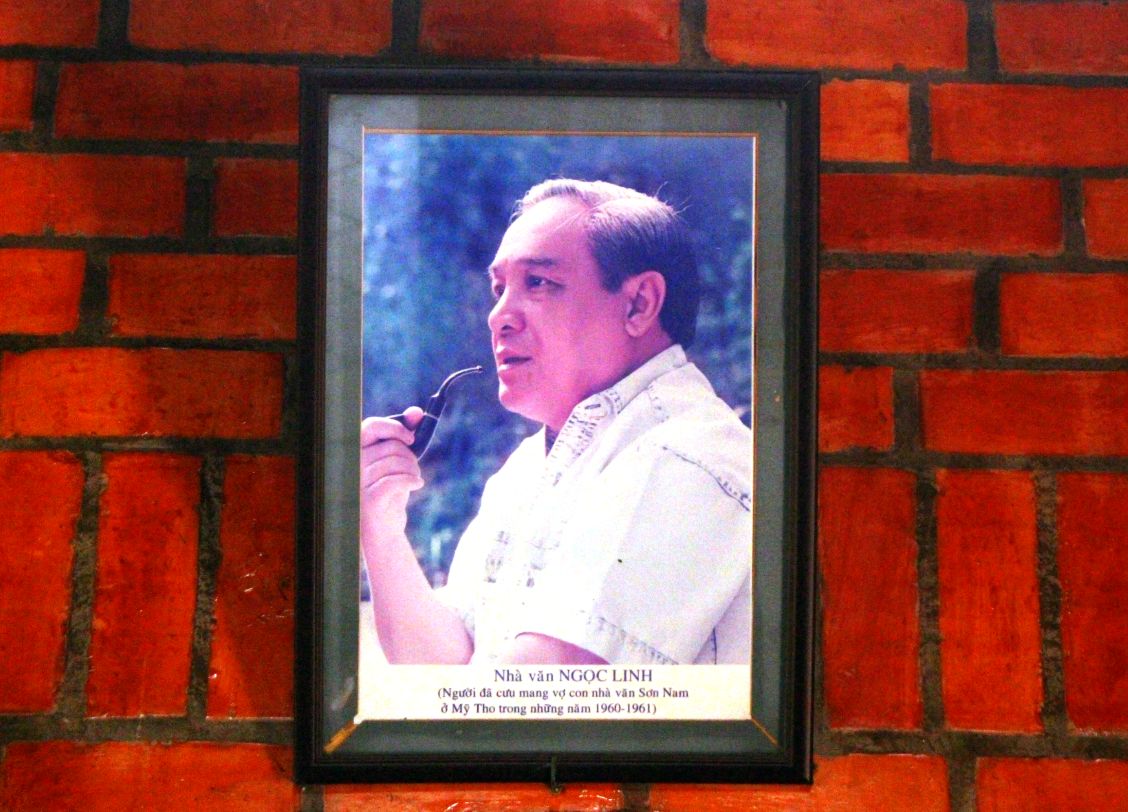
Inside, in addition to the solemn worship space, there are also hundreds of books, newspapers, and everyday memorabilia of writer Son Nam. In particular, he and his wife dedicate a solemn space to preserve images and memorabilia of people who have helped and been attached to their father in their profession and life. They are poet Kien Giang, writer Ngoc Linh, and many other benefactors, including educator Dinh Cong Tam - who was respectfully recognized by Son Nam with the touching words: "He loves me more than I love myself".
From a project originating from personal feelings, Son Nam Memorial House gradually became an important cultural address. This place not only preserves the "ecosystem" of a great writer, but also contains a beautiful story about filial piety. From the filial piety of a son, a spiritual legacy has been passed on to the community. There, filial piety does not close within the family scope, but is expanded into the responsibility of preserving memories and preserving heritage - so that literature and humanity continue to accompany today's and future generations.


