
In Dong Thap, many tourist destinations are invested and effectively exploited, becoming attractive "check-in points" for tourists. Rural tourism not only attracts visitors but also opens up many job opportunities for local people, especially workers in rural areas.
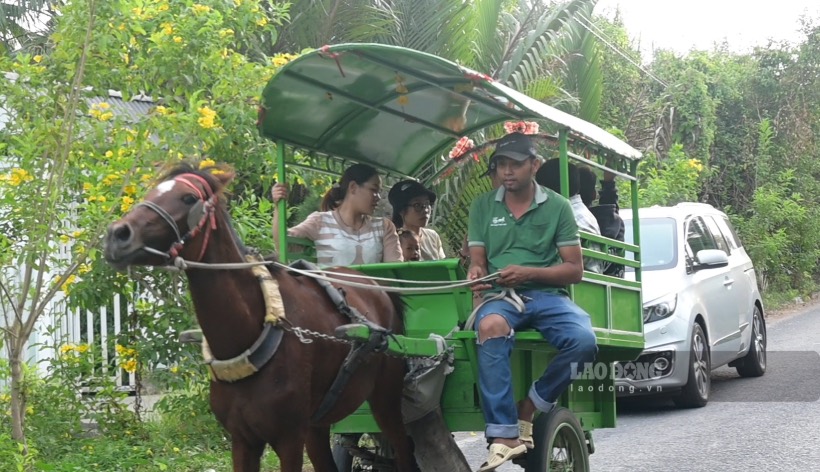
Mr. Pham Chi Binh (Giao Long commune, Vinh Long province) said that about 30 years ago, travel businesses recognized the attraction from the pristine and rustic beauty of the islet, so they came to him to rent cars to serve tourists.
Initially, he took on "two roles": When there were customers, he drove to the islet to serve tourism; when there were few customers, he returned to Ben Tre (now Vinh Long) to transport goods for hire.
When the number of customers became more and more stable, he and his brothers in the group decided to completely quit the job of carrying heavy goods, focusing on tourism in Thoi Son islet (Dong Thap province) until now.
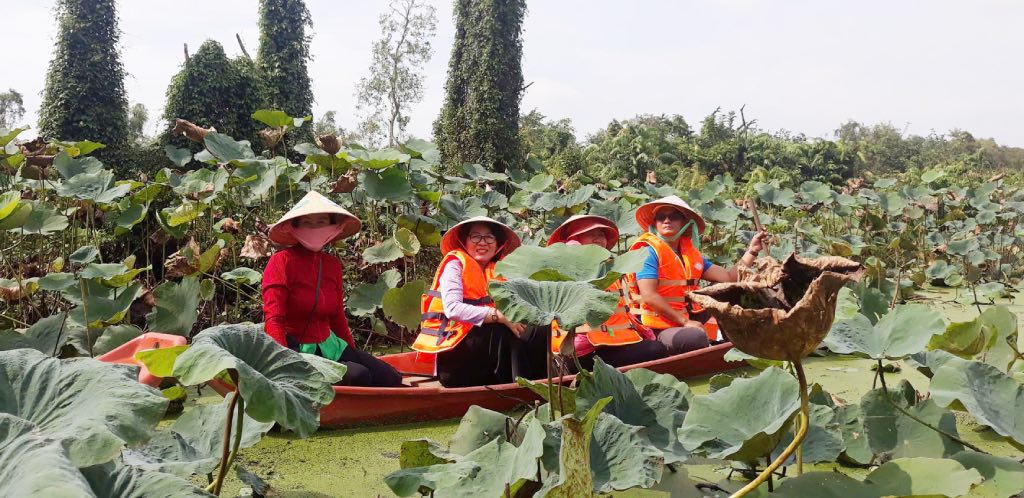
Mr. Le Thanh Tuan - Director of the Dong Thap Muoi Nature Reserve site - said that from the beginning, the unit determined that tourism development must be associated with the indigenous community.
“We not only exploit the landscape, but also support people to develop typical products from pineapple, thereby creating added value for the locality,” Mr. Tuan said.
According to Mr. Tuan, when tourism develops, it is important to create jobs for local people, instead of completely relying on external labor sources. The unit focuses on recruiting and training skills for people, from waiters, boat drivers, guides to souvenir production. Currently, the enterprise is creating jobs for nearly 10 local workers.
Mentioning the difficulty in connecting rural workers with tourism activities, Mr. Tuan frankly said that the biggest challenge is raising awareness and skills for workers.
Some workers are familiar with farming, so they are still confused in communication and serving customers. We coordinate with local authorities to organize training classes on communication skills, basic foreign languages, food safety... to improve service quality. This is a long-term investment for both businesses and the community," Mr. Tuan shared.
According to Mr. Le Thanh Tuan, tourism development must go hand in hand with job creation and preservation of indigenous culture. Currently, the unit is coordinating with travel businesses and functional agencies to connect markets, promote and attract tourists.
Creating jobs is not only creating livelihoods in the short term, but also building a local tourism ecosystem. When people understand and see the benefits of tourism, they will become a force to preserve, develop and promote destinations," Mr. Tuan emphasized.
After the merger, Dong Thap province has over 150 tourist destinations associated with agricultural, community and craft village activities, ecotourism stretching from the Cambodian border to the Go Cong sea border; of which 32 tourist destinations are recognized by the Provincial People's Committee as tourist destinations according to the 2017 Tourism Law, 14 OCOP products. The whole province has 91 travel businesses, more than 400 tour guides, 455 accommodation establishments with over 7,900 rooms (59 hotels are ranked from 1-3 stars, 396 accommodation establishments are eligible for business). There are also 295 historical - cultural relics and scenic spots ranked in the area, including 5 special national relics, 33 national relics and 257 provincial-level relics; many pagodas and temples have become unique spiritual tourist destinations.


