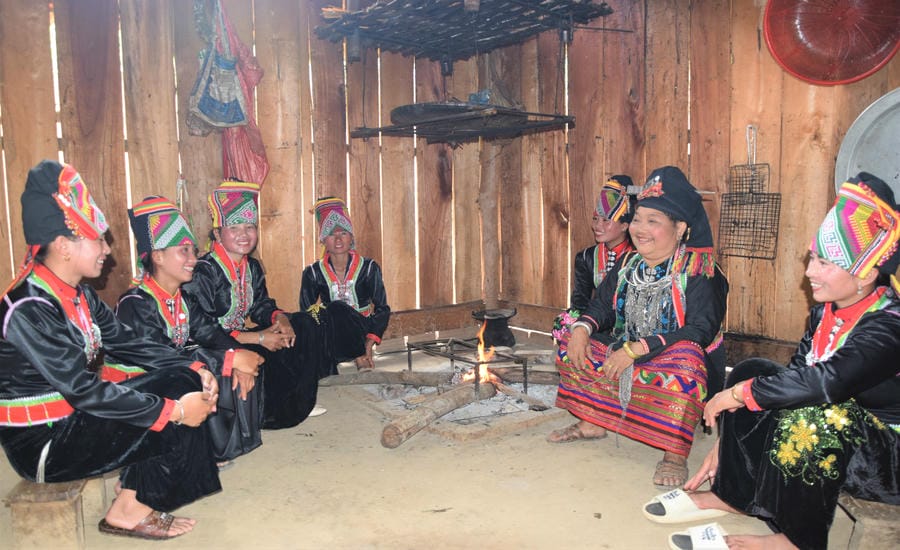
When the song tells the story of Kho Mu village
In Son La, the Kho Mu people live in many localities such as: Sop Cop, Song Ma, Yen Chau, Mai Son, Muong La, Quynh Nhai, Thuan Chau. Through many generations, the community still preserves its own cultural values, in which folk songs and folk dances are closely associated with labor, living, love and belief.
Without elaborate stage, the song can be sung in stilt houses, village yards or during festivals. Through lyrics, the Khơ Mú people tell stories of life, express their feelings for family, community, nature and send their wishes for a peaceful and prosperous life.
Mentioning Kho Mu folk songs is mentioning "hát Tơm" - one of the typical tunes mainly passed down orally. People sing before, others listen, remember and then continue to pass it on. Over time, "Tơm" has become a part of the spiritual life of the community.
Tom has many shades. Sometimes it is a romantic love confession, sometimes it tells family and village stories, praising love between couples, brotherhood, and kinship. On weddings, housewarmings, New Year celebrations, or community activities, Kho Mu boys and girls can sing back-and-forth, impromptu.
Familiar images such as mountains and forests, rice fields, villages and daily life become the material for the song. The lyrics are not fussy but rich in images, helping listeners feel how the Kho Mu people look at their homeland, people and life.
Meritorious Artist Vi Thi Oi in Huoi Lau village, Sop Cop commune said that Kho Mu folk songs are associated with daily life, rituals and beliefs; each melody has its own circumstances of use and expression.
According to artisans, besides love duet, wedding, and housewarming songs, there are also melodies used in rituals, expressing gratitude to ancestors and faith in nature. Some artisans also compose new lyrics based on folk melodies, bringing stories about homeland, villages and today's life into the lyrics.
The lyrics often blend with the sound of khen bè, flute, drum, gong and musical instruments made from bamboo and rattan. The rustic, poignant sound of khen lá contributes to creating a unique color for the performance space. When lyrics and music blend together, folk art is not only heard but also felt by the movements of the body.
Dance coming from the rhythm of working life
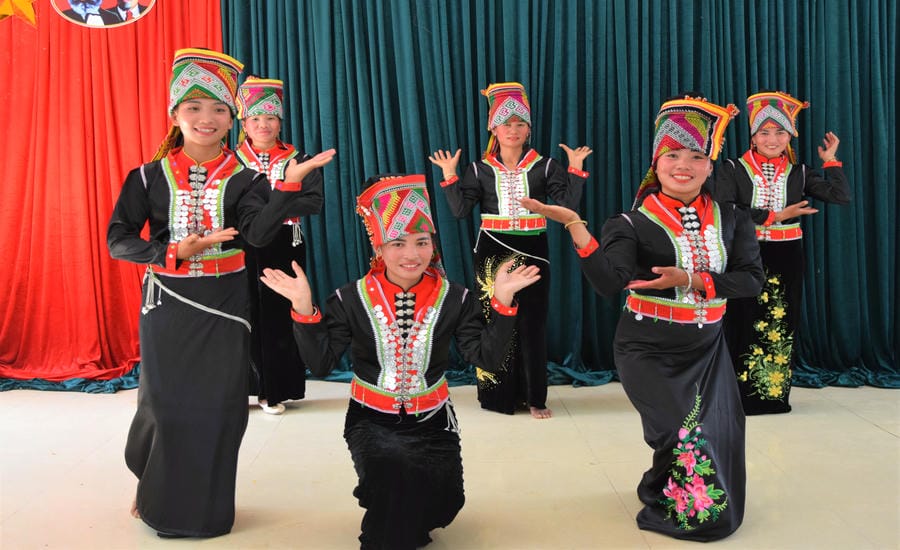
From the lyrics and music, dances are formed and continue to be passed down in the community. One of the typical dances preserved by the Kho Mu people in Son La is Au Eo, also known as Ver Guong.
The dance simulates familiar labor movements such as harvesting rice, planting corn, picking vegetables, scooping shrimp, washing clothes. Through the hands, feet and movements of the dancer, everyday tasks become soft and rhythmic.
In Huoi Oi village, Muong Hung commune, Au Eo often appears during holidays, Tet and cultural exchanges. Dancers shake their hips, bend their waists, bend their heels, turn around to the sound of drums, khen and bamboo and rattan instruments. The movements follow each other to form a rhythm that is both bustling and flexible.
At Ket Doan village, Yen Chau commune, Au Eo is also preserved by people through folk art troupes. The dance can be performed in stilt houses, vacant land or right on rice fields after harvest. The performance space is simple but it is this closeness that helps the dance retain the breath of life.
When the music starts, the circles of people follow each other, moving in rhythm. The dancer not only performs the movement but also recreates a part of the community's labor memory. From the rice harvesting movement to the heel-pulling rhythm, from the arms to the waist movement, each detail evokes the life associated with fields and villages.
The beauty of Au Eo lies in its naturalness. The dance is not separated from life but originates from the work and daily life of the people. Therefore, when performed at festivals or cultural exchanges, Au Eo not only has entertainment value but also helps viewers visualize the life and behavior with nature of the Kho Mu people.
Transmission so that the song can still be heard
Keeping a song or dance is not only about remembering the lyrics and knowing the movements, but also about understanding the meaning and cultural space. While many artisans who understand Kho Mu folk songs are old, a part of young people have little opportunity to practice, and the risk of fading still exists.
Many artisans in Son La are becoming a bridge between generations. Meritorious Artist Vi Thi Oi has many years of teaching folk songs, dances and folk musical instruments to young people, helping learners understand how to sing, dance and the circumstances of using each melody.
In recent years, the Son La Department of Culture, Sports and Tourism has coordinated with localities to organize classes to teach Kho Mu folk songs. In 2024, in Sop Cop, 63 students were instructed to sing "Tom", "Ru", "Ran" to teach their children and grandchildren and songs associated with community life.
Along with teaching classes, folk art troupes in Sop Cop, Song Ma, Yen Chau and many other localities maintain practice, performance, and guidance for young people.
Mr. Nguyen Van Manh - Vice Chairman of Sop Cop Commune People's Committee said that artisans play an important role in preserving and promoting Kho Mu folk songs. Teaching needs to be maintained regularly so that the younger generation understands, practices and continues the values left by their ancestors.
From the song "Tom" to the Au Eo dance round, each sound and movement carries a part of community memory. When young people are still singing and dancing, stories about villages continue to be told and Kho Mu culture is still present in today's life.