
Since feudal times, calligraphy has been associated with Confucianism and the scholarly class. People who write beautifully are not only evaluated in skills, but first and foremost in education and morality. Writing is a way of self-cultivation, cultivating patience, calmness and caution. Calligraphy becomes a measure of personality, a "spiritual face" of people.
Every spring, the image of calligraphers sitting on the street, spreading red paper, studying ink, giving calligraphy at the beginning of the year has become a familiar cultural activity. Asking for calligraphy is not only praying for luck, but also praying for morality - asking for calligraphy to reflect on oneself, to start a new year with good values. The words "Patience", "Heart", "Virtue", "Peace" are not decorations, but reminders throughout the long year.
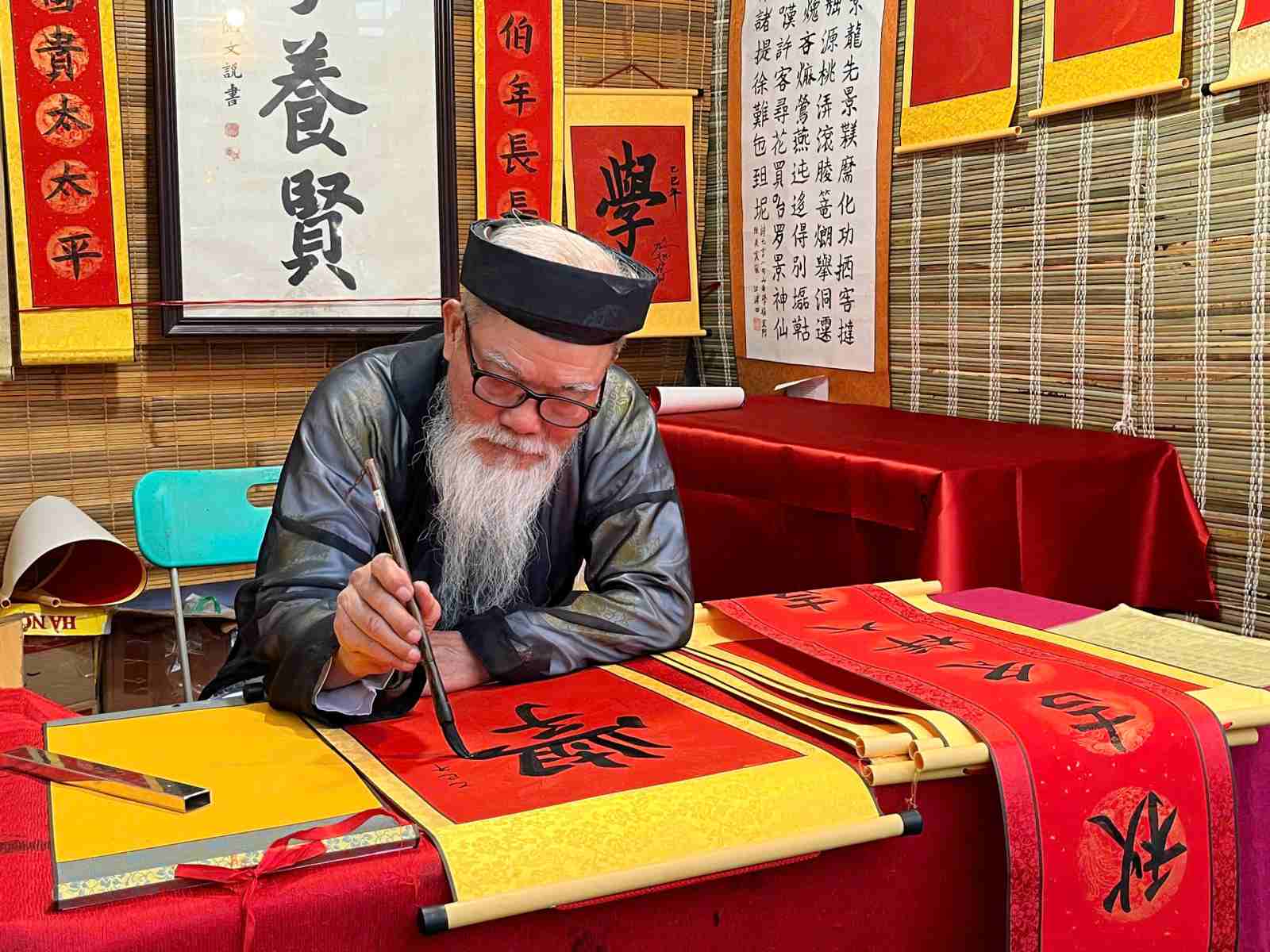
However, along with the decline of Confucianism and social changes, the image of Ong Do gradually receded into nostalgia. Calligraphy from the central position of intellectual life has become a less common cultural practice. However, calligraphy has not disappeared but is seeking to adapt in a new context.
Today, the image of "calligraphers" is no longer confined to traditional appearances. Many young people choose to return to ink and Do paper, creating a generation of "4.0 calligraphers". Mr. Bui Khac Sang is one of such faces. Coming to calligraphy from curiosity when he was young, he gradually pursued it seriously from university and became attached for more than 10 years.
Mr. Bui Khac Sang (pen name Thanh Phong), a young calligrapher, is one of such faces. Not coming to calligraphy through academic paths like the ancient Confucian scholars, he came to calligraphy with curiosity, then gradually became passion and chose to stick with it for a long time.
Calligraphy for me is not nostalgia, but a way to understand culture and myself more deeply," he shared.
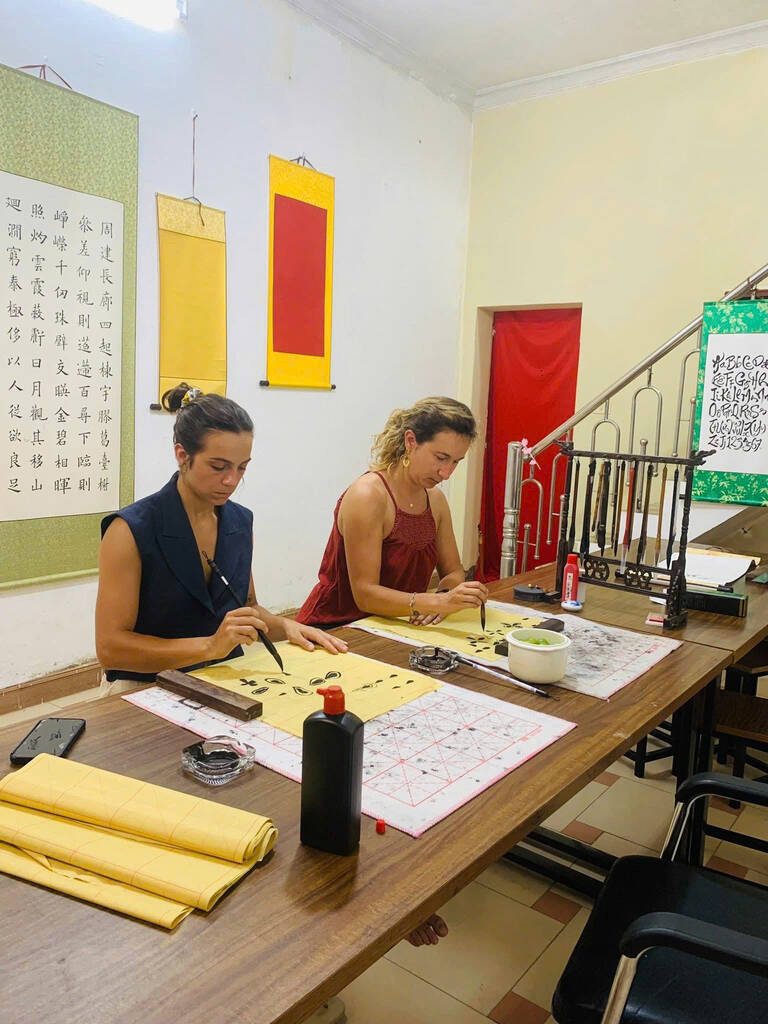
To pursue calligraphy seriously, the writer not only needs skillful hands, but also needs to understand the letters, understand the meaning and understand the cultural spirit hidden behind each letter. Mr. Sang spends many years researching Han-Nom script, stylized Quoc Ngu script, and also learns about traditional materials such as Do paper, Chinese ink, and felt pens. There are days when dozens of pages of paper are just for practicing a letter shape, there are long periods of time repeating the same movement, but that repetition helps him touch the spirit of the letter, instead of just stopping at the form.
Not closing himself in the traditional space, Mr. Bui Khac Sang proactively brings calligraphy into life through experiential activities, exhibitions, cultural spaces and digital platforms. He hopes that young people will no longer feel that calligraphy is something distant and difficult to access, but become a natural part of spiritual life.
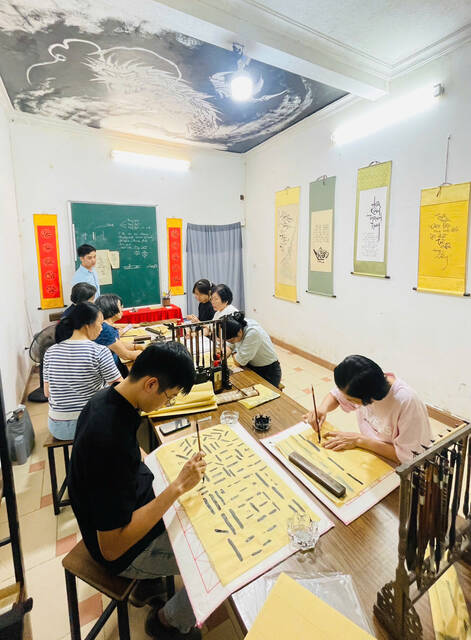
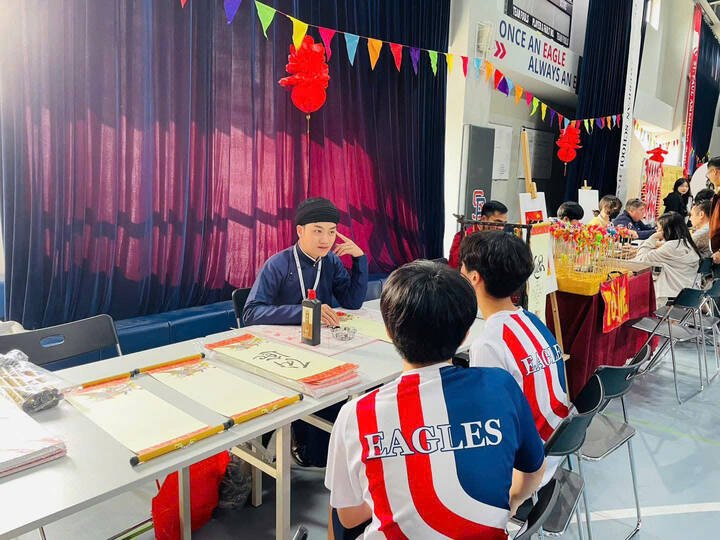
According to him, when calligraphy finds common ground with today's public, traditional values will not be "framed" in the past, but will continue to be nurtured and spread.
Looking back at the journey of Vietnamese calligraphy, it can be seen that each historical period sets different requirements for those who keep the profession. If ancient calligraphers were calligraphers in a society that values calligraphy, then young calligraphers today are calligraphers in a society with many upheavals.
Preserving calligraphy is not only preserving form, but also preserving spirit: respect for words, patience, introversion in an increasingly noisy world. When those values are still nurtured, calligraphy still has a place in modern life.
Perhaps the image of the calligrapher has changed, but the soul of calligraphy is still there, continued by a new generation, with new concerns, new ways of doing things, but with a common desire: to keep Vietnamese script not only existing, but also living in today's life.


