
Historical milestone
Located at No. 12 Huong Vien Street, Dong Nhan Ward, Hanoi. The National Special Relic Complex of Temple - Pagoda - Dinh Hai Ba Trung is a complex of spiritual architecture with a long history. According to historical documents at the relic, Hai Ba Temple was built in 1142 under the Ly Anh Tong dynasty on the banks of the Red River, expressing the deep gratitude of the people to the 2 national heroines.
In 1819, under the Gia Long dynasty, due to riverbank erosion, the people of Dong Nhan village relocated and rebuilt the relic complex at its current location. With special historical and cultural value, the relic was ranked as a National Relic in 1962 and recognized as a Special National Relic in 2019.
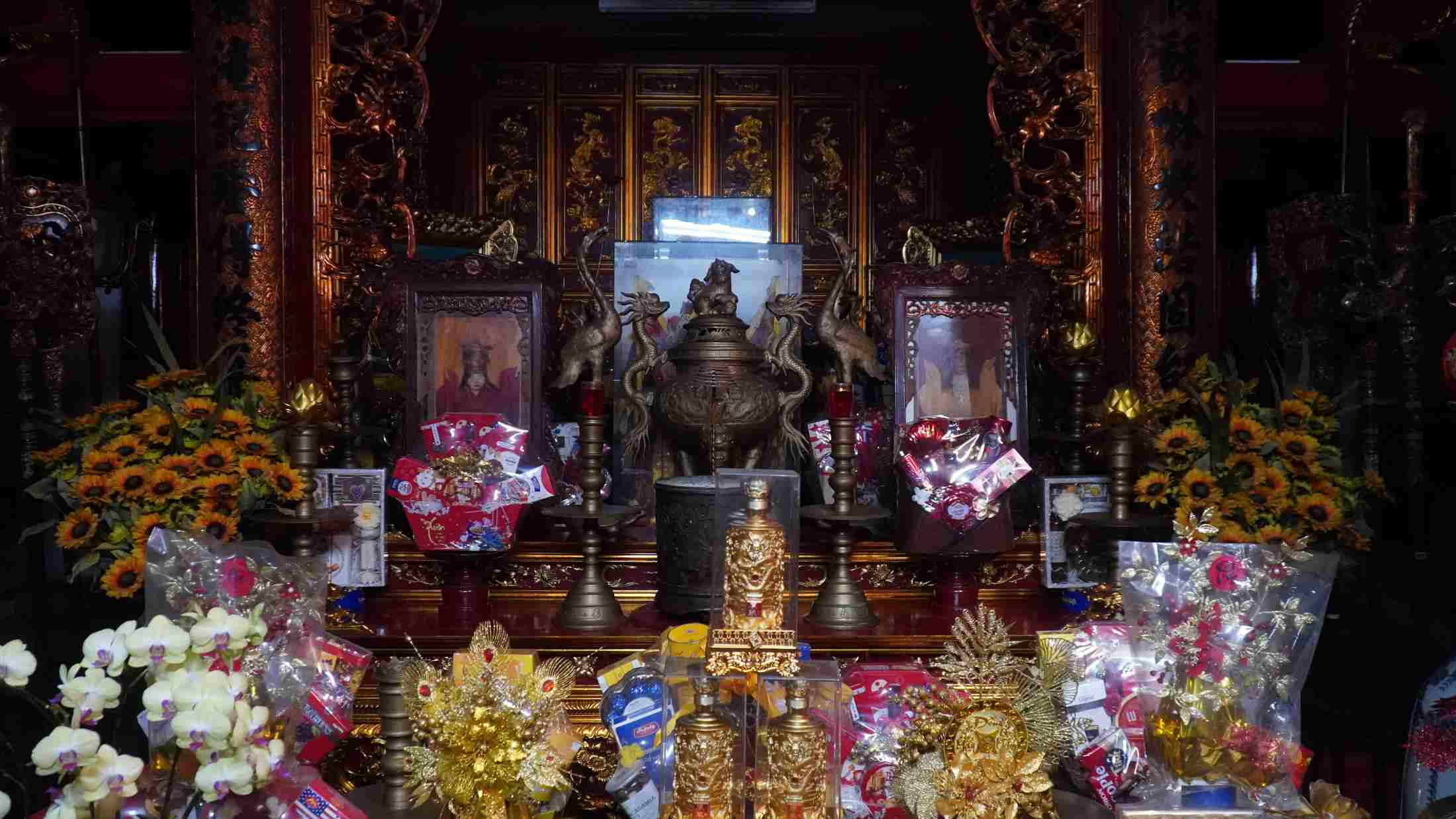
Planned according to a harmonious complex structure, the National Special Relic Complex of Temple - Pagoda - Dinh Hai Ba Trung includes 3 main items: Temple of Hai Ba Trung, Vien Minh Pagoda and Dong Nhan communal house. The temple is built according to the "internal and foreign" layout, is a sacred space to worship Hai Ba and 6 loyal female generals.
On the left side of the temple, Vien Minh Pagoda has a structure in the shape of the word "Cong", preserving many ancient statues, turtles wearing steles and a system of Dharma objects imbued with Nguyen Dynasty artistic imprints. On the right side is Dong Nhan communal house - a place to worship guardian gods, closely associated with the religious life of residents in the Red River region.
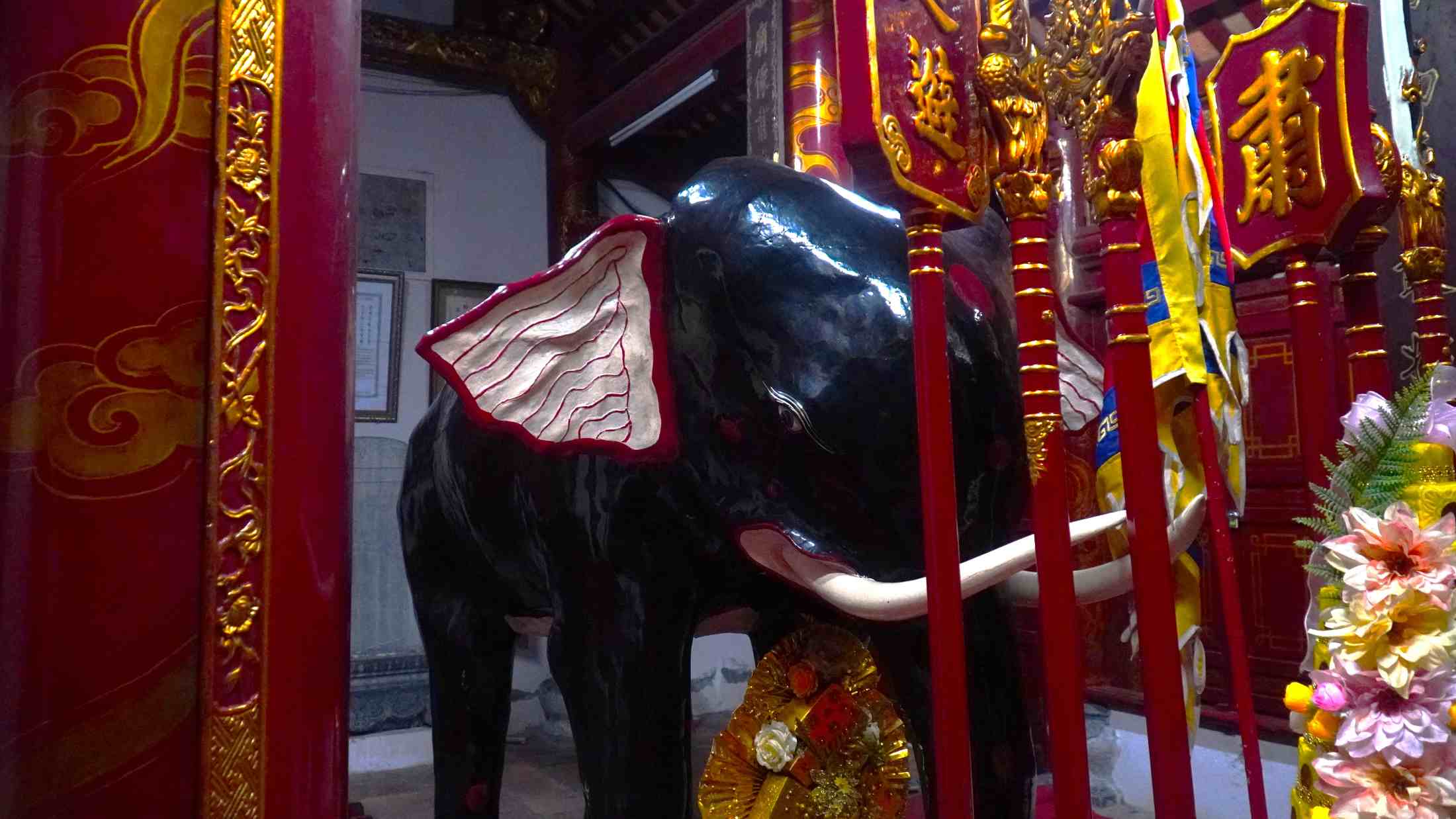
A special highlight in the inner sanctuary is the elaborately handcrafted elephant statues, symbolizing spirit and strength. The entire project uses precious wood, ancient dragon scale tiled roofs and a solid system of pillars, harmoniously combined with the garden and semi-circular lake, creating a solemn and tranquil space amidst the vibrant pace of life in the Capital.
Historical lesson
According to the legend recorded at the temple, in the early years of the Common Era, our country fell into the harsh domination of the Han Dynasty. The Northern government implemented many policies of heavy exploitation, hoarding resources, suppressing heroes and seeking ways to assimilate indigenous culture. In that context, in the Me Linh region (now belonging to Hanoi), the two sisters Trung Trac and Trung Nhi - daughters of a Lac General - nurtured a great ambition to regain sovereignty.
In the spring of the 40s, at the mouth of the Hat River, Hai Ba Trung raised the flag of uprising. Trung Trac's famous oath clearly expressed the goal: Washing the country's resentment, paying off debts to the family and restoring the Hung family's foundation. The uprising flag quickly received strong response from people everywhere.
The image of Hai Ba Trung riding an elephant is still passed down to this day as an image - indomitable and resilient women. Not only that, the elephant is also one of the effective "assistants" of the Hai Ba and is worshiped by the people as a symbol of great significance for protection, authority and loyalty.
Every place worshiping Hai Ba Trung is always associated with the stone elephant guarding outside. People often believe that every time they come to offer incense and offerings, they will rub their hands on the elephant's head as a prayer for good luck, health, stability and protection for their children.
One of the special points of the uprising is the presence of talented female generals. They not only participated in combat but also played an important commanding role. At the temple, the names of the female generals were praised, spreading the spirit of resilient fighting through their glorious feats.
Typical is Le Chan - the force organizer in the An Bien region, who was later assigned to guard the East Sea region. Bat Nan recruited insurgents in Tien La, making many feats before heroically sacrificing. Saint Thien is popularly revered as the Lady of White Cranes, who contributed to building defenses and commanding combat in the midlands of the North. Besides, there are also female generals such as Le Thi Hoa, A Chang, Quy Lan... Each person has a different situation, but all share a common patriotic heart.
After the victory, Trung Trac ascended the throne, proclaimed herself Trung Nu Vuong, and established the capital in Me Linh. This is the first time in Vietnamese history that a woman has headed the country, establishing an independent government after many years of domination. This event is not only of military significance but also has profound spiritual value. It proves that women can completely take on the great responsibility of leading the nation in the most difficult moment.
Affirming the strength and position of Vietnamese women
The Hai Ba Trung uprising was the first milestone in the nation's history of resisting foreign invaders. More importantly, this is the clearest proof of the spirit of "even when enemy comes to women's homes, they fight" - a saying expressing the resilient tradition of Vietnamese women throughout historical times.
Today, the image of Hai Ba Trung has become a symbol of patriotism, the will for independence and the desire for freedom. Many temples dedicated to Hai Ba and female generals are built throughout the North as a way of gratitude and reminding later generations of a glorious period.
Time passes, the fire of the uprising of yesteryear still burns brightly in the Vietnamese people's minds. The victory of the Trung Sisters is not only a glorious page in history, but also a strong affirmation that Vietnamese women, in any era, are always ready to stand up to protect the country, maintain independence and contribute to national history.


