Sir, after more than a decade of organization, how has the Ho Chi Minh City Ao Dai Festival contributed to changing the public's perception of Ao Dai?
- After more than a decade, this year the Ho Chi Minh City Ao Dai Festival has officially entered its 12th organization. The first thing we feel most clearly is that the festival has contributed to reviving the traditional beauty of Vietnamese Ao Dai.
It is encouraging that the community's response is increasingly widespread, from localities to organizations and businesses of all ages participating.
For example, just recently, when working with Dong Hung Thuan ward, I learned that on the morning of March 8th, the ward will organize a joint ao dai performance with a scale of about 1,200 women in the area. Such self-reliant activities from the grassroots level show that the spread of the festival is very strong.
Not only domestic people, international tourists are also particularly interested. Many people when coming to the city have bought and worn ao dai and expressed their desire to return to Ho Chi Minh City in March every year to immerse themselves in this festival atmosphere.
When building the Ao Dai Festival into an annual tourism event, what goals does the city set in positioning this as a separate cultural brand, sir?
- Our goal is not only to introduce the traditional beauty of Ao Dai. Through this, the city wants to promote more widely about the culture and people of Ho Chi Minh City in particular, and Vietnamese people in general.
When witnessing thousands of people wearing ao dai on the streets, we will see a very different face of Ho Chi Minh City. A city that is inherently always dynamic and modern, but in those moments becomes gentler and softer.
We hope that through the festival, we will not only promote culture but also introduce a friendly and compassionate city image to tourists.
The Ao Dai Festival is an opportunity to promote destinations, stimulate tourism demand and attract investment, contributing to helping the city develop more strongly in the new period.
The theme "Golden Silk - Weaving Aspiration" is associated with many historical milestones of the city. Can you share more about this message?
- The phrase "Golden Silk" evokes history and precious traditional values. Meanwhile, "aspiration" is the spirit of rising up of the Vietnamese nation in general and the people of Ho Chi Minh City in particular.
Through the festival, we want to recall historical values, and at the same time arouse the spirit of joining hands to enter a new era - an era of national rise with many new development opportunities.
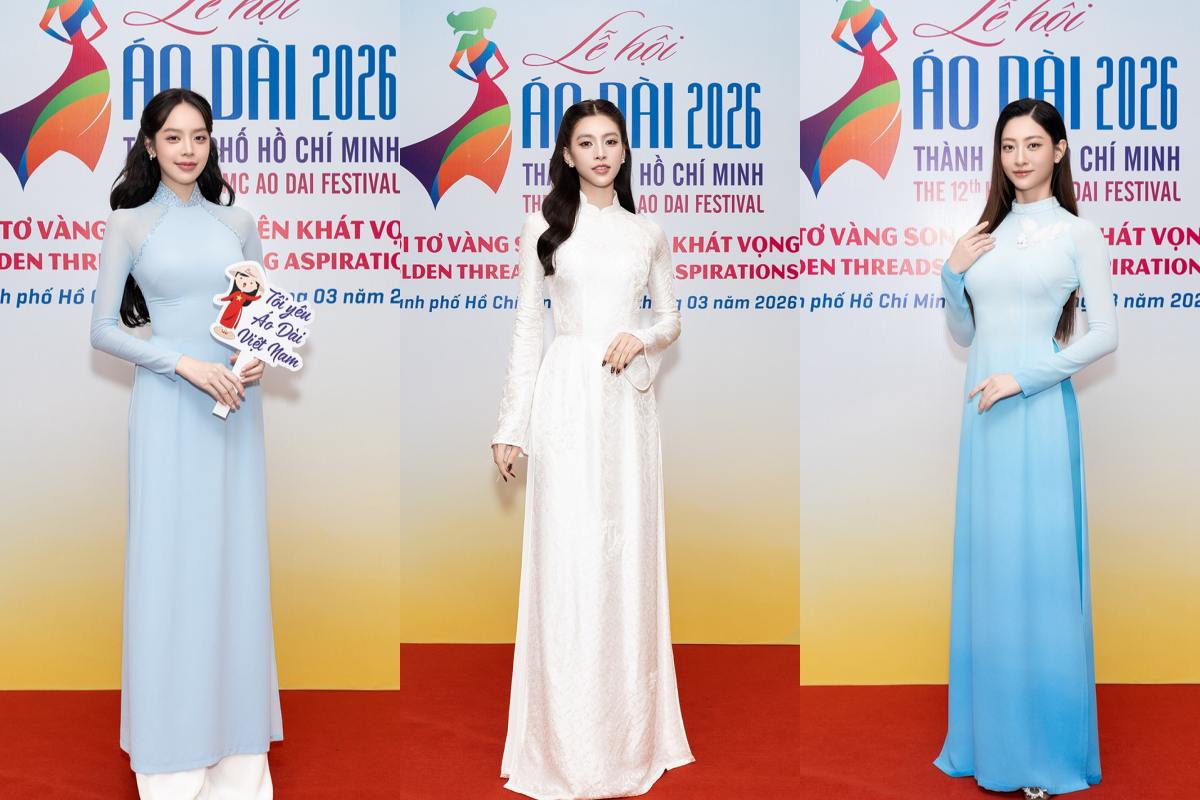
What is the specific meaning of the synchronized performance with thousands of participants right in the city center, sir?
- This activity has three key meanings: First, reviewing the traditional beauty of the ao dai. Second, educating the young generation, helping them better understand the cultural values left by their ancestors. And third, introducing the image of Vietnamese culture to the world.
This year, the festival has more than 50,000 people registered to participate in the performance. As a child of Ho Chi Minh City and Vietnam, I feel very proud. When the gentle ao dai appears everywhere, from the center to districts, wards, communes, and cities, it really becomes much lighter and friendlier.
The festival gathers hundreds of designers and many collections from all over. What do you expect from the event's role for the ao dai fashion industry and the city's cultural industry?
- As the economic - cultural - tourism center of the country, Ho Chi Minh City has the responsibility to contribute to the development of cultural industries. Gathering many designers and artists from three regions not only enriches festivals but also creates space for the ao dai fashion industry to develop.
In particular, Ho Chi Minh City has just been recognized as the first film city in Southeast Asia. This is an important foundation for tourism development, when cinema, fashion and design become attractive stories attracting tourists to explore and feel the creative rhythm of life in the city.
Many people believe that maintaining annual festivals helps Ho Chi Minh City build a sustainable tourism product. What is your opinion on this issue?
- That's right. The Ao Dai Festival is not only a cultural event but also creates a multi-industry economic spillover effect: from food services, accommodation, entertainment to trade and creative industry. Through a series of activities throughout March, the festival contributes to stimulating consumer demand and increasing service revenue.
Many experts believe that the Ao Dai Festival has the potential to become a typical cultural tourism product of Ho Chi Minh City. This is an inevitable trend for developing tourism based on indigenous cultural values, towards long-term sustainability.
We hope that in the future, every time we mention March, tourists will immediately think of Ho Chi Minh City to come and experience and immerse themselves in the unique cultural atmosphere of the Ao Dai Festival.