
On March 28, in Cua Lo ward (Nghe An province), the Mai Bang Temple Festival officially opened with many unique activities, imbued with the cultural identity of coastal fishermen.
The festival is held annually on February 12th and May 3rd of the lunar calendar. Among them, February 12th has special meaning, being both the village establishment day and the fishing festival of fishermen, and also the death anniversary of First Lady Che Thang Nguyen Thi Bich Chau. This is an occasion for people to remember their predecessors, praying for a peaceful life and bumper crops.
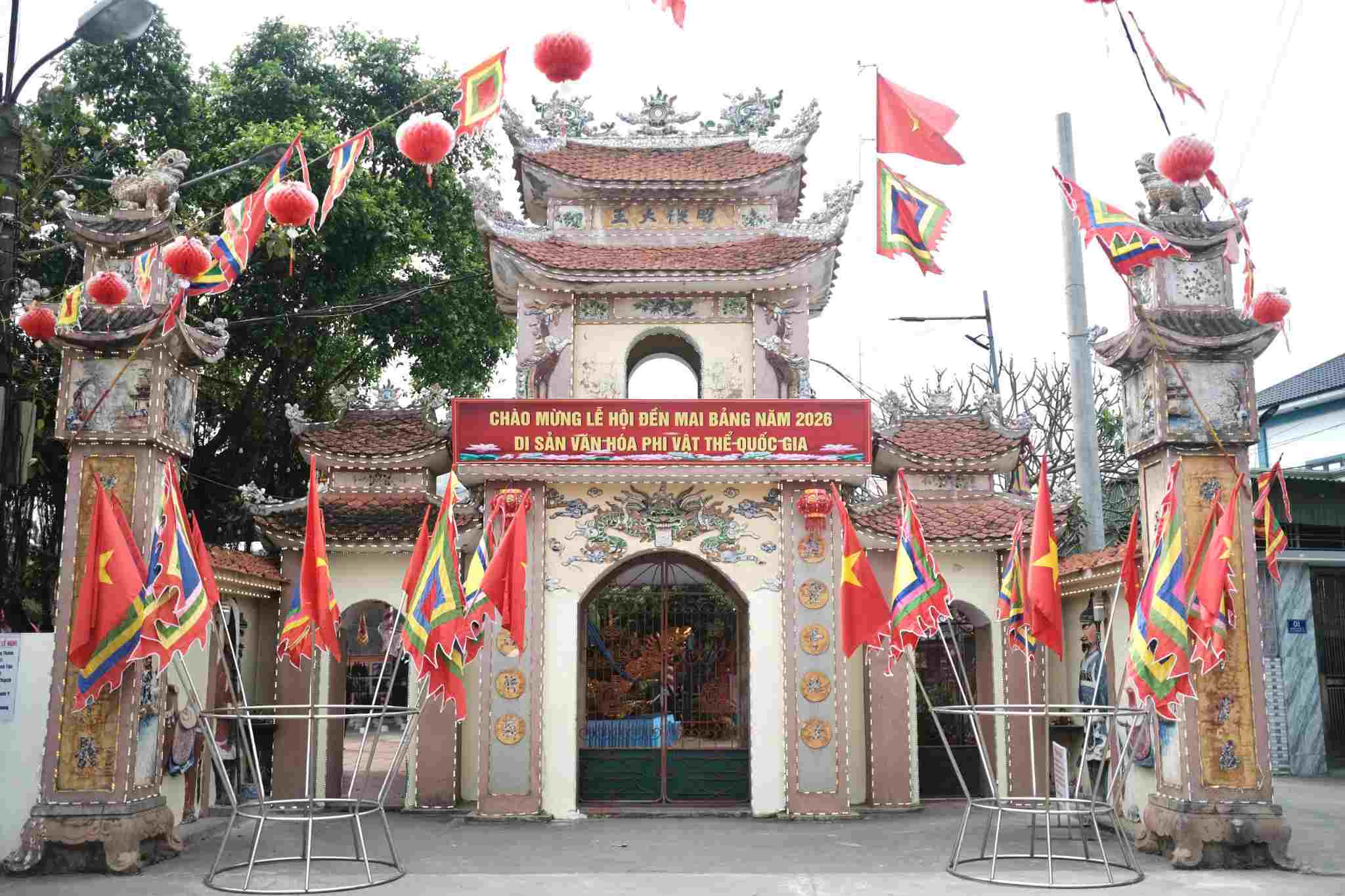
In 2026, the festival takes place in 3 days, from March 28 to 30, with full ceremonial and festival parts organized solemnly and methodically. Traditional rituals such as khai quang, yết cáo, xuất thần, cầu ngư, đại tế... are performed according to customs, showing the cultural depth of coastal residents.
The highlight of the festival is the fish praying ritual with the participation of dozens of boats, creating a sacred space, vividly recreating the spiritual life of Cua Lo fishermen.
Along with that, the large-scale palanquin procession with the participation of a large number of people and organizations, moving through many routes, contributes to honoring traditions and strengthening community cohesion.
The festival part took place sôi nổi with many activities such as kneading, stick pushing, football, volleyball, net knitting competition, grilling fish... along with cultural programs and folk games. In particular, the boat race at Cua Lo port attracted great attention, creating an exciting and bustling atmosphere.
Previously, the Mai Bang Temple Festival was listed as a National Intangible Cultural Heritage, affirming the unique value of the festival. This is also the basis for the locality to continue to preserve and promote heritage associated with tourism and economic development.
Local authorities said they will continue to promote propaganda and raise community awareness in preserving cultural identity. The festival is not only a spiritual cultural activity but also contributes to promoting the local image and promoting sustainable tourism development.


