
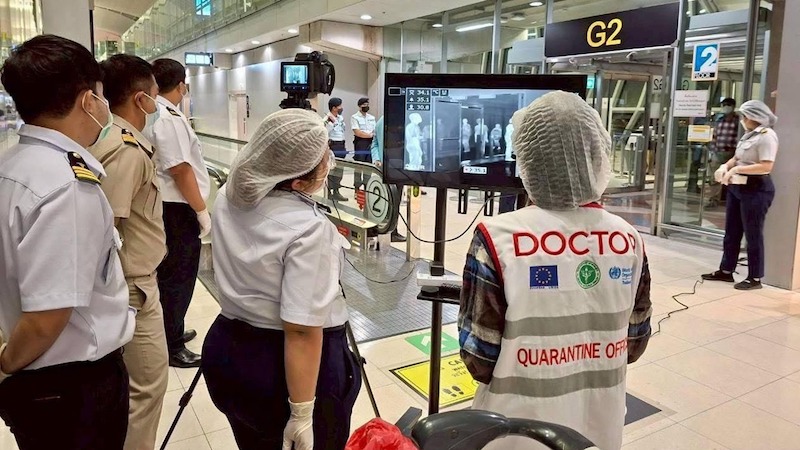
Thailand, Nepal, Hong Kong and Taiwan (China) are the latest destinations to apply preventive measures, after 5 Nipah virus infections were confirmed in West Bengal.
This is a dangerous virus, with a high mortality rate and is classified by the World Health Organization (WHO) as a priority pathogen group due to the high risk of causing an epidemic.
How does the Nipah virus spread?
The Nipah virus is an animal-to-human disease, mainly transmitted from infected fruit bats.
The Nipah virus can spread through food and objects infected with pathogens, and also has the ability to spread from person to person through direct contact with secretions and excretions of patients.
The incubation period of the Nipah virus is usually from 4-14 days. Infected people may experience initial symptoms such as headache, muscle pain, vomiting, sore throat; then progress severely with symptoms of dizziness, drowsiness, consciousness disorders and neurological signs of acute encephalitis.
The mortality rate in previous outbreaks was recorded from 40-75%, depending on the virus strain.
To date, there are no specific vaccines and treatments for Nipah virus disease in both humans and animals.
The Nipah virus was previously recorded in Bangladesh, India, Malaysia, Philippines and Singapore. Bangladesh is the country most heavily affected, with 341 infections and 241 deaths recorded in previous outbreaks.

In Thailand, the Ministry of Health has tightened medical screening at major international airports such as Suvarnabhumi, Don Mueang and Phuket for passengers from West Bengal (India). Control measures are applied based on COVID-19 prevention experience, including body temperature measurement, symptom monitoring and issuing health warning cards to tourists.
Sanitation, disinfection and epidemic prevention preparations are also being strengthened at Phuket airport, in the context that Indian airline Indigo is operating daily direct flights between Kolkata and Phuket.
The Thai park and wildlife management sector also requested increased control at caves and natural tourist attractions, and at the same time advised tourists to comply with the principle: "No hunting, no harvesting, no eating of wild animals".
In Nepal, the government has raised health warnings, strengthened health checks at Tribhuvan International Airport (Kathmandu) and road border gates bordering India. Health checkpoints are set up to detect suspected cases early, in the context of the large number of people crossing the border with West Bengal every day.
Meanwhile, Taiwan (China) is considering classifying the Nipah virus into the group of infectious diseases requiring declaration of the highest level (Level 5) according to local health laws. If approved, all suspected infections will be reported immediately and special control measures will be applied.
Similarly, Hong Kong (China) is strengthening health checks for tourists from India.
Recommendations for tourists before the return of the Nipah virus
As of January 26, 2026, Vietnam has not recorded any cases of Nipah virus infection.
The Ministry of Health said that it has directed localities to strengthen disease surveillance at border gates, medical facilities and in the community, and at the same time prepare response plans. The health sector also continues to closely monitor the developments of the situation, closely coordinate with WHO and related countries to promptly and effectively implement epidemic prevention and control measures.
To proactively prevent Nipah virus disease, the Ministry of Health recommends:
Limit to epidemic areas if not really necessary.
Within 14 days of returning from the epidemic area, if symptoms such as headache, muscle pain, vomiting, sore throat, dizziness, drowsiness, confusion or convulsions appear, it is necessary to go to the nearest medical facility immediately, limit contact with others and fully notify the epidemiological history.
Eat cooked food, drink boiled water; wash and peel fruits before eating; do not use fruits showing signs of being bitten or gnawed by bats or birds; avoid drinking fresh unprocessed tree sap.
Do not come into close contact with fruit bats; wash your hands regularly with soap or antiseptic solution after contacting or slaughtering animals.
Limit direct contact with suspected or infected people; when taking care, use masks, gloves and personal protective gear, and wash hands thoroughly after contact.
Be calm, not panicked, proactively implement disease prevention measures to protect the health of yourself, your family and the community.
In the context of many Asian countries increasing control, tourists are advised to update health information, comply with the guidance of functional agencies and carefully consider travel plans to ensure safety during the upcoming Lunar New Year holiday season.


