
How dangerous is the Nipah virus?
The Ministry of Health has issued guidelines for diagnosis and treatment of Nipah virus disease to unify the nationwide detection, treatment and isolation process. The decision was made when some countries such as India and Bangladesh recorded cases, including deaths in February 2026.
According to the Ministry of Health, the Nipah virus is in the group of group A infectious diseases, with the risk of breaking out into a major epidemic and is on the WHO's priority list. The Nipah virus disease is an acute infectious disease, capable of transmitting from animals to humans and from person to person.
The pathogen caused by the Nipah virus was first discovered in 1998 in Malaysia. Since then, sporadic outbreaks have still appeared in Bangladesh, India, Singapore and the Philippines. Severe forms of the disease often manifest as encephalitis, severe pneumonia, mortality rates range from 40-75% and many cases leave neurological sequelae.
This virus belongs to the family Paramyxoviridae, genus Henipavirus, carrying single-stranded RNA genetic material. The natural host is a fruit bat of the genus Pteropus - a species that can carry the virus but does not develop the disease.
Humans are at risk of Nipah virus infection when in direct contact with carriers, especially pigs during the epidemic in Malaysia, or in contact with secretions such as saliva, urine. The use of contaminated food from bats, such as fern sap or fruit, is also a route of transmission. In addition, close contact with sick people through respiratory droplets or secretions can also cause the virus to spread.
Some strains circulating in Bangladesh and India show higher human-to-human transmission than strains that have appeared in Malaysia. Patients with respiratory symptoms such as cough and shortness of breath are considered a high-risk source of infection.
Nipah virus disease progresses rapidly
The clinical progression of the disease is usually rapid and severe. The incubation period is commonly from 3-14 days, rarely extending to 45 days. Patients may start with high fever, headache, muscle pain, sore throat, vomiting, diarrhea. As the disease progresses, neurological signs such as confusion, disorientation, decreased consciousness, convulsions appear; many cases fall into a deep coma after only 24-48 hours.
In addition to brain damage, patients may experience rapidly progressing respiratory failure, accompanied by multiple organ failure such as heart failure, kidney failure, gastrointestinal bleeding or sepsis.
The mortality rate of the Nipah virus ranges from 40-75%. Among survivors, some may experience recurrent encephalitis after months or years. About 20% of patients leave long-term neurological sequelae such as personality changes, depression, and prolonged fatigue.

Diagnosis of Nipah virus disease
Regarding diagnosis, the suspected case is a person with an epidemiological factor within 14 days and symptoms of fever accompanied by neurological or respiratory disorders appear. Disease identification is based on the detection of viral RNA using Real-time RT-PCR technology or gene sequencing from specimens such as respiratory fluids, blood, urine, cerebrospinal fluid. Serum tests can find IgM antibodies in the early days and IgG after a few weeks.
Virus isolation must be performed in a level 4 biosafety laboratory. Magnetic resonance imaging may show white matter damage under the cerebral cortex, while chest X-rays often record interstitial pneumonia or pulmonary congestion in patients with respiratory failure.
There is no specific treatment or vaccine against the Nipah virus
To date, the world still does not have specific treatments as well as Nipah virus vaccines. Treatment is mainly strict isolation, infection control and intensive resuscitation. Patients are fever-reducing with paracetamol, respiratory support, seizure control, fluid and electrolyte regulation, and multi-organ failure treatment. Antibiotics are only used when there is evidence of infection attached.
Nipah virus prevention recommendations
Vietnam has not yet recorded any cases. However, according to the Ministry of Health, in the context of increasing international travel and trade demand during the Lunar New Year and the early year festival season, the risk of pathogens entering is always present. The health sector recommends strengthening epidemiological surveillance, early detection of suspected cases, control of infection in treatment facilities and limiting contact with high-risk animal sources.
If you plan to travel abroad during the Lunar New Year, people and tourists are not allowed to be subjective. Those planning to go to high-risk areas need to carefully grasp information about infectious diseases and turn preventive behaviors into daily habits.
Basic recommendations include: avoid contact with wild animals; do not eat uncooked meat or food with unclear hygiene conditions; wash hands with soap under running water for at least 30 seconds; limit touching eyes, nose, and mouth.
Tourists need to go to a medical facility for immediate consultation if abnormal symptoms appear during the trip, and notify travel history for medical examination and treatment after returning.
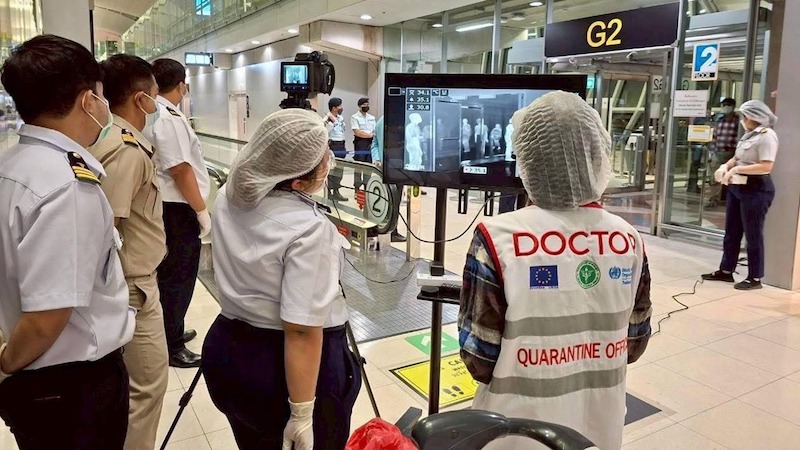
Previously, Thailand, Nepal, Hong Kong and Taiwan (China) were international destinations applying preventive measures, after 5 Nipah virus infections were confirmed in West Bengal.


