
Invitations for "easy work, high salary", private messages with seemingly harmless ideas are becoming a tool for criminals to contact children. When brokers moved from real life to online, the National Children's phone signal station ( signal station 111) was also forced to "transform" to promptly deal with it.
practice brokerage, real danger
According to the Department of Mothers and Children - Ministry of Health, social networks and messaging applications are currently familiar "recruitment channels" for human trafficking crimes. Adults and newly enrolled students are the group that easily becomes targets, due to lack of experience and the need to find additional jobs.
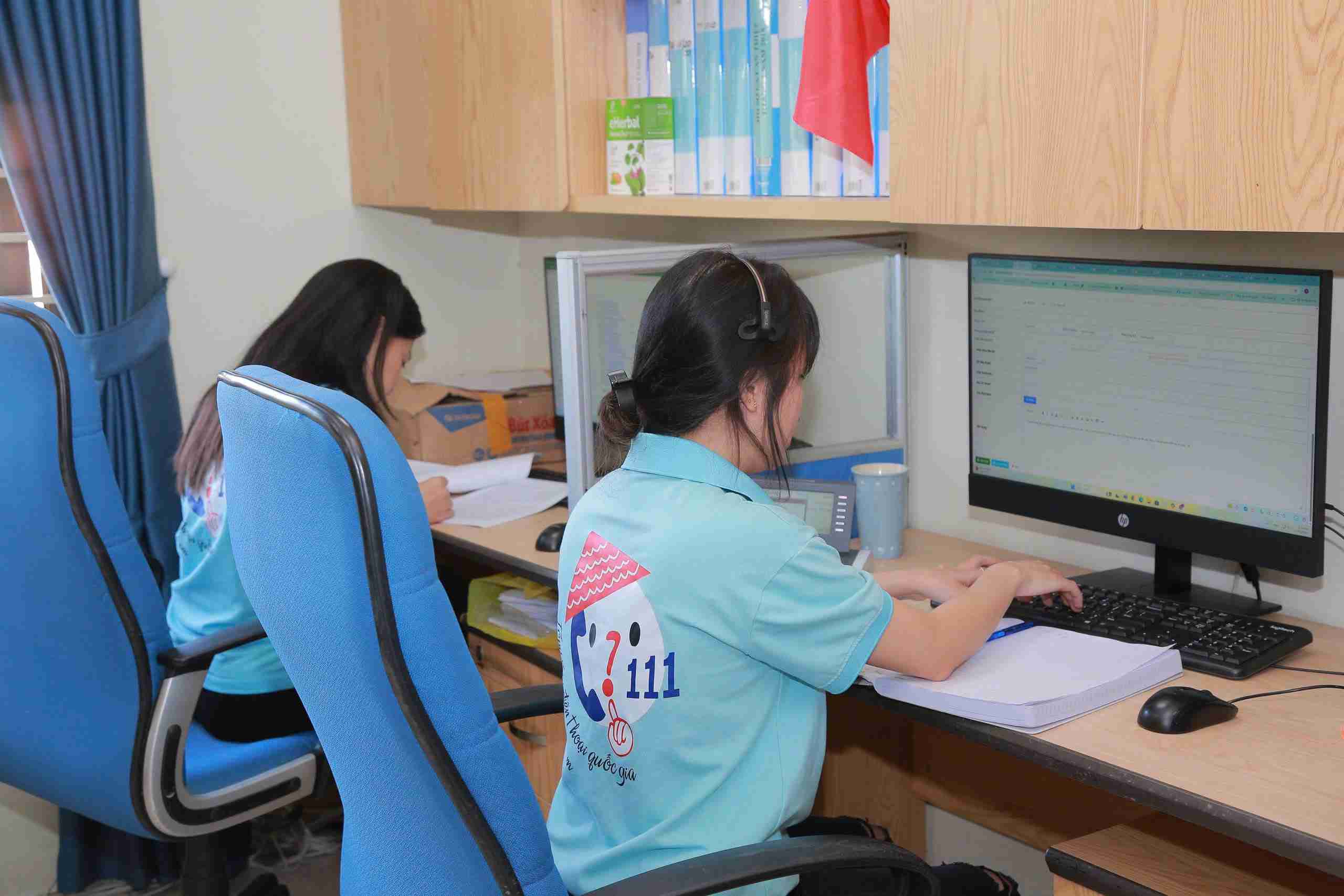
When receiving the report, Call Center 111 not only records the content but also instructes families and children to store digital evidence such as screenshots, messages, links, and the broker's phone number for verification.
Mr. Nguyen Cong Hieu - Director of the Center for Consulting and Communications Services (Department of Mothers and Children, Ministry of Health) - said that recently, hotline 111 has received many calls related to children and students being lured to Cambodia to work illegally.
For cases with signs of crime, the Central Station quickly transferred records and evidence to the police, coordinated with border guards and relevant agencies to prevent them in time.
Children "go ahead" of adults on the Internet
Explaining why the digital environment has become a fertile land for criminals, Mr. Do Duong Hien - an expert from ChildFund Vietnam - said that today's children are far ahead of adults in terms of Internet skills.
Many parents admit that their children are better at technology. But those skills are mainly learned by children online, and rarely come from families or schools, said Mr. Hien.
According to him, the lack of basic knowledge and safety skills makes children susceptible to risky activities, while parents face a difficult problem: loosening or strict control.
For children under 12 years old, management is almost entirely up to their parents. But when children are 13 years old and above, have their own equipment and form personal views, the approach needs to shift from control to dialogue and companionship.
Over control can put children in a state of conflict, making online activities more confidential, and making it even harder for adults to detect risks, Mr. Hien warned.
Digital vaccine and the role of Internet of Things 111
According to experts, a sustainable solution is not only to prevent risks, but to equip children with "digital vaccines" - knowledge and skills to use the Internet safely, responsibly and know how to seek support when needed.
In that ecosystem, hotline 111 acts as a "pill" when the risk exceeds the handling capacity of the family and school. Mr. Do Duong Hien said that with the support of ChildFund, the Center has organized many training courses for a team of safety consultants in the online environment, to improve the capacity to receive and handle cases arising from the digital space.
When criminals use the network to reach children, the protection network is also forced to operate in that space. Call center 111, with a standard process and inter-sectoral connectivity, is becoming an important "bottleneck". However, the final result still depends on the family, school and community proactively reporting the news in a timely manner.
Discovering suspicious recruitment news, what should I do?
1. save evidence: screenshot, link, message.
2. Call 111 or send information via the channels of the National Children's phone Center
Zalo: GOAL 111
Facebook: National Center for Children's Protection
Email: tongdaiquocgia111@gmail.com
3. Do not follow strangers, do not transfer money; inform family and school.


