
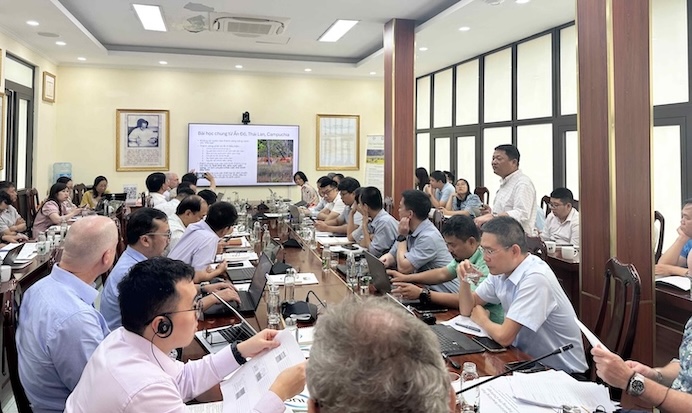
The above information was released at the launching meeting of Building the Vietnam Wilderness Recovery Plan for the period 2027 - 2035, vision 2050 in Hanoi organized by the Forestry and Forest Protection Department under the Ministry of Agriculture & Environment with the companionship of the International Union for Conservation of Nature (IUCN) and Re:wild Organization.
Why is restoring wilderness in Vietnam needed?
According to experts, restoring wilderness is becoming a core approach in modern conservation, not only stopping at restoring populations of endangered animal species but also the entire function of the ecosystem.
Vietnam is aiming to build a policy framework and a National Plan for rewildment in the future. The general objective of the plan is to rewild natural ecosystems and restore populations of wild animals (including endangered, precious, and rare species) in Vietnam in order to conserve biodiversity, establish ecological balance and ensure conditions for sustainable socio-economic development.
Vietnam has achieved forest cover of over 42% and this is a great achievement. However, green coverage alone is not enough. Vietnamese forests are facing "hollow forest syndrome": Forest quality is very low and there are almost no large wildlife species left.
Wildlife plays a very important role in forest ecosystems. About 50%–80% of tropical plant species are completely dependent on wildlife for seed propagation. The decline of wildlife makes forest ecosystems less diverse and reduces the scope and quality of ecosystem services.
Healthy forest ecosystems provide clean water, stabilize soil, reduce flash floods and landslides, and absorb carbon. They also lay the foundation for nature-based tourism and reduce the risk of animal-to-human disease transmission.
Reclaimed nature helps transform "green" forests into "living" forests, bringing economic and ecological benefits for nature and for people.
Rewilding becomes an urgent requirement
Dr. Doan Hoai Nam, Deputy Director of the Department of Forestry and Forest Protection, shared: "Rewilding is no longer an option, but has become an urgent requirement, a scientific and comprehensive approach, not only preserving each individual species but also restoring the entire function and structure of the ecosystem.
Building the Vietnam Wilderness Plan is a direction consistent with the Party's policy on sustainable development and Vietnam's international commitments, especially contributing to the 30x30 Goal in the Kunming-Montreal Global Biodiversity Framework - committing to conserve at least 30% of land and sea area by 2030.
This plan is also built on the reality of biodiversity in Vietnam when the area/quality of natural ecosystems is declining sharply; natural balance is gradually being lost due to chain and food grid breakdowns; and awareness of the role of re-wildness is not sufficient...
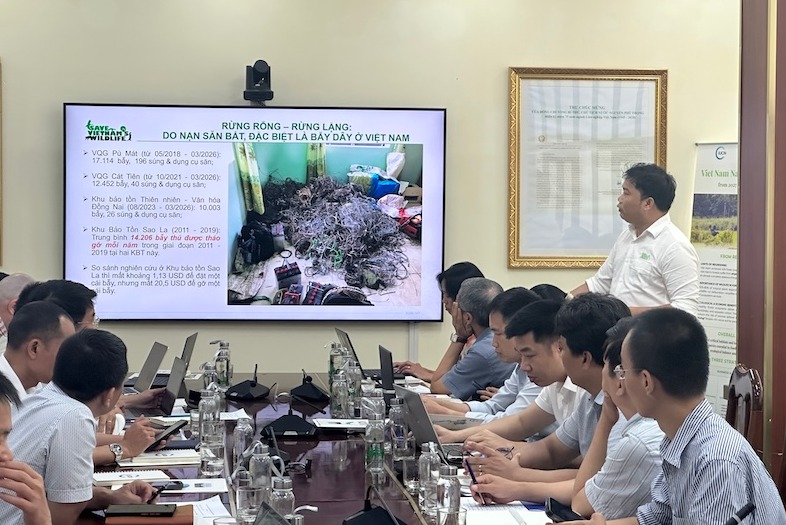
The Department of Forestry and Forest Protection clearly recognizes that this plan is not the product of an agency or unit, but must be the result of consensus, collective wisdom and common commitment from the scientific community, conservation community, universities, national parks, conservation areas, and international partner organizations', Dr. Doan Hoai Nam added.
The meeting will be an opportunity to share international experiences and practical lessons; gather opinions from stakeholders for the draft framework plan for Vietnam's Rewildization; identify priority species and areas; discuss priority activities focusing on legal frameworks, cooperation mechanisms, building semi-wild populations, sustainable livelihood models, benefit sharing mechanisms and applying Nature-Based Solutions to restore ecosystems in selected protected areas,...
An important result after the meeting was the establishment of professional working groups to continue the planning process. The meeting was chaired by the Department of Forestry and Forest Protection with the participation of representatives of departments and agencies under the Ministry of Agriculture and Environment. Representatives of organizations such as IUCN, WWF, FFI, CCD, SVW, UNDP, Re:wild, Pan Nature and the participation of the University of Forestry, University of Science, Academy of Agriculture, Hanoi Animal Rescue Center, Cuc Phuong, Cat Tien,. Some national parks and conservation areas such as Cuc Phuong, Bach Ma, Xuan Lien, Yok Don.
Representatives of research institutes, scientific organizations, domestic and international experts... The results of the meeting will be an important output for the Forest Protection - Forestry Department to continue to develop plans, mobilize resources and build cooperation from stakeholders, domestic and international organizations.
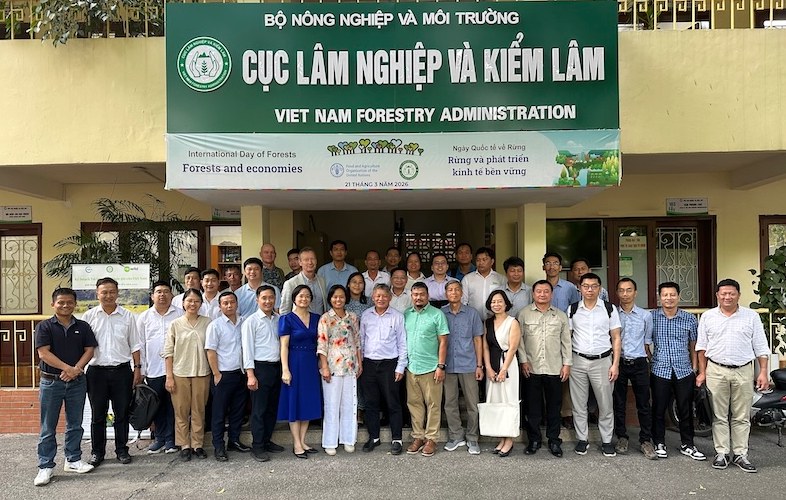
It is expected that the national wilderness restoration plan for the period 2027 - 2035, vision to 2050 will be completed and submitted to the Ministry of Agriculture and Environment for consideration and approval in 2026.


