
According to sharing from the crew, the designs in the MV are developed from familiar images in Vietnamese life and culture such as paper fans, kite wings, Hue ceramic mosaic art, mother-of-pearl mosaics or wooden screens. Instead of recreating the original, these details are transformed into shapes, patterns and materials with a contemporary feel.
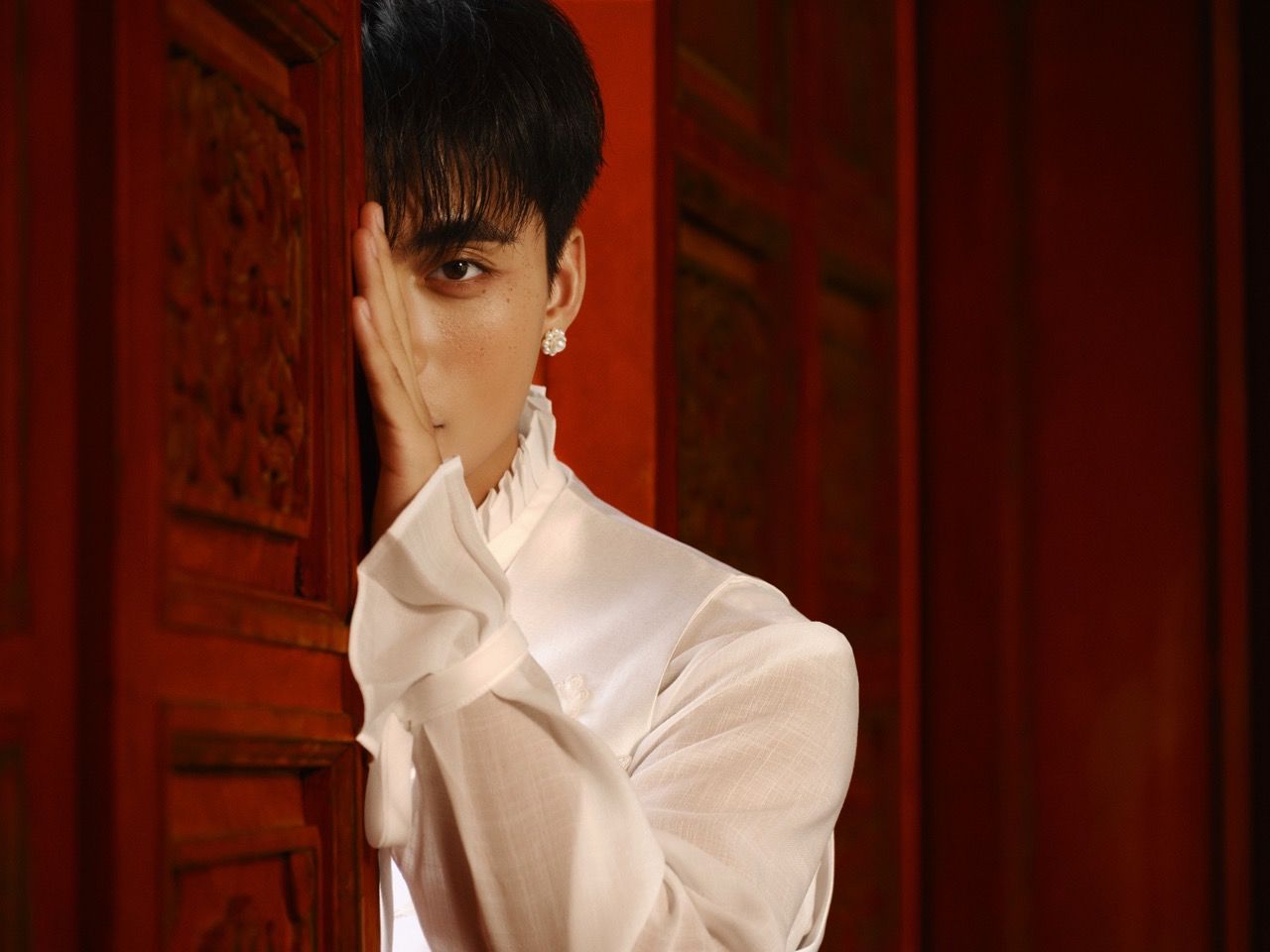
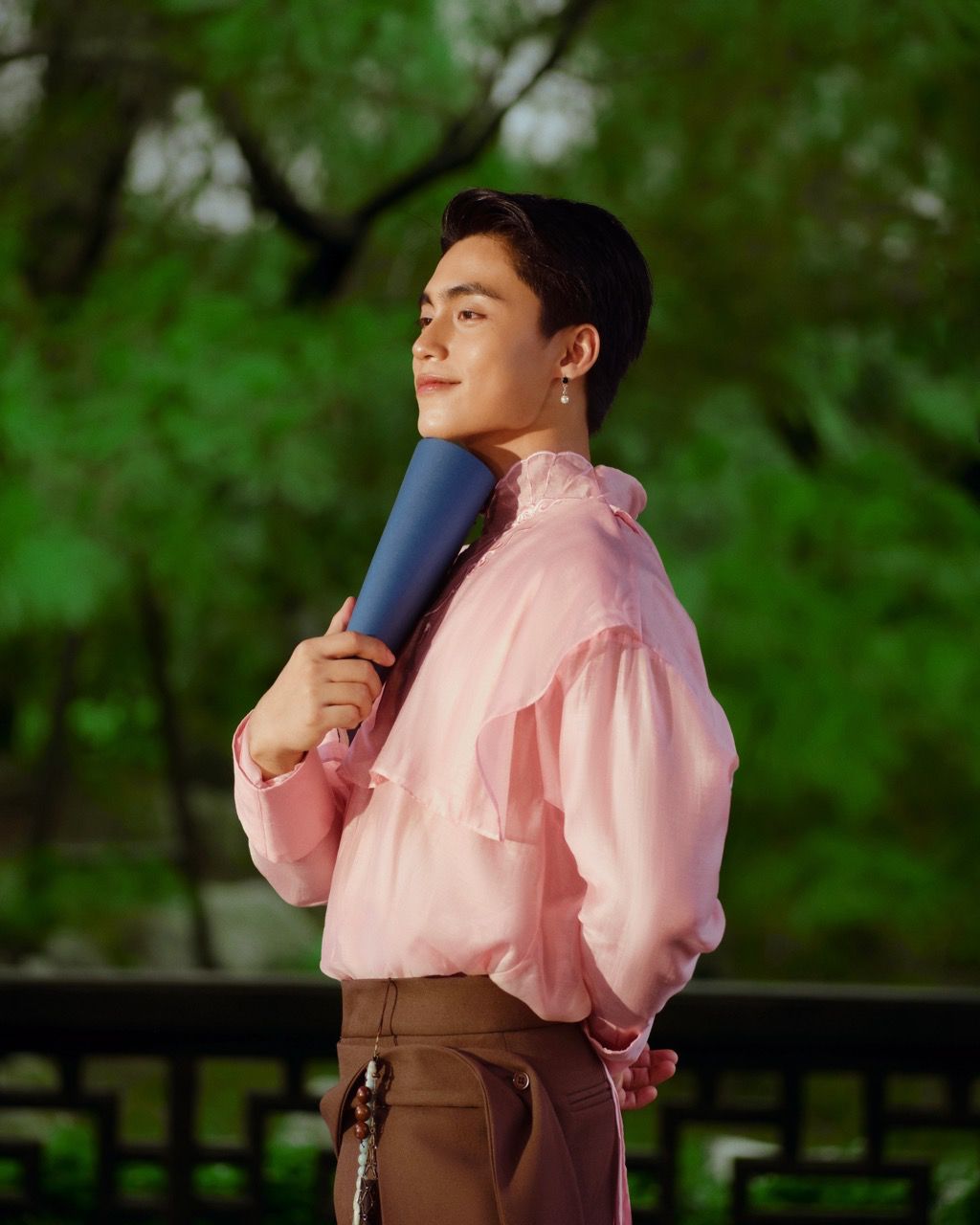
In the wooden house scene in the middle of the garden, MONO's light pink outfit is inspired by a paper fan with soft fabric strips that evoke fan bars. Meanwhile, the white outfit appearing in the Imperial Citadel corridor uses many layers of collar and long fabric strips to evoke the image of a kite moving.
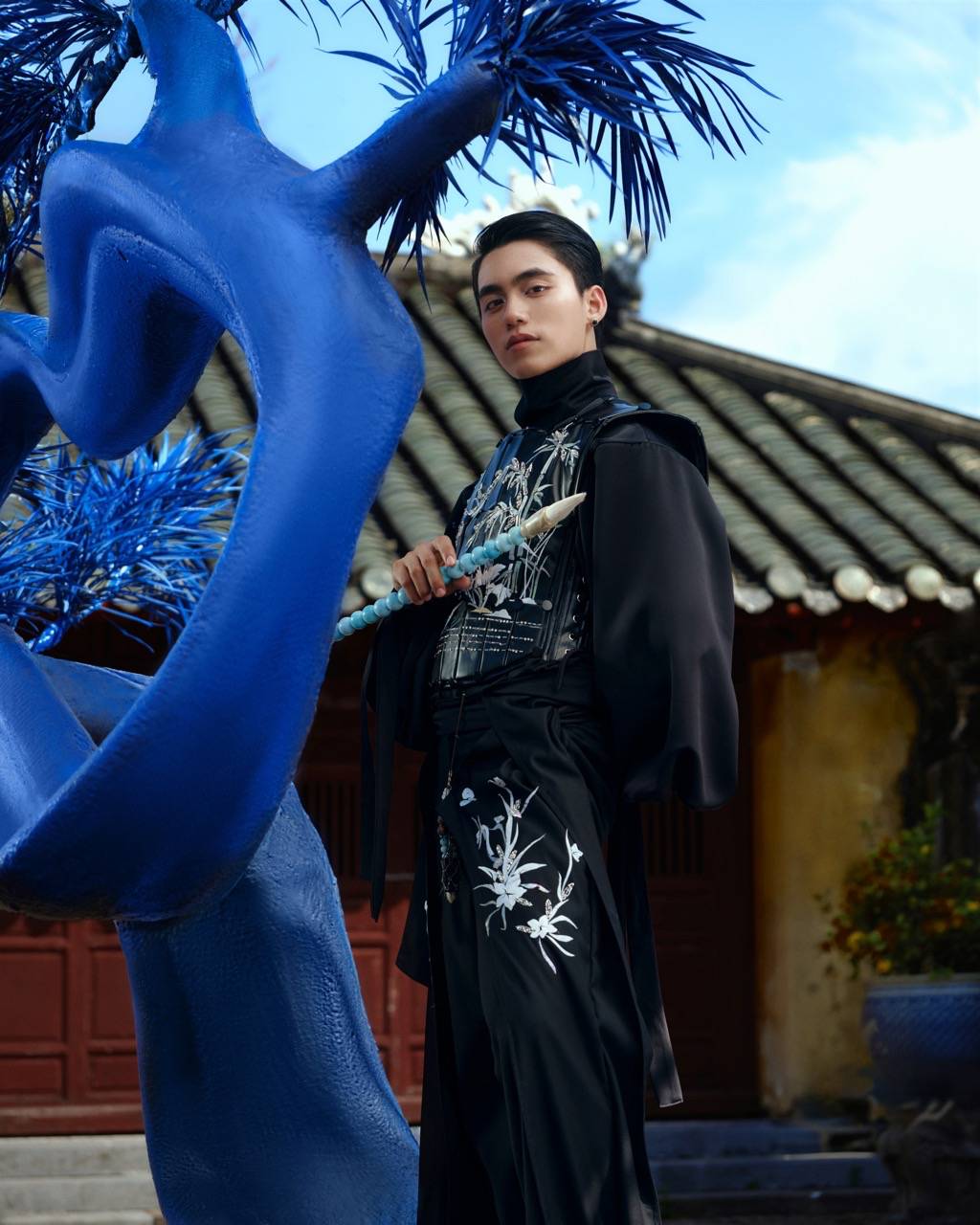
Some other designs exploit cultural materials associated with Hue. The blue outfit in the rice field setting is developed from the art of royal porcelain mosaics, expressed through multi-colored embroidery details on a silk background. The image of carved wooden screens is also incorporated into a jacket design through segmentation and pattern composition.
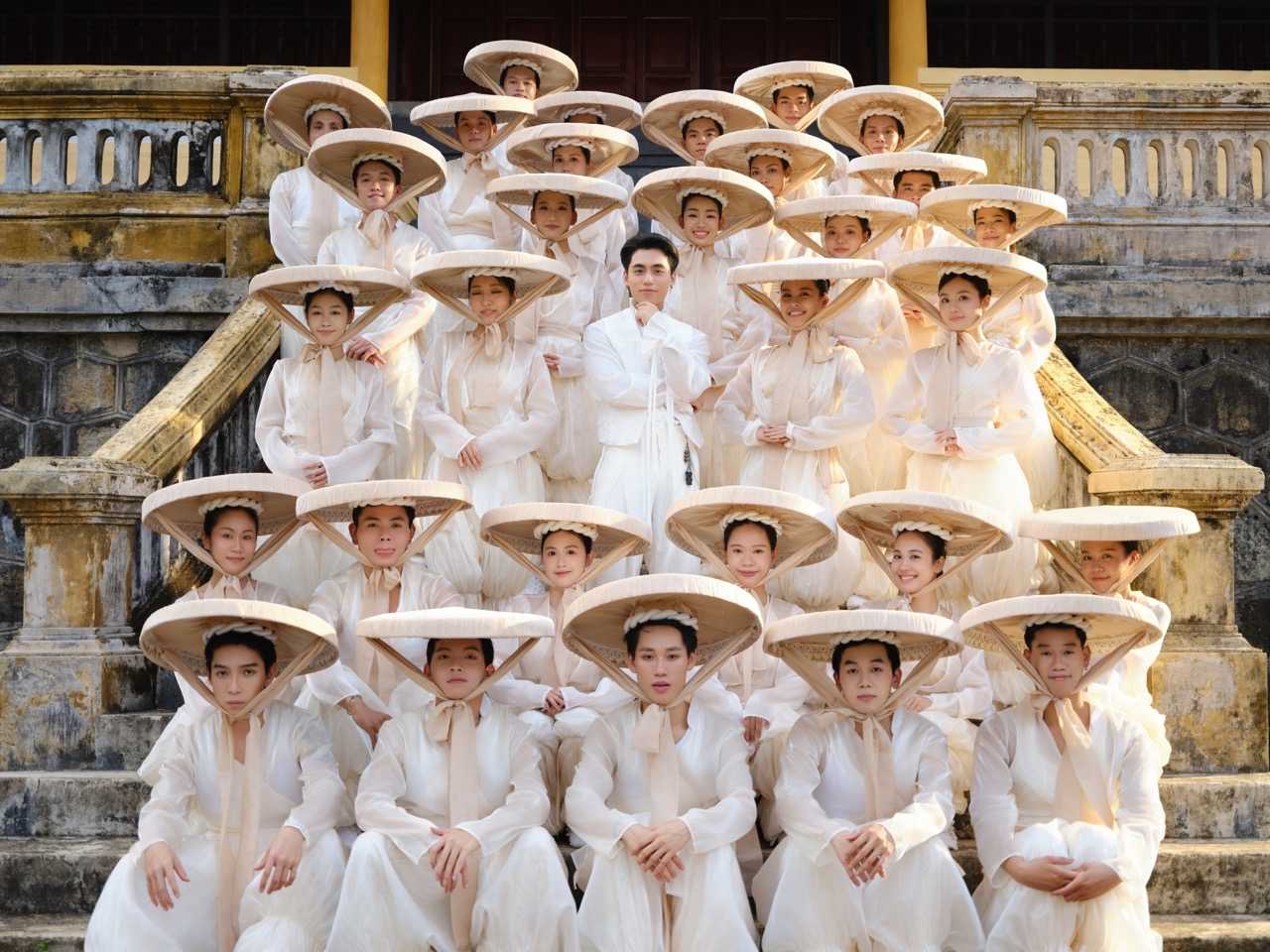
In addition to MONO's costume line, the styling for the female dancers is inspired by yếm đào, áo tứ thân and quai thao hats. These elements are adjusted to suit the stage and modern fashion language.
The female character played by Chau Anh also appears with many different shapes, from evening gowns inspired by the colors of ceramic mosaics to multi-layered designs serving special motion scenes.
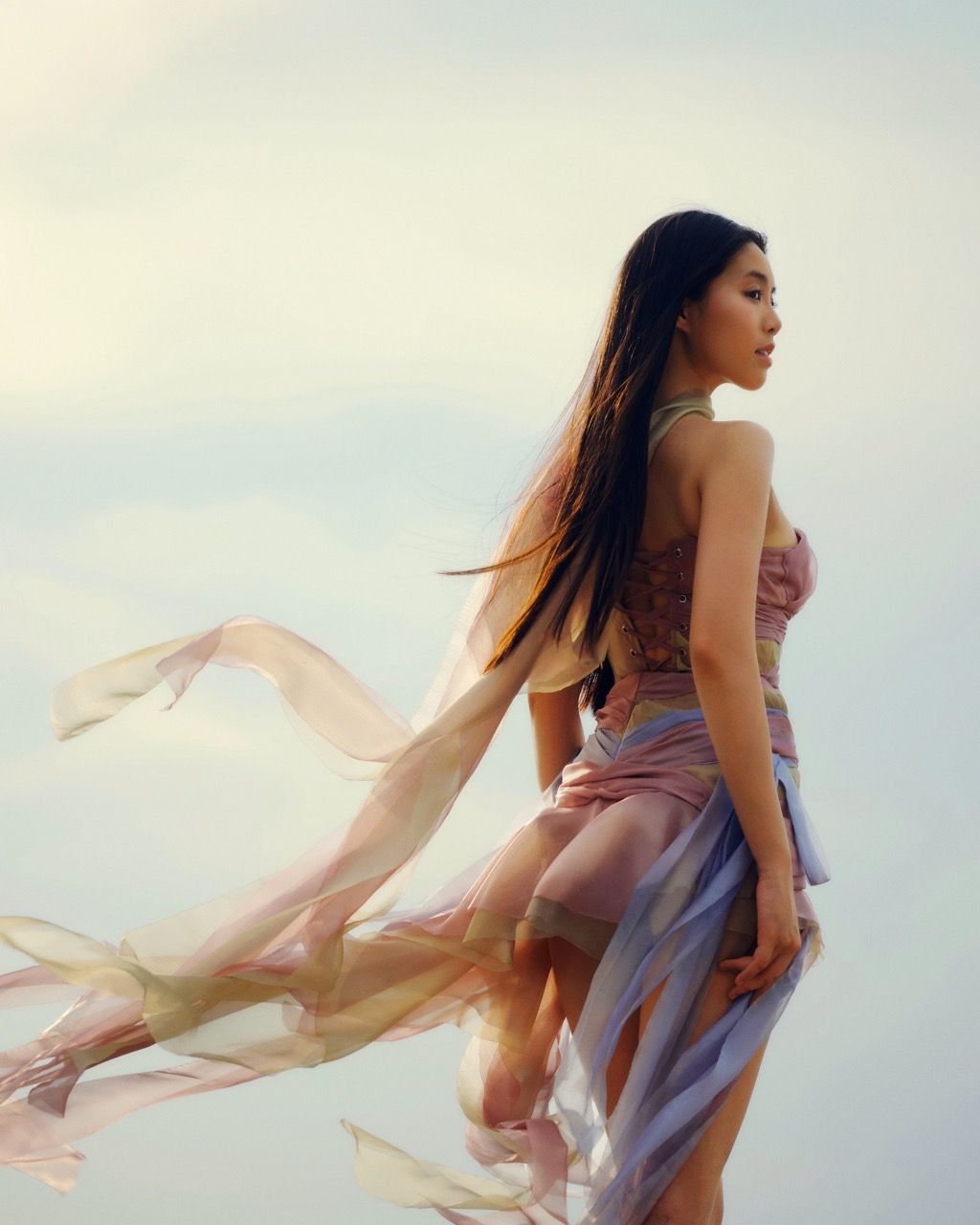
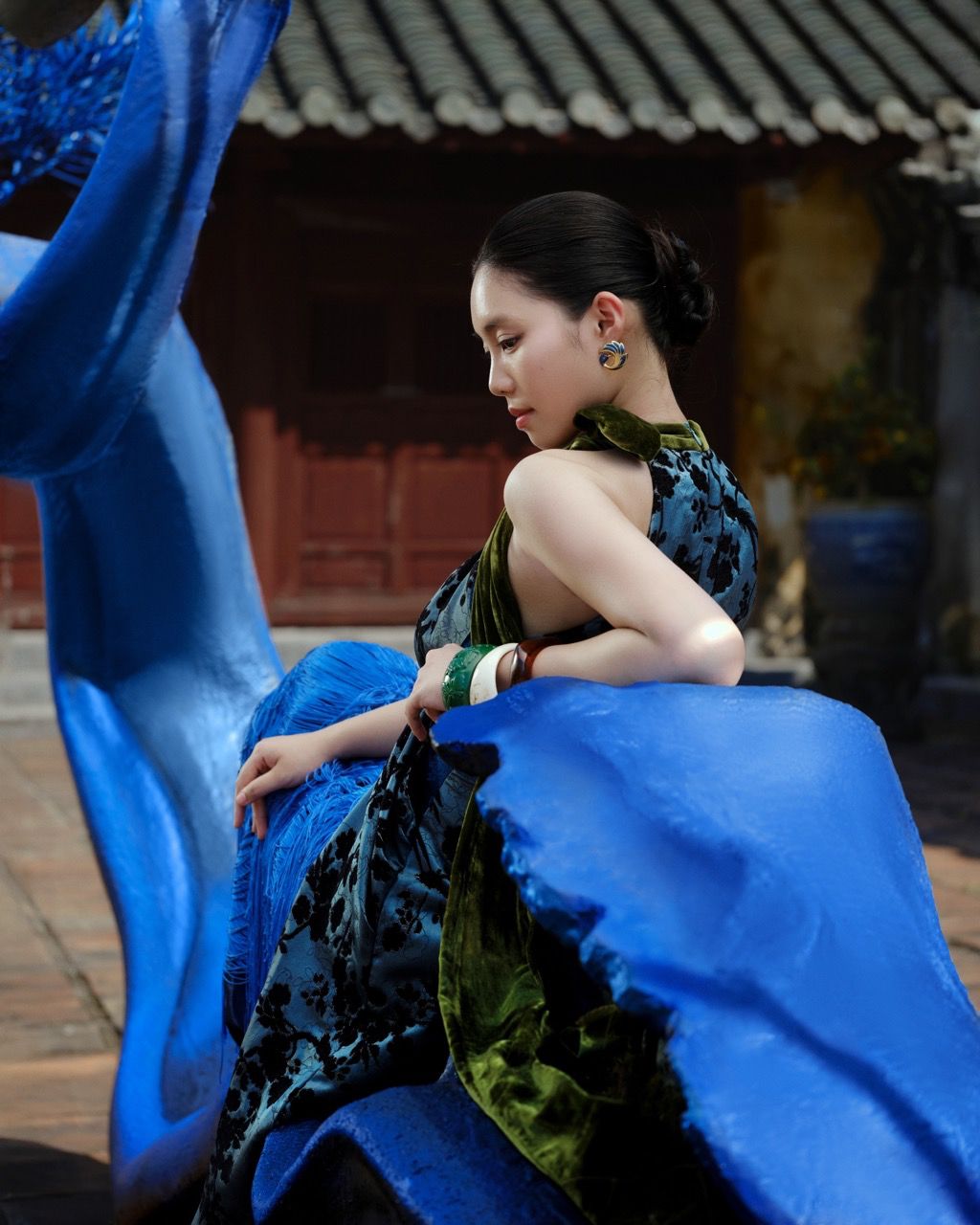
Overall, costumes in "Cong Tu Van Tho" show the trend of exploiting traditional cultural materials in a stylized direction, instead of recreating the original. This approach is increasingly appearing in the music products of young artists, when the identity factor is considered part of building image language and artistic identity.


