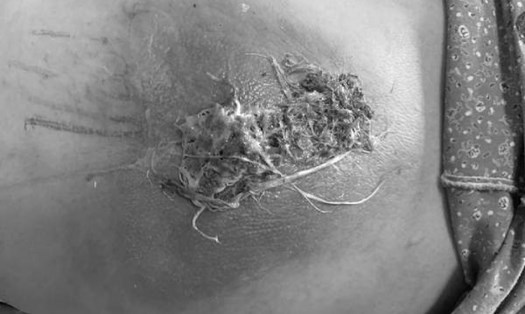
The Department of Blood Transmission Diseases - Institute of Clinical Diseases (Central Military Hospital 108), has just received patient N.H, 56 years old, admitted to the hospital in a state of swollen and deformed left shoulder, red and plump skin, severe pain accompanied by fever and chills. Medical history investigation shows that he previously suffered a shoulder injury and had been examined and consulted by doctors for initial treatment.
However, during home monitoring, the patient did not follow medical instructions, but arbitrarily applied leaves according to the advice of acquaintances with the desire to "reduce swelling and reduce pain quickly".
After a period of time, the condition not only did not improve but also became significantly worse: the left shoulder-arm area was swollen, hot, red, increased pain, discharge and high fever, forcing the patient to be hospitalized for emergency treatment.
Examination and testing results showed that the patient had a diffuse soft tissue infection, inflammatory markers increased. Soft tissue ultrasound recorded clear edema, damaged delta muscle tissue, increased vascular proliferation, although a localized abscess had not yet formed - suitable for post-traumatic fibroid inflammation diagnosis.
The patient underwent early surgery to remove necrotic tissue, combined with appropriate antibiotic treatment, anti-inflammatory - pain-relieving drugs and intensive wound care. Up to now, the condition has improved significantly: no more fever, reduced swelling and pain, stable inflammatory indicators and is preparing to be transferred to lower levels for continued treatment.
Many people believe that "leaves are natural herbs, so they are harmless". However, medical experts point out at least three major risks:
Carrying bacteria and mold: Fresh leaves contain countless microorganisms. When crushed and applied to the damaged skin area (including very small scratches), bacteria can penetrate deep into soft tissues.
Create a favorable environment for infection: Applying closed leaves makes the skin stuffy, increases the local temperature - becoming a "incubator" for bacteria to grow, especially anaerobic bacteria.
Causing irritation or toxicity: Many types of leaves contain resin or active ingredients that cause contact dermatitis, making damage worse and making it difficult to diagnose and treat later.
Dr. Trinh Van Son - Head of the Department of Blood Transmitted Diseases, Central Military Hospital 108 emphasized: Cystictis, if not treated with antibiotics correctly and promptly, can lead to muscle abscesses, muscle necrosis, osteomyelitis, and even sepsis leading to death.