
Second surgery in cervical cancer patients is a major challenge because the anatomical structure of the pelvic region has changed after the first surgery, increasing the risk of damage to blood vessels, ureters, bladder and nerve bundles. Therefore, surgeons must both completely remove cancer cells and preserve the function of pelvic organs to the maximum.
At the first basic robot laparoscopic surgery training course at K Hospital, experts introduced the case of female patient D. T. H. H (34 years old) suffering from cervical cancer in stage FIGO IA2 with invasive lymphatic vessels. After hysterectomy at another medical facility, the patient was assessed to still need additional surgery to completely eliminate the risk of surviving cancer cells.
After a multi-specialized consultation, the team chose robotic laparoscopic surgery, performing widening of the tissue around the vagina, pelvic lymph node dissection and nerve preservation. The robot system with 3D cameras and flexible arms helps to dissect accurately, limit damage to nearby organs and enhance the ability to completely remove suspected cancer cells.
Robot surgery is particularly effective in difficult surgeries such as re-surgery after initial treatment. High accuracy, flexible maneuverability and superior vision help increase safety, reduce blood loss, reduce pain after surgery and shorten recovery time.
Another case presented in the training course was a 33-year-old female patient with reumal cancer, the tumor was only about 3 cm from the periphery of the anus. After chemotherapy and pre-operative chemotherapy, the tumor responded well, shrinking significantly. Robot surgery helps the team completely remove the lesions, while preserving the anal sphincter and pelvic nerve bundles, contributing to maintaining bowel function and improving the patient's quality of life.
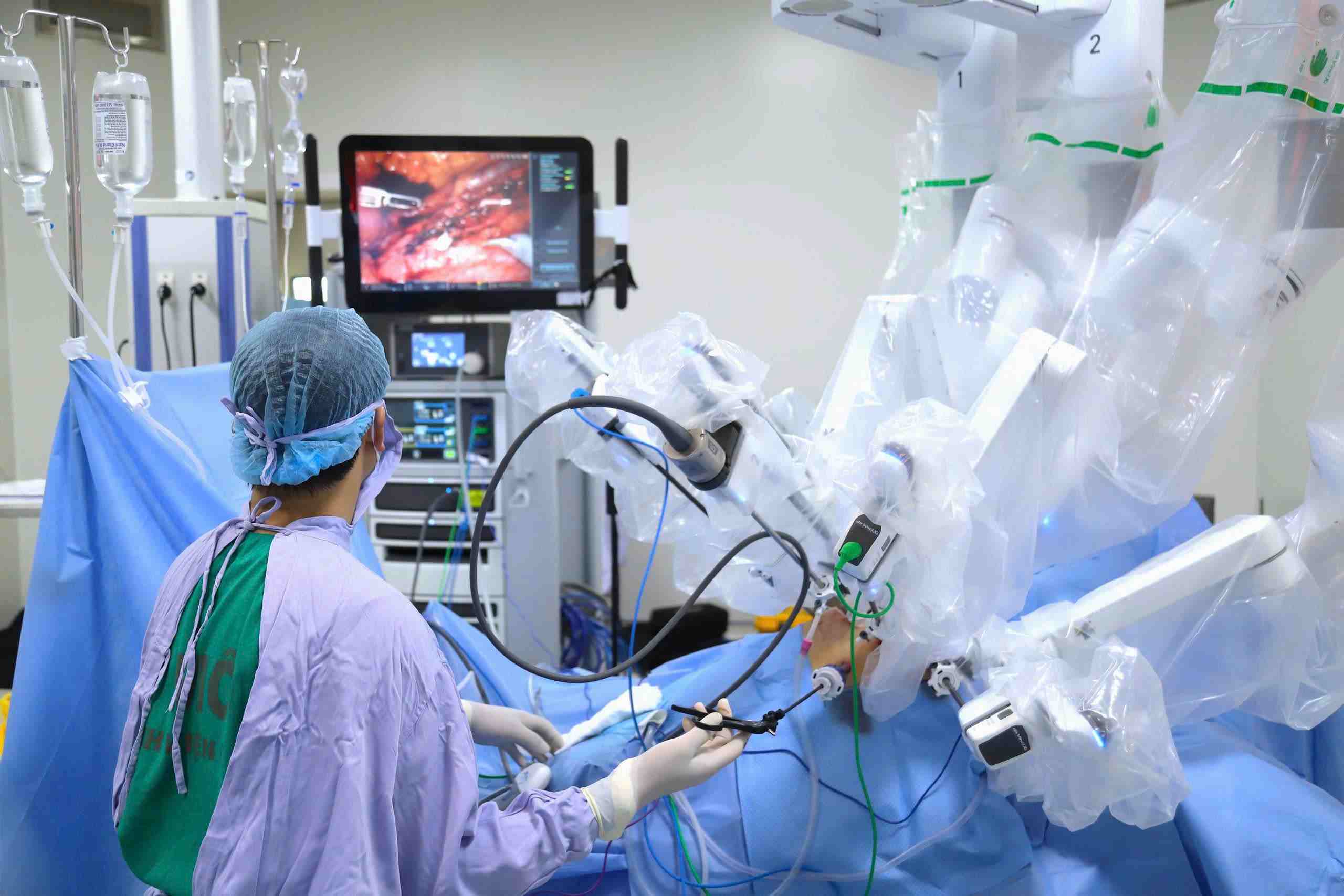
During the training course, students directly monitored and discussed many complex clinical cases in the fields of gastroenterology, urology, gynecology and colorectal medicine. The series of cases showed the outstanding advantages of robot surgery in cancer treatment. The 3D camera system and robot arm support surgeons to operate accurately in deep, narrow positions, thoroughly dredge lymph nodes, and limit damage to nerves and important blood vessels. This technique also helps reduce invasion, control bleeding, reduce pain, shorten hospital stay and accelerate recovery. When combined with pre-operative chemotherapy, robot surgery expands the opportunity for radical treatment for cancer patients in the advanced stage.
Prof. Dr. Le Van Quang, Director of K Hospital, said that the training course not only transfers techniques to surgeons from many major hospitals but also contributes to standardizing robot surgery training in cancer treatment. This is an important foundation to make robot technology a routine technique, improve treatment quality and improve prognosis for patients.


