
Currently, disease prevention through vaccines helps minimize economic damage, contributes significantly to reducing antibiotic use, and prevents the risk of antibiotic resistance.
At the Forum "Application of new advances in the field of veterinary vaccines in Vietnam", Mr. Le Toan Thang - Head of Veterinary Drug Management Department, Department of Animal Health (Ministry of Agriculture and Rural Development) - emphasized:
"In fact, Vietnam is ready to cooperate, research and develop, and transfer technology in the production of new generation, safe, and effective veterinary vaccines. At the same time, priority is given to importing veterinary vaccine products to serve the prevention of urgent and emerging diseases.
In particular, the import of veterinary vaccines according to the needs of livestock breeders and businesses helps prevent animal diseases in Vietnam. Accordingly, Vietnamese veterinary vaccine manufacturing enterprises are encouraged to export veterinary vaccine products to countries in the region and internationally."
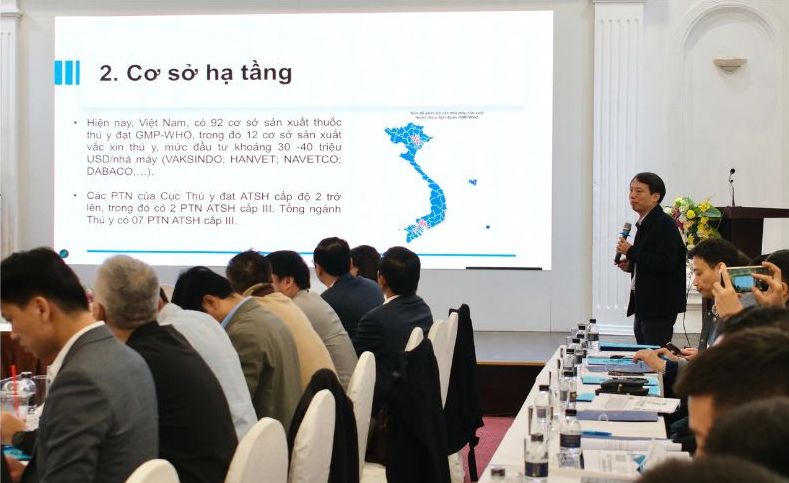
Mr. Le Toan Thang also said that, up to now, the whole country has 12 enterprises researching and producing animal vaccines that meet GMP-WHO standards, with a total of 218 types of vaccines and 340 types of imported vaccines that have met the needs of preventing diseases in livestock and poultry in the country.
Regarding the production and import of some important vaccines in 2024, avian influenza vaccine: 739 million doses (191 million doses produced; 548 million doses imported); foot-and-mouth disease vaccine: more than 46 million doses (1.4 million doses produced; 45 million doses imported)...

Mr. Nguyen Van Long - Director of the Department of Animal Health (Ministry of Agriculture and Rural Development), emphasized the need to produce veterinary vaccines domestically to cope with the increasing epidemic situation in animals in Vietnam. Epidemics in livestock, poultry and wild animals are increasing, although African swine fever and epidemics in cattle are currently basically under control.
Vietnam has a long border and increasing trade and travel between countries, creating favorable conditions for new diseases, including new strains of avian influenza, African swine fever and lumpy skin disease, to spread rapidly.
"The departments of animal husbandry, veterinary medicine, aquaculture and related businesses need to cooperate closely in disease control, especially dangerous infectious diseases. In particular, the use of vaccines is extremely important and necessary in disease control" - the Director of the Department of Animal Health recommended.
For example, Mr. Nguyen Thanh Ba - Director of the Center for Vaccine and Biological Research (Hanvet Pharmaceutical and Veterinary Supplies JSC) - shared: "Rabies is an extremely dangerous disease. After vaccinating dogs and cats against rabies, some side effects often occur.
Accordingly, Hanvet used Vero cells from the US cell bank ATCC CCL81 and the PM Rabies Virus strain transferred from the US CDC. At the same time, applied technology to purify antigens to increase the ability to prevent and control rabies.
To achieve high product efficiency, the company implements a comprehensive quality control process: From the quality of input materials; the production process to product testing before leaving the factory.
According to Mr. Ba, Rabiva vaccine fully meets Vietnam's and international standards for rabies vaccines for animals and has been widely circulated in the country.
In addition, this vaccine has begun to be exported to countries such as Sri Lanka, Myanmar and Middle Eastern countries, contributing to expanding the international market.
“In localities, Rabiva vaccine has proven effective in rabies vaccination for dogs and cats, helping to achieve good results in rabies prevention and control and protect public health. With these contributions, the company has made an important contribution to the National Rabies Prevention and Control Program, aiming to improve safety for livestock and society,” said Mr. Ba.
