
This is the content in DHL's Global Connectivity Report 2026, announced by DHL and Stern Business School of New York University on March 10, in Hanoi. The report tracks the globalization process on a scale from 0% (no cross-border trading flow) to 100% (border and distance no impact). The level of globalization in the world reached 25% in 2025, equivalent to the record high set in 2022.
According to Mr. John Pearson - CEO of DHL Express, the globalization process is still maintaining its position and that has said a lot about its value. Looking to the future, the recent US tariff increase is forecast to slightly slow down trade growth in 2026, but not completely stop it. Global goods trade is forecast to grow by an average of 2.6% per year until 2029, equivalent to the growth rate in the past decade.
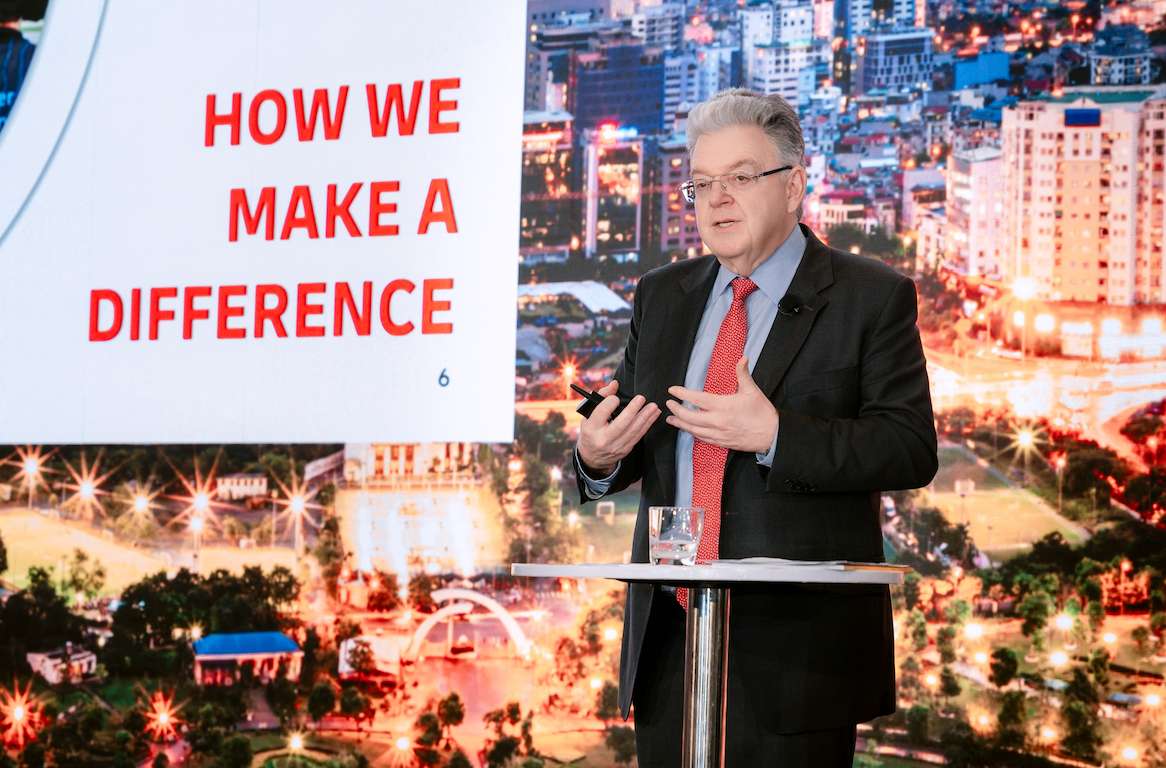
According to Professor Steven A. Altman - Director of the DHL Globalization Program at the Future Management Center at NYU Stern Business School, politics and policies related to globalization are much more volatile than the actual flows between countries. Global trade patterns have changed more in 2025 than in a normal year, but less than other recent disruptions such as the early stages of the war in Ukraine.
Notably, in this year's DHL global connectivity index, Vietnam ranked 36th out of 180 economies based on international flow tracking data on trade, capital, information and people. Among countries in the middle group of global per capita income distribution, Vietnam and two countries in Southeast Asia (Malaysia and Thailand) achieved the highest global connectivity scores.
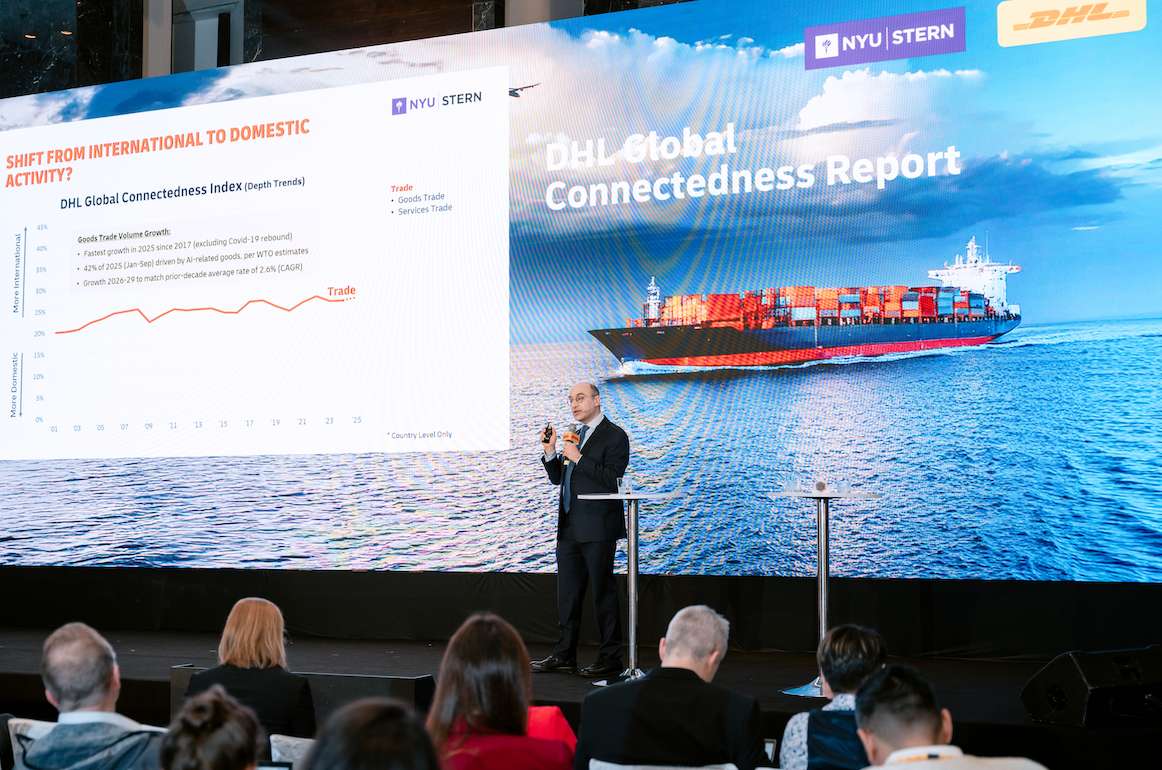
According to Professor Steven A. Altman, Vietnam has a rapid growth rate of per capita income in parallel with trade growth since 1986. Notably, Vietnam's trade growth prospects are forecast to be quite bright (2026-2030): forecast to achieve the 4th largest absolute commodity trade growth rate in the world and the 24th fastest trade growth rate (~6%).

Answering questions about how the conflict in the Middle East affects globalization, Mr. John Pearson - CEO of DHL Express - said that there are certain impacts on global trade and logistics activities. DHL has been present in the Middle East since 1996 and in the past 12 months has still recorded positive growth.
The Middle East, especially logistics centers like Dubai, always has a very large demand for freight transportation. However, when information about tensions and conflicts breaks out, air transport and logistics in the region are immediately affected.
In recent days, many flights and transportation activities have been temporarily suspended or restricted, disrupting the supply chain. However, DHL representatives believe that international trade is still striving to maintain its recovery momentum and will gradually stabilize as the war situation subsides.


