Since 2024, many fashion groups such as H&M, Adidas, Decathlon have required suppliers to have a roadmap to reduce emissions according to SBTi and transparency of energy - water - waste data.
Regulations such as the EU Green Deal or the German LkSG Act face a major challenge for the Vietnamese textile and garment industry with over 6,000 businesses and 2.8 million workers, forcing it to prove the "carbon footprint" of each product if it wants to continue to keep orders.
In response to these changes, Vietnam has launched many initiatives to support businesses to adapt, including the Project "Dug-up Transformation Center - Digital Transformation and Innovation to protect the environment and climate in Vietnam" implemented by the Department of Private Enterprise Development and Collective Economy (Ministry of Finance) in coordination with the German International Cooperation Organization GIZ in the 2024-2028 period, with funding from the German Government.
The project aims to support businesses in building digital capacity and greening production processes, helping to use resources effectively, save energy and reduce emissions.
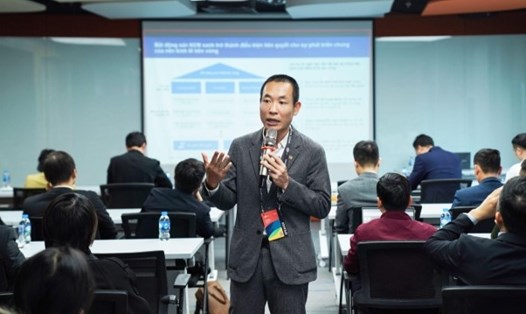
One of the key activities of the project is the training program " Optimizing textile and garment industry data management through Digital - Green Transformation", organized by FPT Digital - a partner invited by GIZ and the Department of Private Enterprise Development and Collective Economy to participate in developing content, compiling documents and directly implementing training.
The program aims to help small and medium enterprises in the three fields of textiles, agricultural processing and wood processing - paper, digital technology and green production standards to optimize data management, save energy, resources and reduce greenhouse gas emissions.
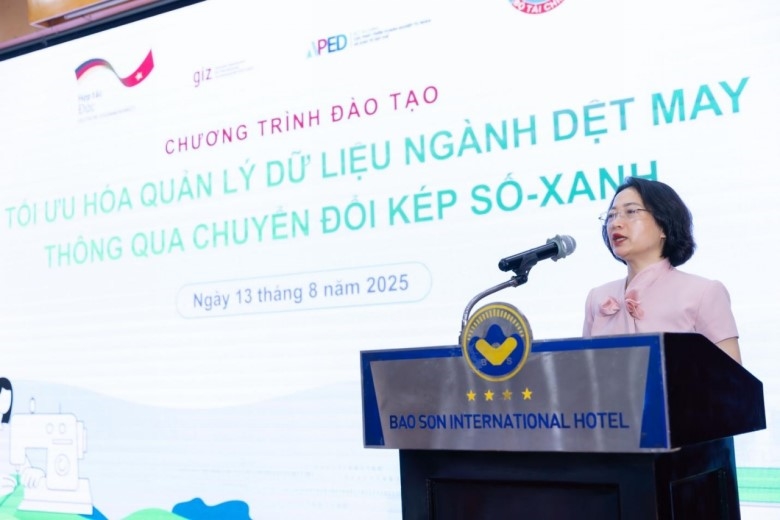
According to Ms. Nguyen Viet Hue, "DUB- together transformation not only helps textile and garment enterprises reduce costs and comply with international regulations, but more importantly, it helps workers work in a safer, more modern and more productive environment. When businesses are greener, workers are also greener, from thinking to action.
Data becomes the foundation of a sustainable factory. The project aims to build an international standard data framework to support businesses in collecting data and having an overview of factory operations.
Workers are the center of the transformation process. Dual transformation requires not only technological investment, but also "transformation of people". It is expected that about 500 technical staff, workers and mid-level managers will have been trained in data collection and use skills for businesses.
Aiming for the first "Green Digital" business network in Vietnam, dual transformation cannot be completed in one day or two. However, with a methodical roadmap and coordination between management agencies, international organizations and technical partners such as FPT Digital, the project hopes to form the first "Digital - Green" textile and garment business network in Vietnam.
The Digital - Green Journey is the development journey of Vietnamese people and businesses, where every small step forward in data, energy and environment brings great value to the future, Ms. Hue concluded.