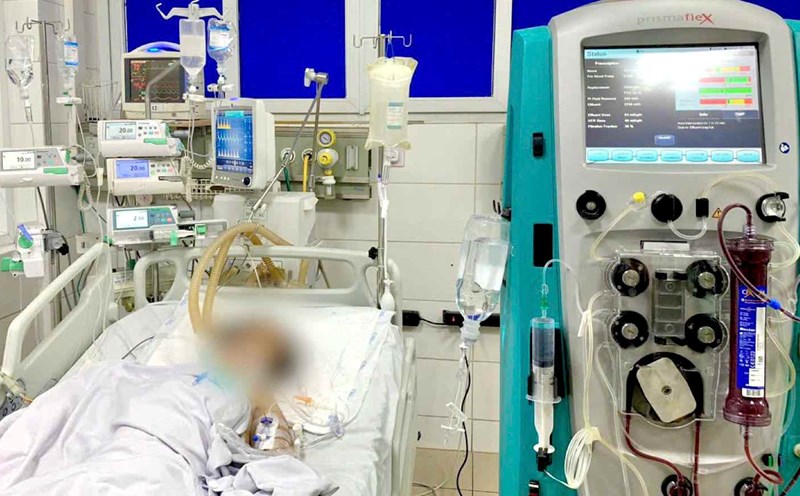
On November 19, Vung Tau General Hospital (Vung Tau Ward, Ho Chi Minh City) announced that it had just successfully treated a case of severe dengue fever, with particularly critical progress, causing three consecutive cases of shock attacks within more than 24 hours.
Previously, on November 2, Patient N.N.V.A (19 years old, living in Vung Tau ward) was admitted to the hospital with a fever for the 4th day, fatigue, low blood pressure, abdominal pain and continuous vomiting, and was diagnosed with dengue fever. At the same time, the patient was obese, which increased the risk of seriousness.
After receiving initial resuscitation in the Emergency Department, the patient was transferred to the Intensive Care - Anti-Poison Department (HSTC-CD) for further treatment. Although following the correct regimen, the disease progression was complicated, continuously falling into a state of shock.
Immediately after treatment at around 8am, the patient was shocked the first time; the second time at around 11:30am on November 3; the third time at 1:30am on November 4. The shock attacks caused the patient to have a series of serious complications such as: abdominal rash, right pleural rush in large quantities, causing lung tightness, albumin reduction and severe hycalcemia.
Vung Tau General Hospital quickly consulted with Ho Chi Minh City Hospital for Tropical Diseases to agree on a treatment direction. Thereby, the patient was supported with breathing by mechanical ventilation, calcium compensation, adjustment of electrolyte disorders and continuous blood monitoring... Thanks to active and timely intervention, the patient overcame the critical condition and vital signs were stable. Up to now, the patient's health has recovered and he has been discharged from the hospital.
According to Dr. CKI Van Viet Thang - Department ofTCH - Trade Union of Vung Tau General Hospital - dengue fever can progress very quickly, especially in the period from the 4th to the 6th day, and in people with risk factors.
When warning signs such as vomiting, abdominal pain, sluggishness, shortness of breath, cold hands and feet or prolonged fever appear, people need to go to a medical facility immediately for timely monitoring and intervention, avoiding the risk of shock and re-shock, Dr. Thang emphasized.