
When the "white box" room gradually loses its appeal
For many years, minimalist style has often been associated with rooms covered in white, glossy surfaces, sharp lines and maximally restrained furniture. However, this type of space is gradually revealing limitations when it is easy to create a feeling of coldness, lack of depth and rarely brings emotional connection.
The "warm minimalist" trend is becoming a noteworthy choice in interior design in 2026. This style still maintains the neat and restrained spirit of minimalism but changes the way colors, materials and light are used.
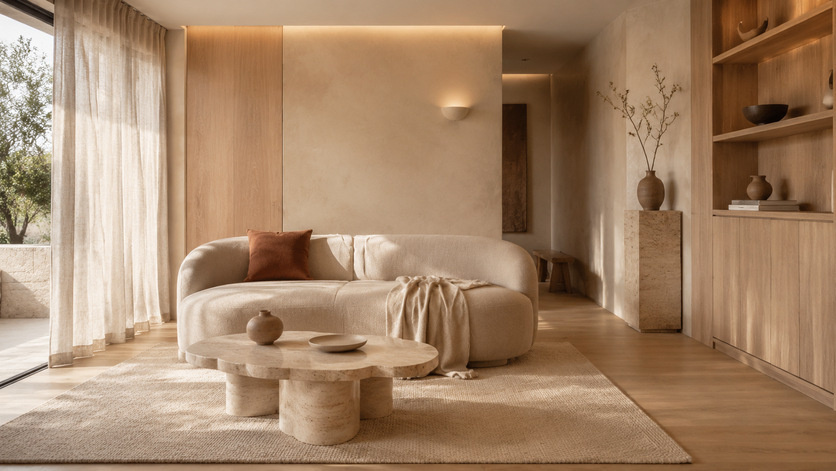
Instead of using cold white, homeowners can choose warm-toned neutral colors such as sand, oatmeal, clay, caramel brown, chocolate brown or greige – a mix of gray and beige.
White can still be used but usually leans towards cream, light yellow or light red to avoid turning gray under artificial light.
An important principle is to only choose a few shades with similar brightness, then create a difference with the material. With the same color, but when it appears on matte mineral plaster walls, oil-covered wood or surface-brushed stone, it will bring different effects.
To replace the decoration material
With a minimalist and warm style, the depth of the space is created from the material structure. Travertine stone, sedimentary stone, oak wood, walnut wood along with linen, wool, coton and natural leather are suitable choices.
These types of materials bring natural beauty, helping the room have depth without using too many pictures or decorations. Wooden floors with light patterns, walls with matte surfaces or carpets woven from wool and linen not only create a warm and comfortable feeling but also contribute to limiting noise in rooms using many hard materials.
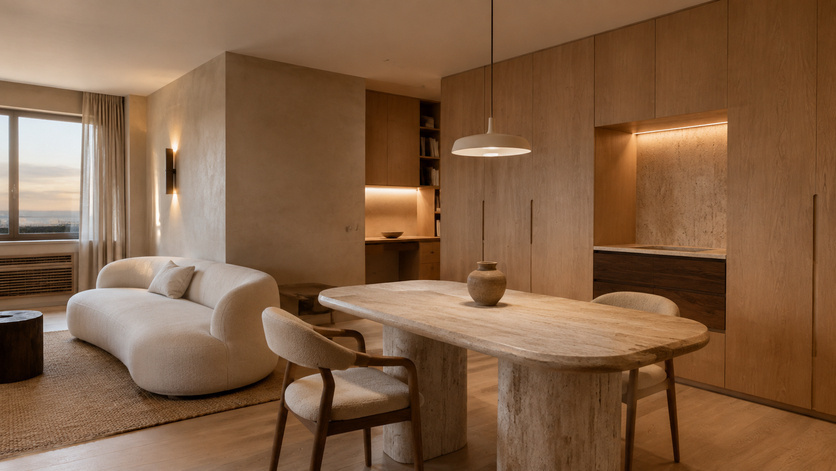
Light also plays a decisive role. With a warm color palette, light of about 2,700K is considered a suitable choice. Instead of relying on a central ceiling light, homeowners can arrange many low-intensity light sources in different locations.
Wall lights or surface lights help highlight the patterns of wood, stone and plaster, creating a more relaxing feeling.
Furniture should be chosen in moderation but with clear shapes. Closed cabinets, flat design with walls and integrated handles help control furniture, maintain visual order. Meanwhile, dining tables, sofas or chairs with soft curves can become sculptural highlights.
This style is also suitable for small houses. The continuous use of colors between the floor, walls and cabinets helps limit division, making the space feel like a more spacious whole. However, homeowners should limit the number of materials to avoid making the room look messy.


