
For more than a decade, 4 major Chinese-origin clans - Ming, Bai, Wei and Liu - have controlled an online fraud, gambling, human trafficking and torture empire in Myanmar's border areas.
These networks are said to have generated billions of USD in revenue, while detaining and forcing tens of thousands of workers to participate in cyber fraud.
China's recent large-scale crackdown campaign is not only aimed at Myanmar but also spreading to Cambodia and Thailand.
Death sentences and deterrent messages
On February 2, the Shenzhen Intermediate Court announced that it had executed 4 people convicted of operating fraud and gambling rings from Myanmar.
This group is accused of defrauding more than 29 billion yuan (108 trillion VND) and causing the deaths of 6 Chinese citizens.
A week earlier, 11 other subjects related to fraud centers in northern Myanmar were also executed according to a court ruling in Zhejiang.
The sentences were pronounced with harsh words, emphasizing the "particularly serious" nature, posing a "major threat to society". Among those sentenced to death were key figures of the Bach family, who once ruled the Kokang region.
Once part of the notorious "Golden Triangle", Kokang has long been associated with smuggling and drugs. After 2009, when a military campaign swept away local rebels, the power vacuum paved the way for the four Minh, Bach, Nguy, and Luu clans to rise up.
They quickly shifted the local economy from opium and drugs to casinos and then large-scale online fraud. These clans maintain close relations with Myanmar military generals, even participating in politics and holding seats in parliament.
The White Family and the rule of violence
Among the 4 families, the White House is considered the most powerful. Family leaders control their own armed forces and run 41 fraudulent complexes, where violence is commonplace. Chinese court judgments describe systematic beatings and torture, along with many deaths and serious injuries.
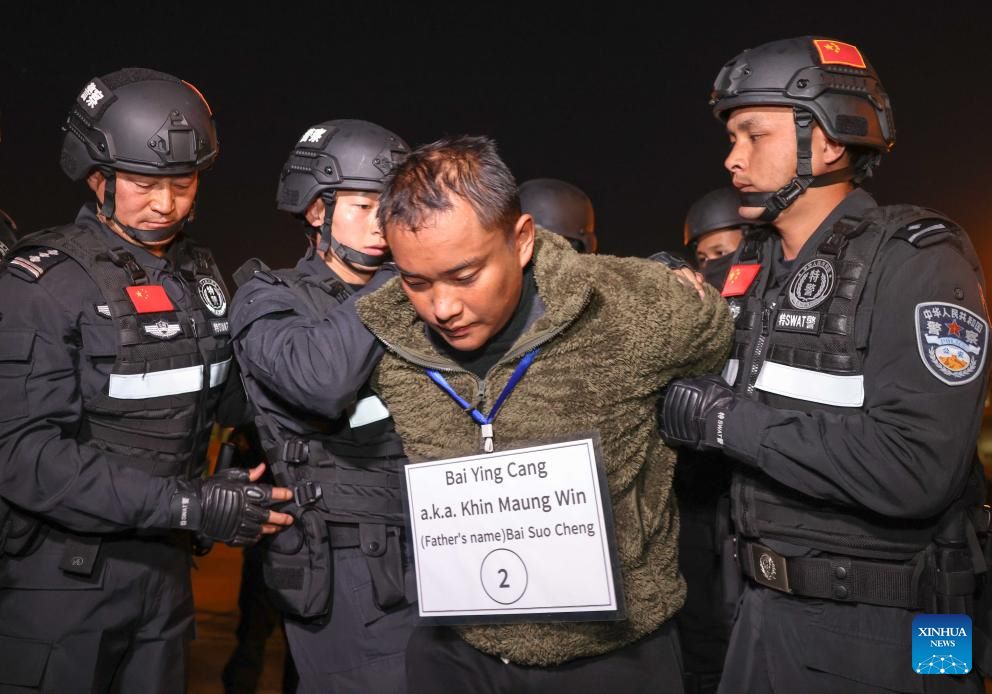
The Bach family's career was associated with the patronage of the Myanmar military, but collapsed in 2023. The fraud leaders were arrested and handed over to China, becoming the main characters in documentaries promoting Beijing's determination to "eliminate fraud".
The Minh family and the brutal symbol of fraud
If the Bach family represents political power, then the Minh family is associated with brutality. The "Ngọa Hổ Villa" area controlled by the Minh dynasty once imprisoned thousands of workers, forcing them to implement sophisticated fraudulent scenarios, build trust and then appropriate the victim's property.
Living conditions are described as hell, with frequent torture and bloody punishment for those who try to escape.
Faced with the wave of outrage in Chinese public opinion, Beijing issued arrest warrants, offered high rewards and launched joint arrest campaigns. Many members of the Minh family, including the leader's son and granddaughter, were executed.


