
In the most recent trading session, gold and silver prices simultaneously increased. At 5:55 am on July 28, world gold prices were listed around the threshold of 4,073.5 USD/ounce, up 21.8 USD compared to the previous day.
The driving force supporting the precious metal came from the sharp drop in oil prices after the US and Iran temporarily stopped attacks. Brent oil closed the session at 85.87 USD/barrel, down 6.3%, while US WTI crude oil fell to 82.61 USD/barrel, down 7.5%.
Cooling energy prices help reduce inflationary pressure, while pulling down US government bond yields. 10-year term bond yields fluctuated around 4.6%, lower than last weekend. The USD index weakened or almost went sideways, creating more support for gold.
However, the market remains cautious before the US Federal Open Market Committee's interest rate decision this week. Investors are assessing the possibility that the US Federal Reserve (Fed) will raise interest rates by another 25 basis points. Some forecasts suggest that the probability of raising interest rates in the upcoming meeting is about 33%, while the possibility of higher interest rates in September is estimated at about 80%.
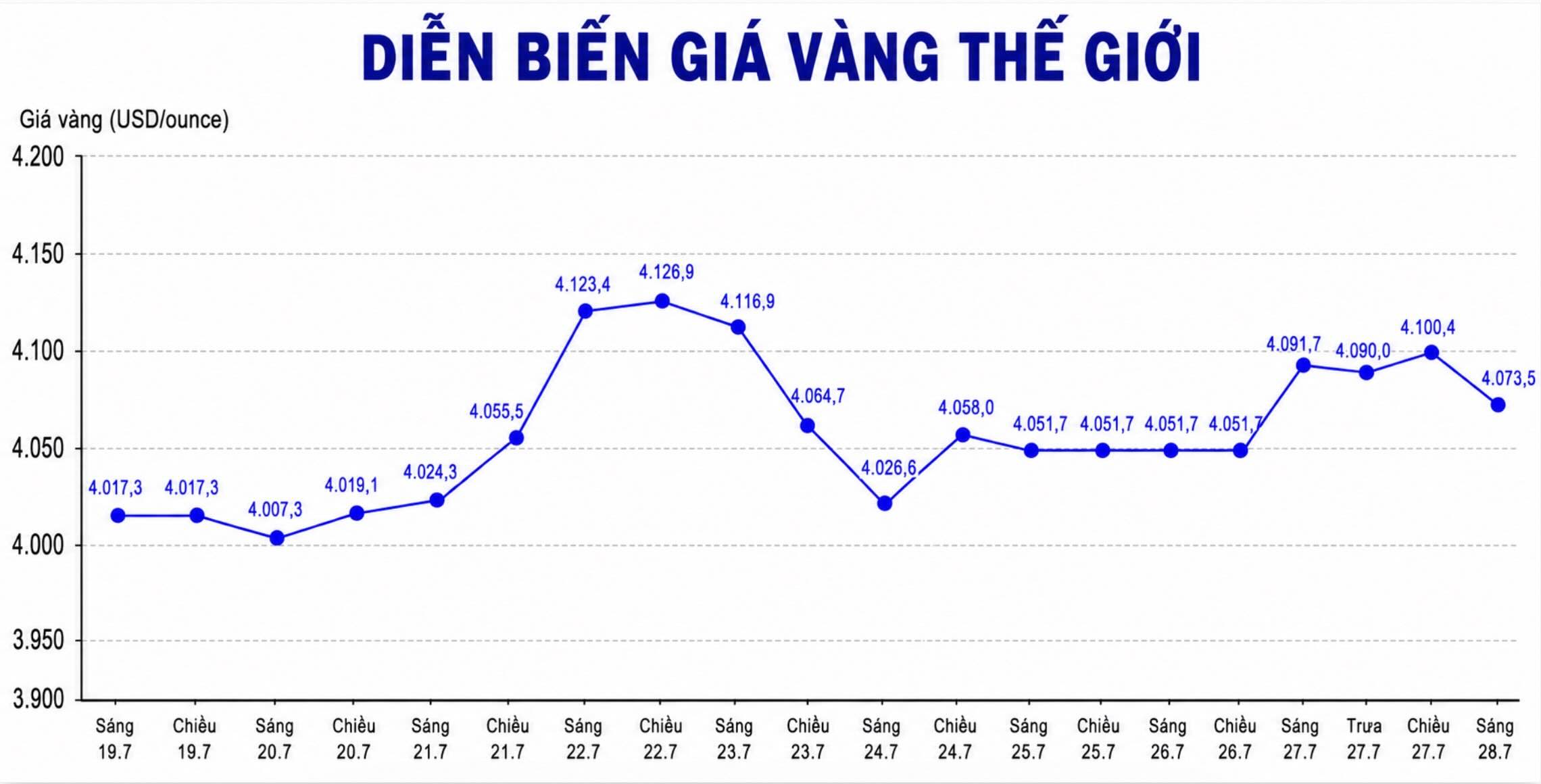
Rising interest rates and real yields are often detrimental to gold because the precious metal does not provide a fixed income. Last week, the real yield of long-term bonds rose to its highest level in about a decade, increasing the opportunity cost of holding gold.
US economic data also sends mixed signals. Sustainable goods orders in June only increased by 0.3%, lower than the forecast increase of 1.6%. Core orders, excluding the transportation sector, increased by 0.6%, also lower than the expected 0.9%.
Weak manufacturing data may make the Fed more cautious about raising interest rates, because tightening in the context of economic slowdown risks weakening growth. However, inflation due to energy prices and conflicts in the Middle East remain a major obstacle to monetary policy.
The Strait of Hormuz continues to be the focus of risk. Before the conflict, this shipping line transported about 15 million barrels of oil per day from the Persian Gulf region. Transportation has not returned to normal, making the oil and gold markets still sensitive to new information.
Technically, the near support zone of gold is around 4,072.4 USD/ounce and 4,041.65 USD/ounce. If selling pressure increases, the 3,959.8 USD/ounce mark can be tested.
In the opposite direction, gold needs to surpass the 4,162.36-4,214.34 USD/ounce range to strengthen the upward trend; the next target is the 50-day moving average around 4,221.46 USD/ounce.
In the short term, gold prices are supported by weakening the USD, falling oil prices and geopolitical risks. However, the reaction after the Fed's message will determine whether the upward momentum is sustainable enough.
The article is only intended to provide reference information about market developments, not investment recommendations. Investors need to carefully consider risks before making a decision.


