
Investor disappointment is increasing as gold prices face difficulties amidst the continued instability in the Middle East. However, despite prolonged selling pressure, many banks have not changed their long-term forecasts.
On Tuesday, the Bank of Montreal (BMO) announced an updated commodity price forecast. Despite facing many current obstacles, the Canadian bank remains optimistic about gold and silver.
Analysts say that gold and silver prices may continue the downward trend in the short term, affected by economic changes caused by the war between the US and Israel with Iran. However, they emphasize that the market's upward momentum is only temporary and has not reversed.
The Iranian conflict does not weaken the long-term argument for metals and the mining industry, but even strengthens it. The only question is when the market is confident enough that the conflict has been resolved to return to accepting risks" - experts said.
In the new forecast, BMO said that gold prices will reach an average of about 4,800 USD/ounce in the third quarter, up 7% compared to the previous forecast and about 4,900 USD/ounce in the fourth quarter, up 9%.
This bank also forecasts that the average gold price this year is about 4,846 USD/ounce, up from the previous level of 4,550 USD.
In the long term, BMO is particularly optimistic when forecasting that by 2027, gold prices will remain stable above 5,000 USD/ounce, with an average of about 5,125 USD/year, an increase of 26% compared to previous estimates.
For silver, BMO also maintains a positive view but believes that fluctuations will be greater. Silver prices are forecast to average 70.6 USD/ounce in the third quarter (up 28%) and about 68.1 USD/ounce in the fourth quarter (up 31%).
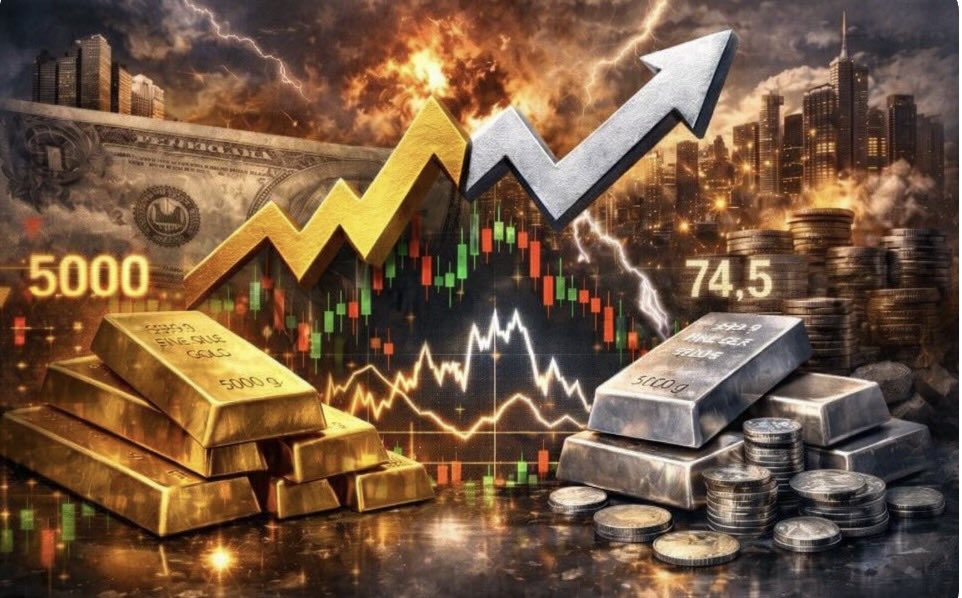
The average silver price this year is forecast to be around 74.5 USD/ounce, up 32%. However, this may be the peak, as the price is expected to fall to around 64.20 USD/ounce next year, although still 42% higher than the previous forecast.
“We believe that individual investors account for at least 60% of the capital flow into ETF funds, so their psychology - where trending factors play an important role - will strongly affect gold prices in the coming time, especially after the Iranian conflict breaks out.
Historically, gold usually increased sharply in the first weeks of major conflicts, but this time it is different, because prices have increased significantly in the past two years thanks to large investment flows" - experts said.
The long-term gold price increase doctrine remains unchanged, including the need for asset diversification, currency devaluation, and a downward trend depending on the USD - but it may be necessary to wait for the conflict to end before selling power turns back into buying power.
Although silver prices are forecast to continue to rise, experts are more cautious as the war in the Middle East could weaken global economic growth, thereby affecting industrial demand for silver.
BMO also believes that the physical silver market may return to a state of oversupply, thereby reducing price pressure due to liquidity factors.
Although the outlook for tangible assets remains positive in 2026, we believe that other precious metals are less attractive than gold and the price gap between them and gold will continue to widen this year" - experts concluded.


