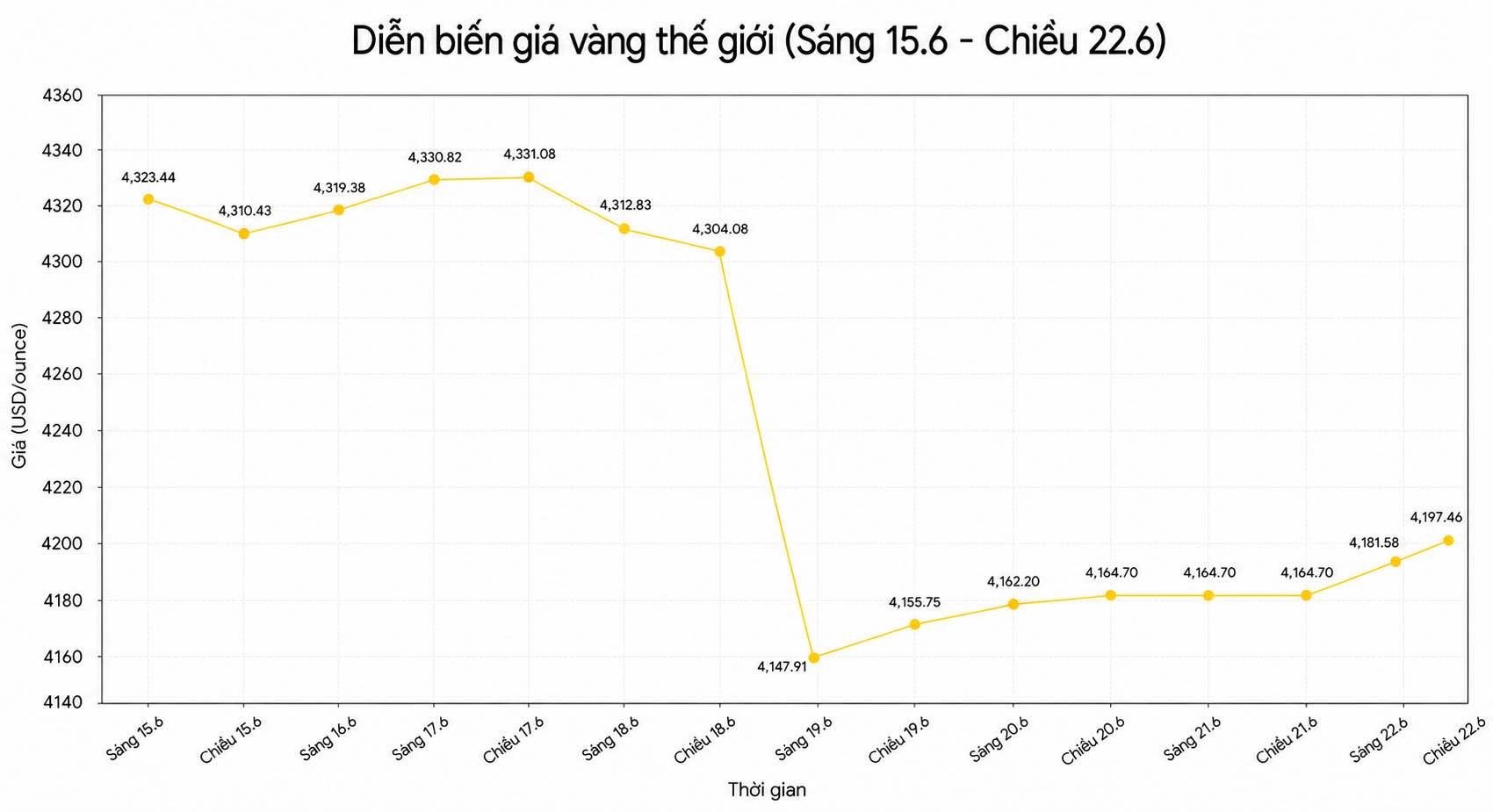
Gold prices rose again in the first trading session of the week as positive signals from negotiations between the US and Iran helped ease geopolitical tensions, while boosting optimism in the global financial market.
The precious metal at one point increased by 1.6%, surpassing the 4,220 USD/ounce mark, thereby wiping out the decrease recorded last week.
The price increase momentum appeared after Qatar and Pakistan issued a joint statement saying that the first round of high-level talks between the US and Iran in Switzerland had achieved "encouraging progress". The two sides are expected to continue discussions throughout this week to find a long-term solution to the conflict that has shaken global markets for months.
The above information partly eases previous concerns after US President Donald Trump issued a new warning about the possibility of launching attacks on Iran.
One of the notable results of the round of negotiations is that Washington and Tehran established a direct communication channel to ensure the safe circulation of commercial ships through the Strait of Hormuz - a strategic shipping route transporting about 20% of global oil consumption.
Oil prices fell in the first session of the week as transportation through the Strait of Hormuz continued normally last weekend. Previously, the US and Iran signed a memorandum of understanding last week, opening a 60-day period of de-escalation for the parties to continue negotiations.
However, despite recovering in the first session of the week, gold is still under significant pressure recently.
Precious metal prices have fallen for three consecutive weeks and are currently about 20% lower than when the conflict broke out at the end of February. The fact that the Strait of Hormuz was once facing the risk of being blocked has disrupted the flow of oil and natural gas, pushing energy prices up sharply.
Rising energy costs increase inflationary pressure and may force central banks to maintain or raise interest rates for longer. This is a disadvantage for gold because the precious metal does not yield yields like bonds or deposits.
Pressure on gold also comes from the tough stance of the US Federal Reserve (Fed).
In the first policy meeting under the direction of Fed Chairman Kevin Warsh last week, the new leader of the US central bank continued to emphasize the priority of controlling inflation but did not give a clear signal about the interest rate roadmap in the coming time.
Investors are currently focusing their attention on the US Personal Consumption Price Index (PCE) which will be released on Thursday. This is an inflation measure that the Fed is specifically monitoring and is expected to show that price pressure is still increasing.
As of 2:24 PM Vietnam time, spot gold price increased by 1.31% to 4,197.46 USD/ounce.
On other precious metals markets, silver prices rose 2% to $66.21/ounce after falling 4.6% last week. Platinum and palladium prices also simultaneously went up.
Meanwhile, the Bloomberg Dollar Spot Index – a measure of the strength of the USD against a basket of major currencies – rose 0.1%.