
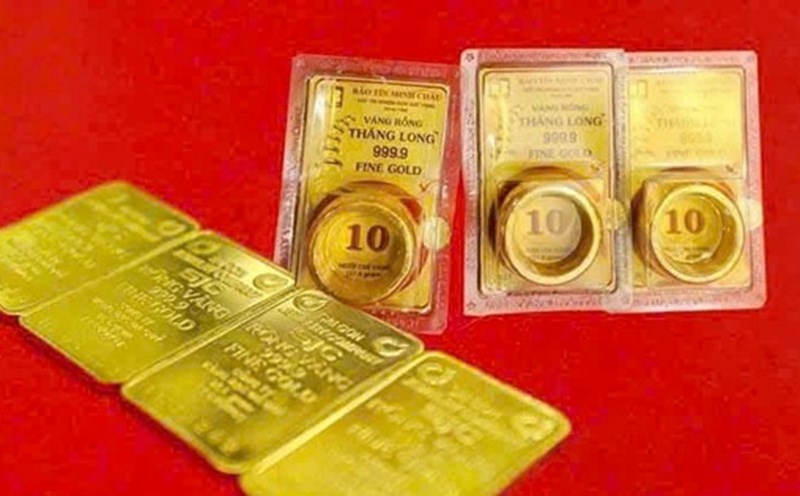
According to records, if buying SJC gold bars or gold rings on April 19 and selling them on April 26, buyers may lose up to 5.7 million VND/tael.
This large loss comes from two main reasons: Gold prices decreased following the downward trend of the world market and the buying-selling spread in the country remained too high.
Domestic gold prices fall following world trends
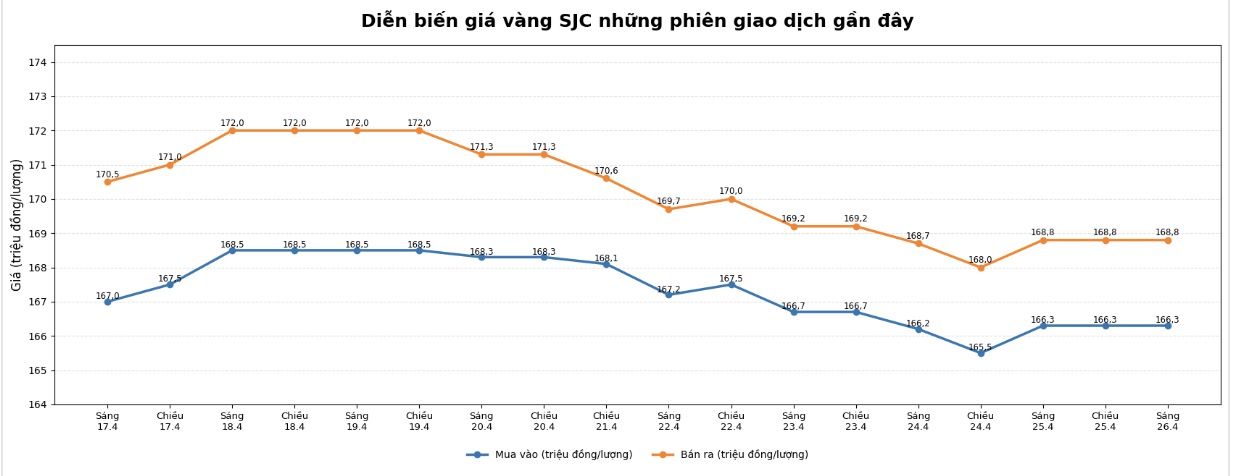
Closing the weekly trading session, Saigon SJC Jewelry Company listed the price of SJC gold bars at 166.3 - 168.8 million VND/tael in both buying and selling directions. Compared to the closing session of the previous week on April 19, the price of SJC gold bars at this unit decreased by 2.2 million VND/tael in the buying direction and decreased by 3.2 million VND/tael in the selling direction.
At DOJI, SJC gold bar prices were also listed at a similar level, 166.3 - 168.8 million VND/tael, down 2.2 million VND/tael on the buying side and 3.2 million VND/tael on the selling side respectively compared to the previous week.
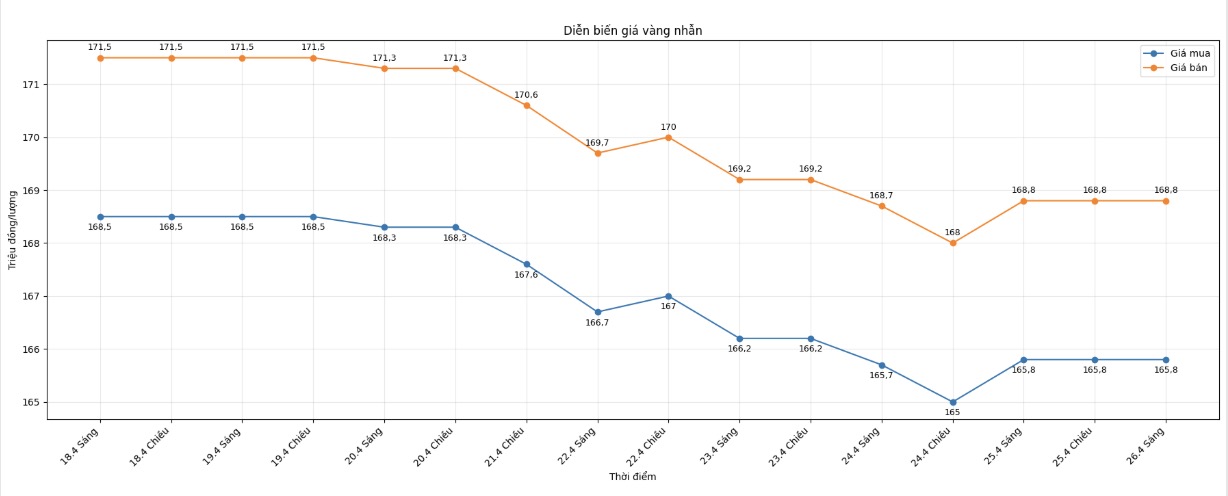
Not only gold bars, the price of 9999 gold rings also decreased sharply. DOJI listed the price of gold rings at 165.8 - 168.8 million VND/tael, down 2.7 million VND/tael in both buying and selling directions. Phu Quy also listed gold rings at 165.8 - 168.8 million VND/tael, with a similar decrease.
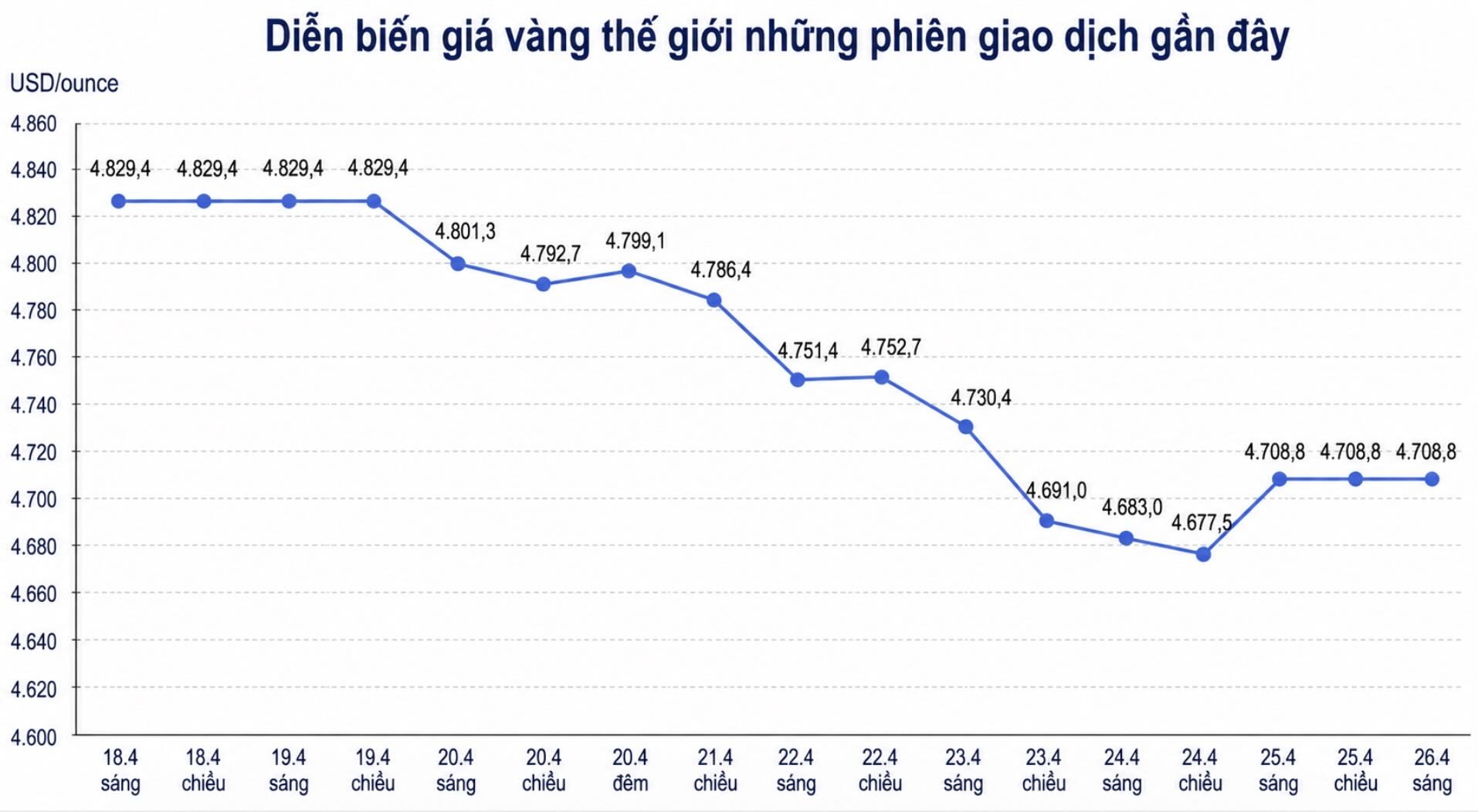
This development is consistent with the downward trend of world gold prices. At the end of the week, world gold prices were at 4,708.8 USD/ounce, down 120.6 USD/ounce compared to a week ago. When world gold prices weakened, domestic gold prices also suffered adjustment pressure, especially in the context that investors bought in high prices.
Too high buying-selling spread causes risks to increase sharply
The second reason why gold buyers suffer heavy losses is that the difference between buying and selling prices is still very high.
For SJC gold bars, both SJC and DOJI listed the buying - selling difference at 2.5 million VND/tael. This means that immediately after buying gold, if resold immediately, investors have suffered a loss corresponding to this difference, not including market price fluctuations.
With 9999 gold rings, the difference is even higher, up to 3 million VND/tael at DOJI and Phu Quy. This is a large difference, putting great pressure on individual investors if they buy gold for short-term surfing purposes.
In the case of buying SJC gold bars on April 19 and then selling them on April 26, buyers at SJC and DOJI both lost 5.7 million VND/tael. This loss includes a double impact: gold prices decreased during the week and buyers had to resell according to the purchase price of the enterprise, which is much lower than the selling price.
With gold rings, the situation is similar. If you buy gold rings at DOJI or Phu Quy on the April 19th session and sell them on the April 26th session, investors will also lose about 5.7 million VND/tael.
This shows that in the context of a high buying-selling spread, gold prices must increase very strongly for buyers to be able to break even or make a profit. For example, with a difference of 2.5 - 3 million VND/tael, gold prices need to increase at least corresponding to this level just to compensate for the difference.
If you want to have real profits, the selling price must then increase even higher. Conversely, as long as gold prices remain flat or slightly decrease, investors are at risk of losing money.
Should not be FOMO when gold prices fluctuate sharply
The developments of the past week are a clear warning to investors who buy gold out of fear of missing opportunities (FOMO) when seeing strong fluctuations in gold prices. Gold is still an important safe-haven asset, but chasing purchases at high prices, while the buying-selling spread is stretched, can cause the risk of losses to increase very quickly.
Therefore, before deciding to buy, investors need to closely monitor macroeconomic and geopolitical developments in the world.
In the coming week, the international financial market will receive many important economic data after a period of relatively lack of information. The focus will be on monetary policy decisions of many major central banks such as the Bank of Japan, the Bank of Canada, the US Federal Reserve, the Bank of England and the European Central Bank.
In addition, investors also need to monitor important US data such as consumer confidence in April, housing data, GDP, PCE, weekly unemployment claims and the ISM Manufacturing PMI index in April. These are all information that may affect interest rate expectations, the strength of the USD and thereby directly impact world gold prices.


