
Hanoi is facing a turning point in handling the problem of old apartment buildings that have existed for decades. Flexible functional conversion is not only a story of urban management, but more importantly, ensuring the rights of low-income people, workers... subjects directly affected by policies.
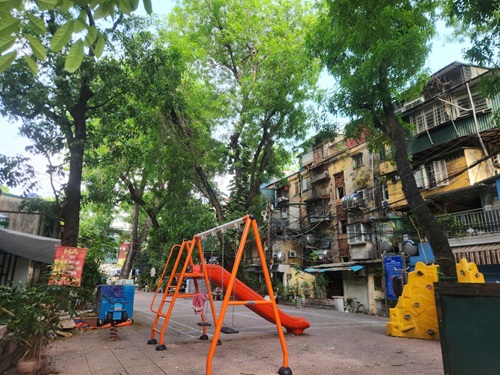
According to the Hanoi Department of Construction, the city currently has about 2,160 old apartment buildings, most of which are seriously degraded and pose a risk of unsafety. Although there is a renovation roadmap, the new implementation rate is only about 1–2%. This reality requires stronger solutions to remove bottlenecks, especially in the context of a shortage of social housing supply.
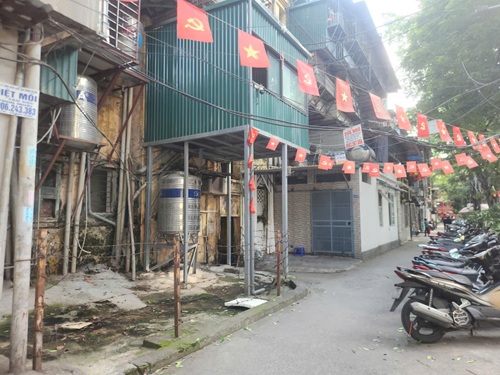
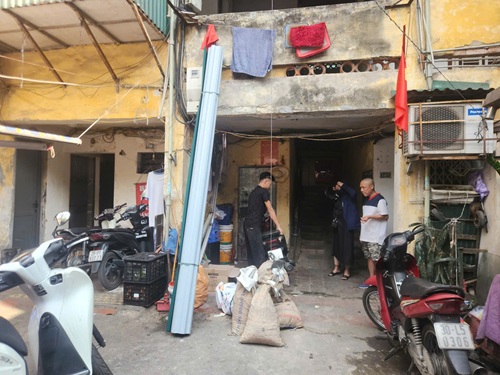
Records at old apartment buildings show that people's living conditions are increasingly degraded. Ms. Mai Chau (house E10 Phuong Mai, Dong Da district) said that her family has repeatedly repaired the electricity and water systems, overcome leaks to be able to continue living. "If the State builds new houses so that people have a safer place to live, it would be very good, but the implementation process needs to be quick, avoiding prolongation and affecting life," Ms. Chau said.
Similarly, Mr. Do Van Khanh (B8 Kim Lien area) shared that his family's apartment has been used for nearly 40 years, and is often had to be repaired to maintain living. According to him, renovation is necessary but must be carried out urgently, avoiding prolonging for many years causing disruption to life.
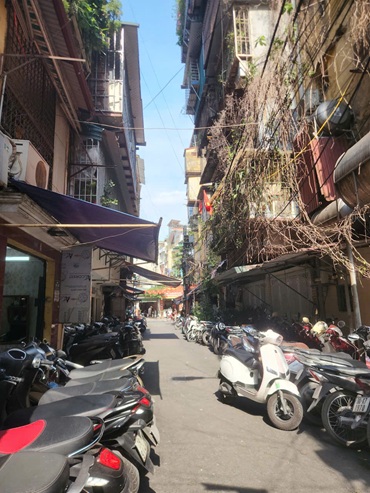
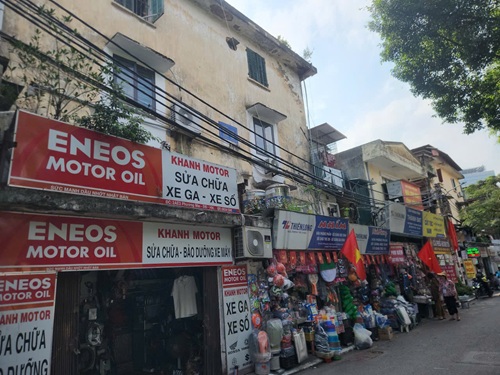
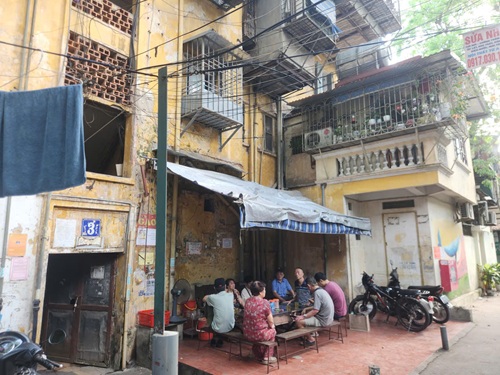
In fact, many collective housing areas built from the 1960s–1980s such as Phuong Mai, Kim Lien, Trung Tu, Giang Vo... have expired their service life, and infrastructure is overloaded. The situation of illegal expansion not only detracts from urban aesthetics but also poses a risk of fire and explosion. Despite cramped and degraded living conditions, many households still cling to it because of livelihoods associated with the inner city area.
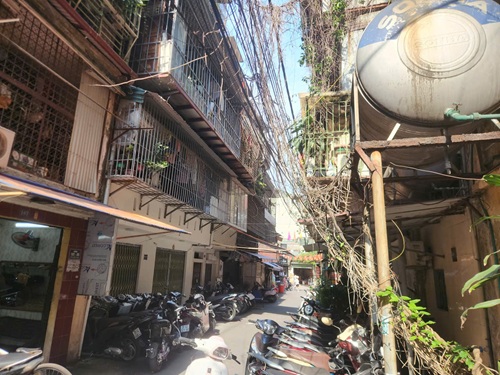
Hanoi City People's Committee sets a target to complete 100% of the old apartment renovation plan by the second quarter of 2027. However, experts believe that it is necessary to avoid the situation of planning "on paper", causing the project to be delayed, pushing people into a situation where they cannot live but cannot leave.
A noteworthy point in the new orientation is the study of converting the function of old apartment buildings to social housing and resettlement housing. This is considered a suitable solution to support vulnerable groups in the context of continuously increasing house prices in the Capital.
According to planning experts, the biggest challenges today are capital and construction quality. Not every old apartment building is eligible for conversion into social housing. Therefore, there needs to be preferential mechanisms on credit and taxes to attract businesses to participate.
In addition, "collecting" small apartment buildings to create large land funds is considered a reasonable solution. However, management agencies need to clarify the mechanism for profit sharing, avoiding the situation where businesses take advantage of central land funds to develop high-priced commercial housing, causing workers to be pushed away from the inner city area.
Architect Do Thanh Tung believes that the renovation of old apartment buildings must be linked to the overall urban plan, ensuring synchronous infrastructure, space and use functions. If implemented loosely, projects will hardly be effective in the long term and will not create added value for the city.
It is noteworthy that the decisive factor for the success of renovation projects is the consensus of the people. Therefore, policies need to put the legitimate rights of workers first. The resettlement plan must be flexible, prioritizing on-site or nearby areas so as not to interrupt livelihoods.
Along with that, it is necessary to strictly control social housing beneficiaries, avoid speculation and policy profiteering. Construction quality inspection must be transparent and public, so that people understand the level of safety where they live.
Converting the function of old apartment buildings is a necessary direction, but if the harmony of interests between the State, businesses and people, especially workers, is not ensured, the social security goal will be difficult to achieve as expected.


