
Perhaps, Richard Hughes' last match as Liverpool's Sporting Director partly showed how he built the team.
Just 9 minutes after at Portman Road, Liverpool decided the match with a double by Alexander Isak. That is also the image that Hughes once expected when deciding to spend £125 million to bring the Swedish striker to Anfield.
When Isak left the field to make way for Bradley Barcola, Liverpool became the first club to use 3 players with a transfer fee of 100 million pounds or more in the same match.
Florian Wirtz is the remaining name. These figures partly reflect the investment scale under Hughes. More than 650 million pounds were spent on rookies in just over a year, of which Barcola, Isak and Wirtz all had fees of at least 100 million pounds.
Initially, Hughes' reign brought many positive signs. The Kop won the Premier League under Arne Slot after Hughes chose the Dutch coach to replace Jurgen Klopp. Their approach is still based on a calculated transfer plan.
However, that image changed quickly last season. Liverpool dropped from 84 to 60 points, from the top to fifth place. Slot once lost only 1 in the first 28 matches, but suffered 20 defeats in his second season. These results revealed limitations in Liverpool's operation, and at the same time caused rifts at the top level.
Therefore, Hughes will leave Liverpool with a controversial legacy. The large spending in the previous summer was once considered by former center-back Jamie Carragher as one of the worst transfer campaigns in club history.
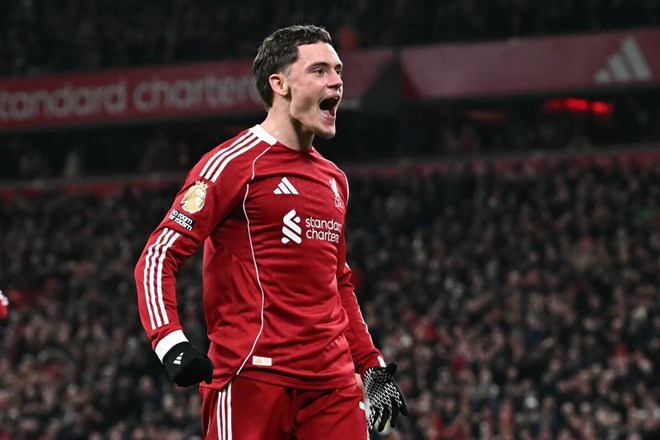
Isak is the clearest example. After a season of only scoring 3 goals in the Premier League, this striker scored a double right in the first match after Hughes left his position. This performance shows the value that Isak can bring, but also reiterates the risk of the £125 million deal when this striker often has physical problems.
Hughes has also not been able to create too many successful contracts. Hugo Ekitike is the most prominent case, while Wirtz still needs more time to prove his ability to adapt to the Premier League. The four new signings of this summer are still too early to evaluate, although Jeremy Jacquet has left positive signs.
In the opposite direction, Hughes also made decisions towards the future. The recruitment of Leoni, Jacquet, Barcola, Wirtz, Ekitike and Victor Munoz shows that Liverpool is not only looking for immediate solutions but also wants to lay the foundation for many years to come. Barcola is also a deal Hughes has been preparing for for a long time and he still plays an important role in completing the £106 million contract.
However, Hughes' successor will take over an unfinished job in many aspects. Liverpool may need 5 or 6 new players for the first team next summer. The right winger position still does not have a real replacement for Mohamed Salah, while the future of Virgil van Dijk and Alisson also needs to be considered when their contracts are about to expire. The decline of Jeremie Frimpong further complicates the personnel problem.
Hughes can be considered successful or failed depending on the perspective. He still has the right to be proud when Liverpool wins the Premier League title in his term. However, most of that success comes before the period they spend the most heavily.


