
There is a painful reality that exists when Italy's last shot at a World Cup in the United States was still a penalty kick that sent the ball over the crossbar by Roberto Baggio in Pasadena in 1994. At that time, the missed shot closed the final match. But more than three decades later, similar mistakes have a much more harsh meaning.
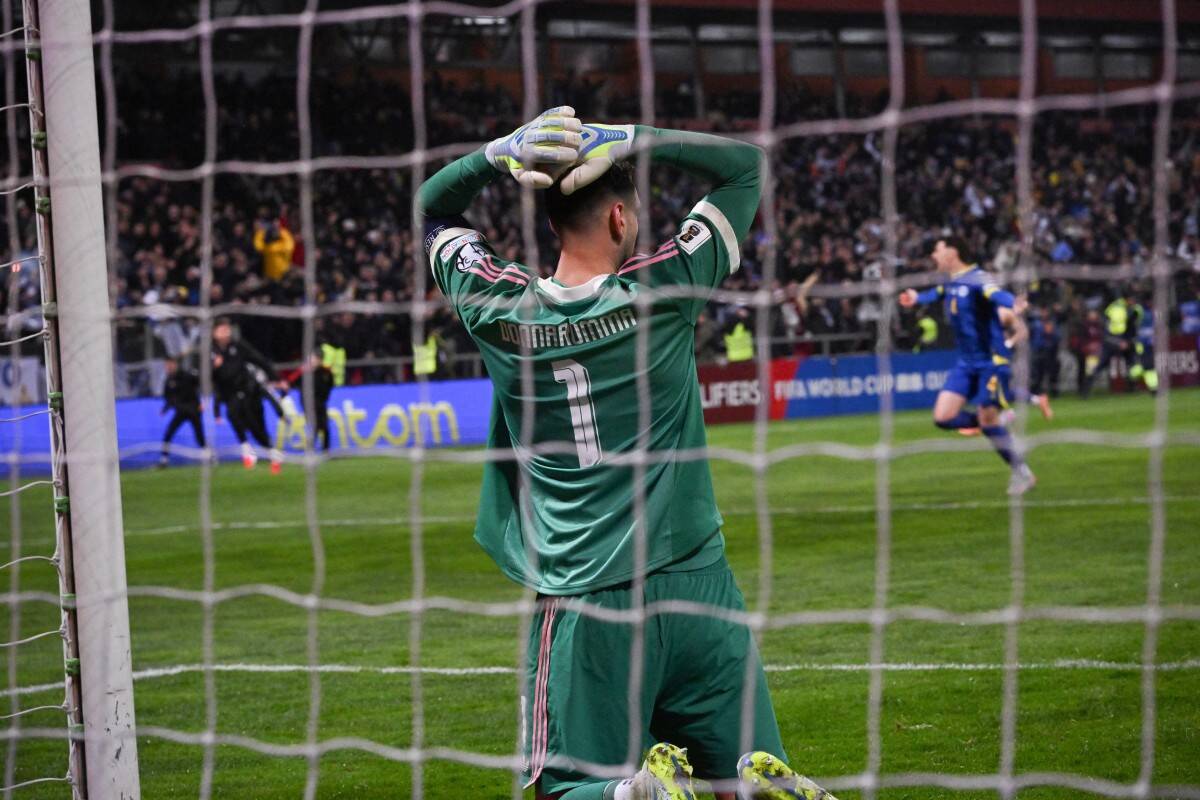
This time, when Francesco Pio Esposito shot over the bar and Bryan Cristante was unsuccessful on penalties, the consequence is that Italy will not participate in the 2026 World Cup.
A country that once won the world championship two decades ago is now facing an unprecedented bleak prospect. The feeling of "apocalypse" is no longer an exaggeration. The tragedy of Italian football is even more clearly portrayed when Gennaro Gattuso - the symbol of the midfield in the World Cup championship - was the one who led the team to lose to Bosnia Herzegovina in a penalty shootout.
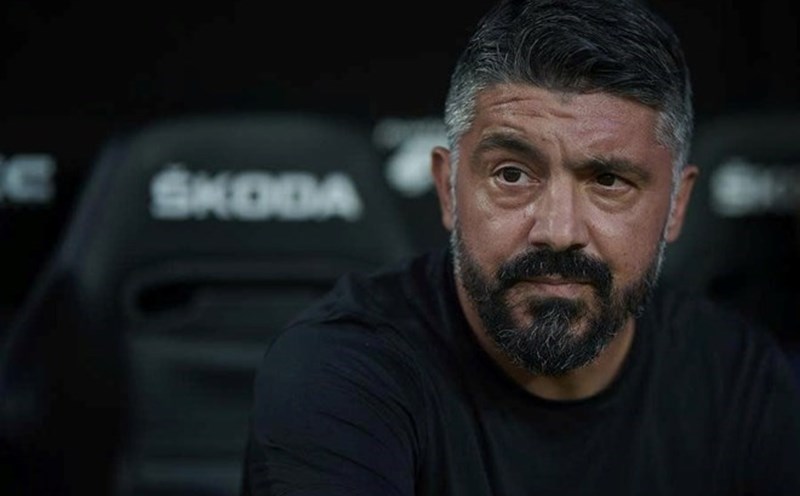
Italy was eliminated by an opponent outside the top 60 in the world, in a match where they were completely inferior in terms of number of chances. This is reminiscent of the defeat to Northern Macedonia in 2022, but this time it is even worse as Italy is no longer the dominant team.
Ironically, Gattuso is still part of the last Italian generation to win the World Cup knockout round - the 2006 final. Since then, Azzurri's journey has only been a long series of disappointments. They were eliminated from the group stage in 2014 and now are absent from three consecutive World Cups, even though the tournament has expanded to 48 teams.
This is not just a slip-up, but a clear manifestation of a prolonged decline. The problems of Italian football come from both individual and systemic factors. Gattuso, although once led by great strategists such as Marcello Lippi and Carlo Ancelotti, has not yet been able to recreate those values on the coaching bench.
However, the problem is not that Italy lacks good coaches. Previously, they were led by names like Roberto Mancini - EURO 2020 champion, or Luciano Spalletti - Serie A champion. But even these top coaches could not get the team through the qualifiers.
At the player level, Italy is not lacking in talent. Names like Alessandro Bastoni, Nicolo Barella, Federico Dimarco or Gianluigi Donnarumma have all played in European finals. Moise Kean is even having an impressive scoring streak.
But Italy's biggest problem is still attacking efficiency. They no longer possess classy creative stars like Francesco Totti or Alessandro Del Piero. Replacement options like Lorenzo Insigne were also not properly utilized in the past.
In addition, the decline of Serie A also contributes to weakening the foundation of the national team. The fact that many players leave Europe early, along with the high proportion of foreign players in the domestic league, limits the development opportunities of Italian players.
Although Inter Milan has recently shown signs of improvement, overall, Italy no longer possesses the depth of force like previous golden generations.
If 1958 was the only shock when Italy was absent from the World Cup, now it has become normal. And that is the most worrying thing for a football background that once stood at the top of the world.


