On July 3, the Labor Federation and the Ho Chi Minh City Police organized a Conference to deploy and thoroughly grasp the implementation of Action Program No. 13/CTrHĐ-LĐLĐ of the Ho Chi Minh City Labor Federation on implementing Resolution No. 02-NQ/TU of the City Party Committee on "Improving the effectiveness of crime prevention and control and drug evils". The conference was attended by many trade union officials, business owners, and landlords in the city.
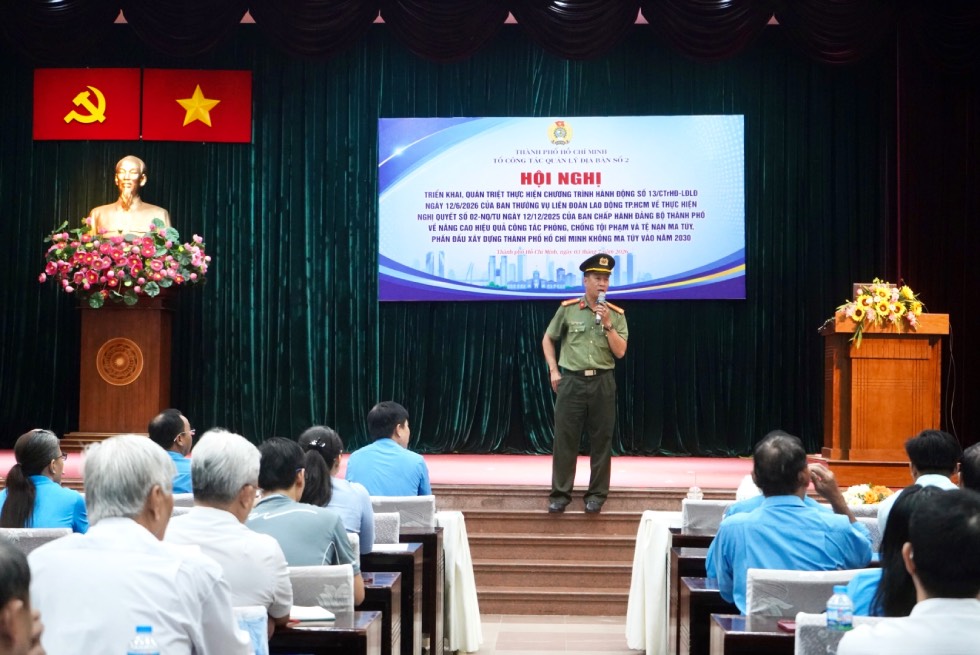
At the conference, Lieutenant Colonel Nguyen Dao Minh Huy, an officer of Ho Chi Minh City Police, reported on a number of contents, in which he emphasized that crime and drug substances are currently appearing in many new disguised forms, developing extremely complicatedly in multiple spaces and platforms. Therefore, sticking to the grassroots level, strengthening the grasp of thoughts and public opinion in wards and communes, especially dormitories with many workers, is an urgent task.
Trade union organizations need to maximize their core role, review prominent social security issues, thereby promptly identifying, detecting and preventing the risk of drug use entering the lives of workers.
Speaking at the conclusion of the conference, Mr. Pham Chi Tam - Vice Chairman of the Ho Chi Minh City Labor Federation stated the determination of the trade union organization to accompany the goal of building Ho Chi Minh City free of drugs by 2030. Trade union officials need to take the lead in organizing the signing of commitments not to use, store, or trade drugs and promote the "Trade Union Family 3 No" model.
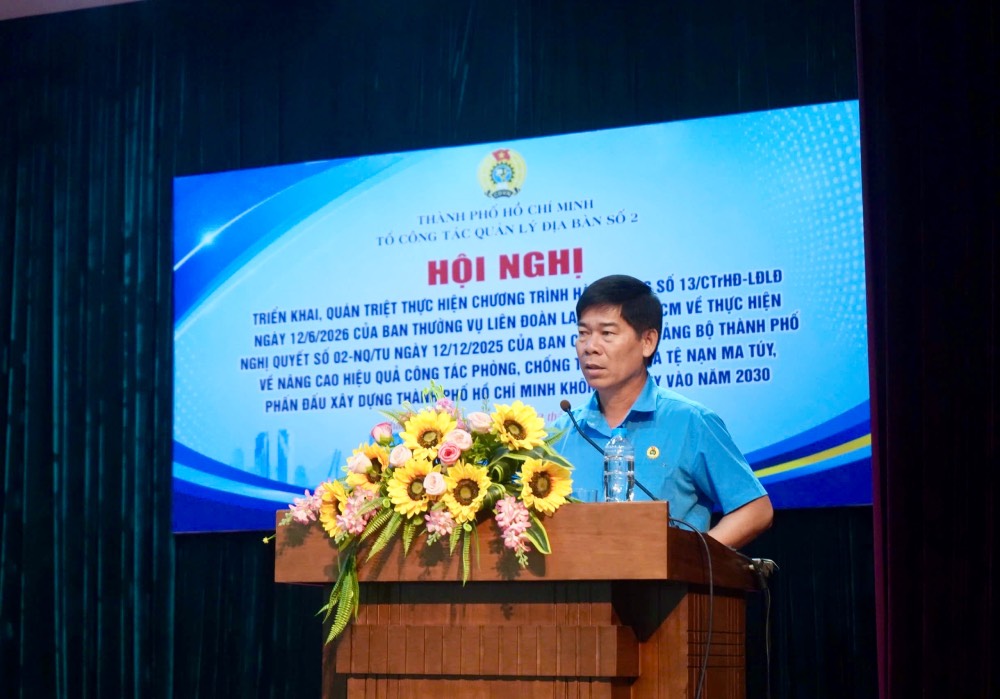
To realize the above goals, units need to link the emulation movement "Good labor, high productivity" with the criteria "say no to drugs". The goal is to train each union member and worker to become a soldier on the front of crime prevention and control.
In particular, grassroots trade unions need to disseminate to employees to install and use the anonymous denunciation feature on the VNeID application. At the same time, closely coordinate with employers and boarding house owners to tighten security regulations and clean up the living and working environment.