According to information published on Sciencealert, a group of paleontologists including: Jongyun Jung, Kyung Soo Kim, Lida Xing and Byung-Do Choi have just announced a special discovery from fossil footprints on rocks in Korea, showing the possibility that an ancient flying reptile once hunted prey on the ground.
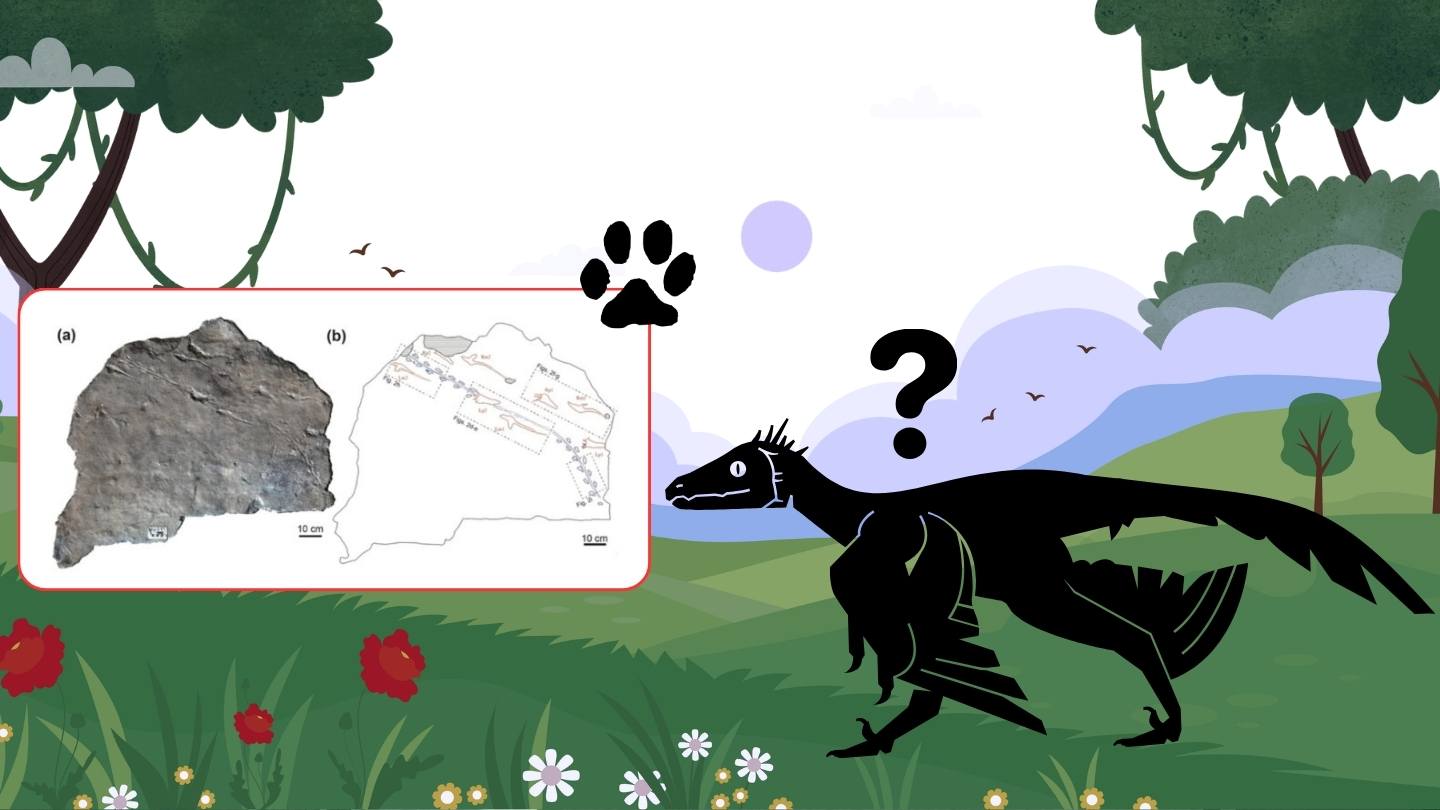
According to research published in Scientific Reports, the fossilized stone slab, over 106 million years old, holds the footprints of two moving creatures in succession. The first mark belongs to a small animal moving slowly, then suddenly changing direction and accelerating.
Right behind is the footprint of a large flying lizard moving on four legs at a fairly high speed. Researchers believe this could be a hunting chase.
Through footprint analysis and comparison with known fossils, the research team identified the predator as belonging to a new species, named Jinjuichnus procerus.
This name is named after the Jinju area of South Korea - where fossils were discovered. The footprints of this species have characteristic long fingers, different from many flying lizards that have been recorded before.
Scientists believe that this flying reptile belongs to the neoazhdarchians group, which are believed to be able to move flexibly on the ground and hunt small animals.
Fossil traces show the animal moving at a speed of about 2.9 km/h, fast enough to create a chase on the ground.
According to the research team, although it is not possible to confirm for sure that the two creatures appeared at the same time, many details such as the direction of movement, the change in the speed of the prey, and the distance between footprints show a high probability of a real prey hunt.
However, this discovery is assessed to help scientists better understand the survival behavior and hunting strategies of animal species that were extinct tens of millions of years ago.