
Among the traditional festivals of the Khmer people of the South, Ghe Ngo always preserves a special position. For the Khmer people, this is not simply a means of competition but also a cultural symbol associated with spiritual life, rituals and community spirit through many generations.
Ngo boats, also known as Tuk Ngo in Khmer, were previously made from large hollowed-out star tree trunks. Due to the increasing scarcity of wood, many boats today are assembled from many different pieces of wood. The boat is about 27 - 30m long, with a narrow body, a nose curved lower than the tail, creating a shape like the Naga god snake in Khmer culture.
The boat body is divided into many compartments, each compartment has a horizontal bar for the rowers to sit parallel. The rowing beams are also designed in different positions to create uniformity during competition. Some teams also use "fishing rods" - long poles tied between the boats to create pushing force, helping the boat accelerate when surfing.
The highlight of Ghe Ngo lies in the decoration. The hull is often painted brightly with dragon scales, god snakes and Khmer traditional patterns. Each pagoda will choose a separate symbol for its boat. In particular, the bow of the boat is always drawn with eyes with the concept that the boat can "see the way", similar to the custom of drawing boat eyes of residents in the Southern river region.
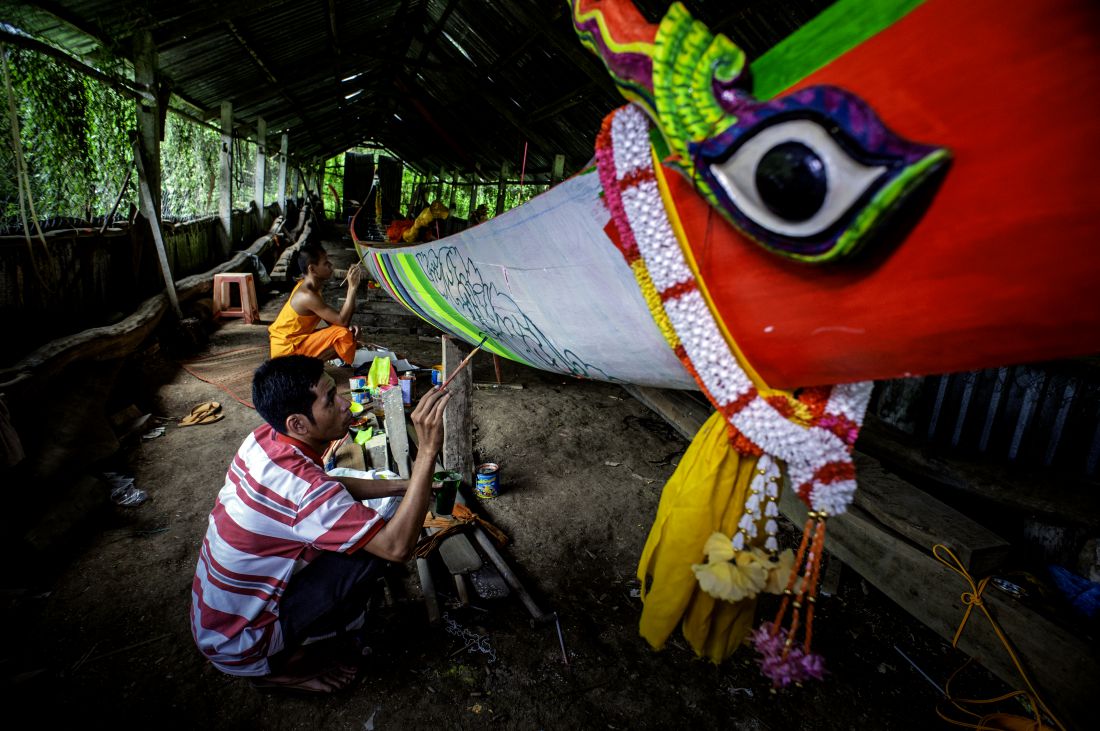
Not only appearing on the race day, Ghe Ngo is also associated with many important spiritual rituals. Before going to the water to compete, all boats must perform the launching ceremony. This is a ritual that carries the meaning of praying for peace, luck and victory for the boat team.
According to Mr. Lam Xem, a member of the Ghe Ngo team of Tum Núp Pagoda (Can Tho City), the launching ceremony usually has offerings such as pig heads, chickens, ducks, bananas, a tray of rice, and rituals of chanting sutras and spreading water by the monks. The launching time is also carefully selected according to good days and hours after the pagoda management board and the Achars discuss.
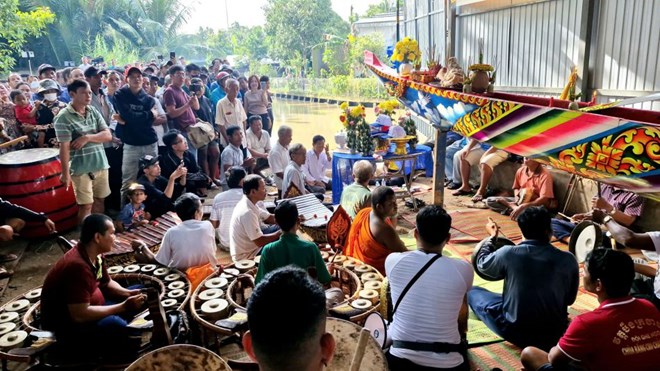
Music is also an indispensable part of this ritual. People's Artist Chau On said that the songs are performed with the meaning of inviting gods to bless Ghe Ngo and add spirit to the Cheo players. In the worshiping orchestra, the Khum and Pay o are the two most important musical instruments.
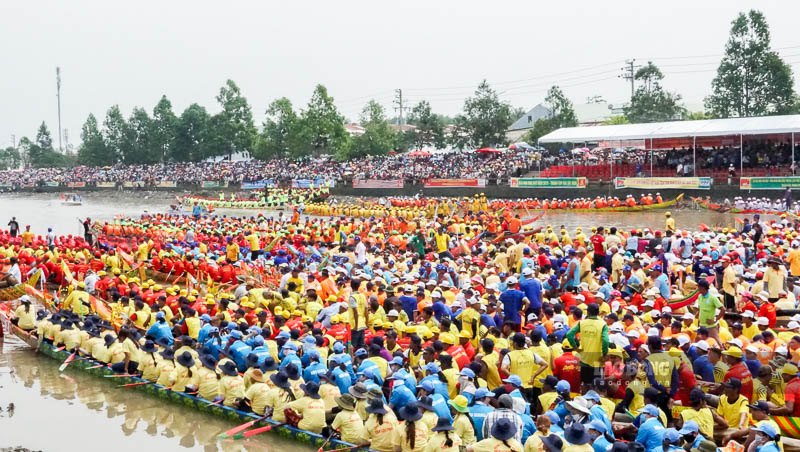
Ghe Ngo racing takes place during the annual Ooc Om Boc Festival and becomes the most anticipated community activity of the Khmer people in the South. Not only carrying the meaning of praying for favorable harvests, the festival also expresses the spirit of solidarity and cultural pride preserved through many generations.


