
In Dien Bien province, the reality of implementing the National Target Program on building new rural areas in the period 2021 - 2025 shows that there is still a disparity between localities in socio-economic conditions, infrastructure, education level and resource mobilization capacity.
For communes and wards with favorable conditions in the basin such as: Thanh Hung, Thanh Chan, Noong Het or Him Lam (old) have easily accelerated and reached the NTM finish line quite early.
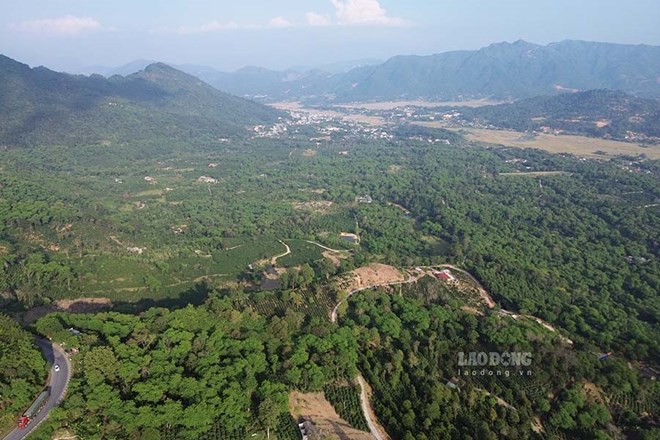
However, remote and isolated communes such as: Pa Ham, Nam Nen, Xa Dung (old)... lack synchronous infrastructure, hilly terrain is fragmented, and the lives of people, mostly ethnic minorities, are still facing many difficulties.
The fact that difficult communes are "slow in progress" is partly due to the criteria set of the previous period being applied in the direction of "common ground" for all communes, not fully reflecting the differences in natural, socio-economic conditions between regions.
From there, difficult localities have to "brace themselves" to follow overly high standards, leading to a more difficult NTM construction situation.
Recently, Standing Vice Chairman of Dien Bien Provincial People's Committee Lo Van Cuong approved the list and number of communes belonging to group 1, group 2, group 3 communes implementing NTM construction criteria for the period 2026 - 2030.
Specifically, group 1 are adjacent urban communes; group 2 are plain and midland communes with stable development; and group 3 are communes in region II and III of ethnic minority areas.
In Dien Bien, in the period 2026 - 2030, the province has 42 communes ranked in group 3, i.e., the group with a low starting point, which needs to prioritize support resources.
Area II communes include: Thanh Nua, Thanh An, Tuan Giao, Muong Phang; along with a series of extremely difficult communes in Region III such as: Na Bung, Quang Lam, Na Hy, Tia Dinh...
According to the Dien Bien Provincial New Rural Coordination Office, the national criteria for NTM communes in the period 2026 - 2030 (including 10 criteria, 47 indicators).
Specifically, each criterion is designed according to 3 groups of communes, suitable for the process of arranging commune-level administrative units and the development level of each area.
This group approach is considered a breakthrough, helping management agencies correctly recognize the potential to build a roadmap and appropriate support mechanisms.
The fact that Dien Bien does not have any communes entering group 1 and group 2 has reflected the picture of rural mountainous areas still facing many difficulties. However, this also creates opportunities for the province to innovate direction and administration methods in a "targeted and correct" direction.
Instead of spreading out budget resources, support policies in the period 2026 - 2030 will be designed with focus.
For these 42 group 3 communes, priority will not only stop at concrete pouring for roads or basic infrastructure construction, but must "go from the root".
The focus will be placed on creating sustainable livelihoods, converting crop and livestock structures, and directly supporting people to develop household economies, thereby substantially reducing poverty.
Mr. Lo Van Cuong said that the province has assigned the Department of Agriculture and Environment to preside over and coordinate with relevant units to monitor, urge and guide communes to implement according to the approved groups.
Periodically every 6 months and annually, functional agencies must summarize and update reporting results so that the province can make timely adjustments, ensuring that the NTM program truly brings prosperity to workers and farmers in mountainous areas.


