
As of July 31, 2026, Lao Cai province had 1,011,966 people undergoing periodic health check-ups and free screenings, equivalent to 57.9% of the population. Health check-up activities are being implemented synchronously in 99/99 communes and wards to bring proactive health care services closer to people, especially at the grassroots level.
Implementing the policy of free periodic health check-ups at least once a year for people, Lao Cai Provincial People's Committee has issued Plan No. 256/KH-UBND dated May 26, 2026 on organizing health check-ups for the period 2026-2030, and at the same time directed sectors, localities and medical facilities to implement it.
The Lao Cai Provincial Department of Health has provided professional guidance, developed campaign plans and directed medical examination and treatment facilities to arrange personnel and equipment, coordinate with localities to review subjects, make lists and organize appropriate examinations.
In July 2026, 641,068 people were examined, bringing the total number of people examined since the beginning of the year to more than 1 million people. Among them, children under 6 years old have 32,334 people; groups from 6-18 years old have 247,294 people; people over 18 years old have 732,338 people examined.
Specifically, periodic health check-ups reached 418,448 people, equivalent to 23.94% of the population. The province also completed health check-ups for 29,553 officials, civil servants, public employees and employees at agencies and units.
According to the assessment of the health sector, the program contributes to shifting from treatment thinking to proactive disease prevention, early detection of risks and pathologies for counseling, monitoring, health management and referral for treatment when necessary. This is also the basis for gradually building health data to serve people's health management.
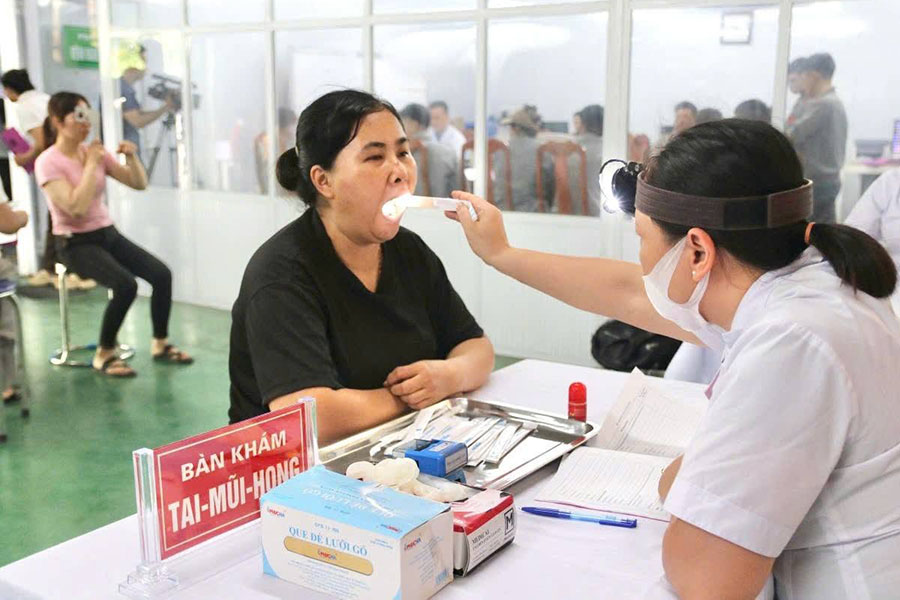
Besides the achieved results, the implementation process still faces some difficulties such as limited capacity to perform paraclinical techniques at the grassroots level; lack of human resources and equipment; many health stations have to manage larger populations after administrative unit arrangement.
In addition, the budget for implementing the plan has not been fully approved, while the mechanism for payment of some costs arising related to health insurance has not been unifiedly guided. The work of updating electronic health data is also facing difficulties due to limitations in information technology infrastructure in some localities.
In the coming time, Lao Cai will continue to expand the rate of people having health check-ups, strengthen mobile health check-up teams in remote and isolated areas; promote propaganda to form the habit of periodic health check-ups, and at the same time complete the Electronic Health Record and funding assurance mechanism to improve the effectiveness of all-people health management.


