
Tay Ninh currently has 19 border communes with 177 schools. The school network basically meets learning needs, transportation is relatively convenient, and most students can go to school and return to their families on the same day. However, teaching and learning conditions in many schools are still limited.
According to the Department of Education and Training of Tay Ninh province, some schools were invested in from before according to a single-level model, small scale, lacking subject classrooms, functional rooms, libraries, teaching equipment, dining halls, kitchens and lunch break areas. Therefore, the ability to organize 2-session/day teaching and semi-boarding is not uniform between localities.
Through review, there are currently 17 schools in 11 border communes organizing semi-boarding, serving 5,487 students. There are still 8 communes that do not have primary schools organizing semi-boarding; especially, 18/19 border communes do not have inter-level primary and secondary schools organizing semi-boarding.
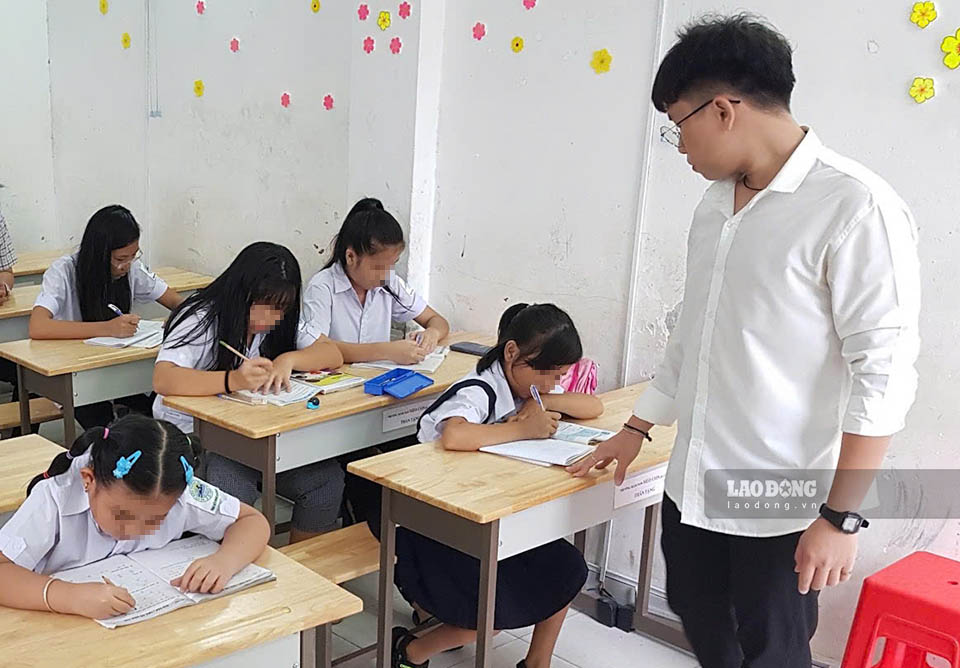
While the demand for boarding school is only about 15-20%, in some areas about 5%, over 80% of students and parents want students to study 2 sessions/day, eat and rest at school and then return to their families.
From this reality, Tay Ninh orients the development of inter-level primary and secondary schools with semi-boarding organizations, suitable for terrain, population and people's aspirations. The investment plan for 19 schools has a total estimated capital demand of about 1,669 billion VND, mainly taking advantage of existing land funds, schools and facilities to upgrade and expand, prioritizing items serving 2-session/day and semi-boarding.
Right in the 2026-2027 school year, the Education sector will implement immediate solutions, not waiting for the project to be completed; including reviewing and arranging schools, repairing essential items, improving the quality of 17 boarding schools, regulating teachers and gradually supplementing equipment, libraries, and subject classrooms.
Mr. Nguyen Hong Phuc, Deputy Director of the Department of Education and Training of Tay Ninh province, said that the travel conditions of students in border communes are more favorable. Through surveys of learning and boarding needs in mountainous provinces, the number of students registering for boarding is still low. If boarding schools are built, there is a risk of waste. Therefore, the education sector has requested the policy of the Provincial People's Committee to build in the form of semi-boarding, more suitable to actual needs.
The goal set is that each border commune has at least one inter-level primary and secondary school organizing semi-boarding, meeting the requirements of teaching 2 sessions/day and gradually reaching national standards. Investment is expected not only to narrow the educational gap but also to create favorable conditions for parents, develop local human resources, stabilize population and contribute to strengthening national defense and security in border areas.


