
Developing large timber production planted forests is one of the directions identified by Lao Cai province to improve the economic value of forests, improve people's livelihoods and increase environmental protection capacity.
Implementing the plan "Developing large timber production planted forests in the period 2024-2030", the province has integrated the target of large timber forest planting into the task of socio-economic development, management, protection and annual forest development. Localities review land funds, determine appropriate areas and mobilize people to switch from short-term forest exploitation to long-term forest investment.
The province prioritizes species of trees suitable for ecological conditions such as ma vi pine, po mu, sa moc and cinnamon. In which, cinnamon both provides wood and produces bark, branches, leaves, and contributes to protecting soil and the environment.
In the 2024-2025 period, the province is expected to support 3,000ha of large timber production forest with a budget of about 51 billion VND from the replacement forest planting fund. However, the process of arranging administrative units and organizing local government at 2 levels has caused the review of area, subjects and support needs to be adjusted.
On June 8, 2026, the Provincial People's Committee issued Decision No. 2000/QD-UBND assigning plans and funding to support large-scale timber production forest planting phase 1 of 2026. Accordingly, 2,360ha in 26 communes and wards are allocated support with a total budget of 40.12 billion VND. This area is equivalent to about 78.7% of the target of 3,000ha of the previous phase.
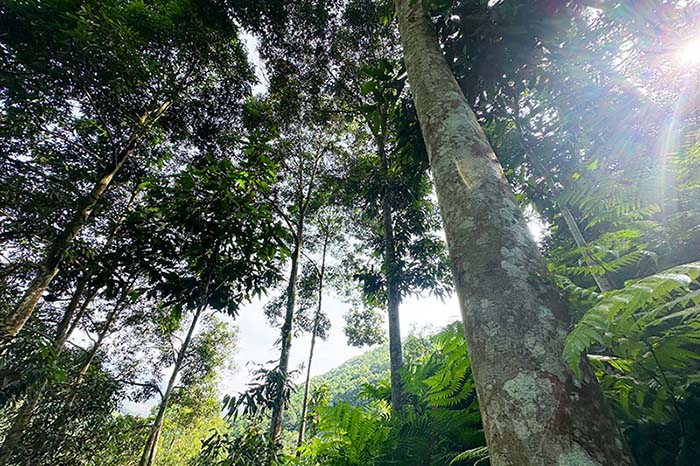
Lao Cai currently has about 300,000ha of timber raw material forests, with an average exploitation output of over 1.1 million m3 of timber/year. The area with sustainable forest certification, organic certification and raw material forest area codes reaches 44,656.26ha. Of which, the area certified with FSC/PEFC/VFCS certificates reaches 12,237.5ha; organic cinnamon 24,241.5ha and the area certified with raw material forest area codes 8,177.66ha.
Notably, the cinnamon area in the area is about 148,000ha, of which about 97,000ha is a concentrated, key area. The cinnamon area is developed in a sustainable direction, meeting organic standards and sustainable forest management of about 24,200ha.
However, the development of large timber forests still faces difficulties due to the long investment cycle and slow capital recovery capacity, especially in highlands, ethnic minority areas and mountainous areas. Some native plant species have potential but the appropriate area is not large, the terrain is fragmented and the cost of planting and caring is high.
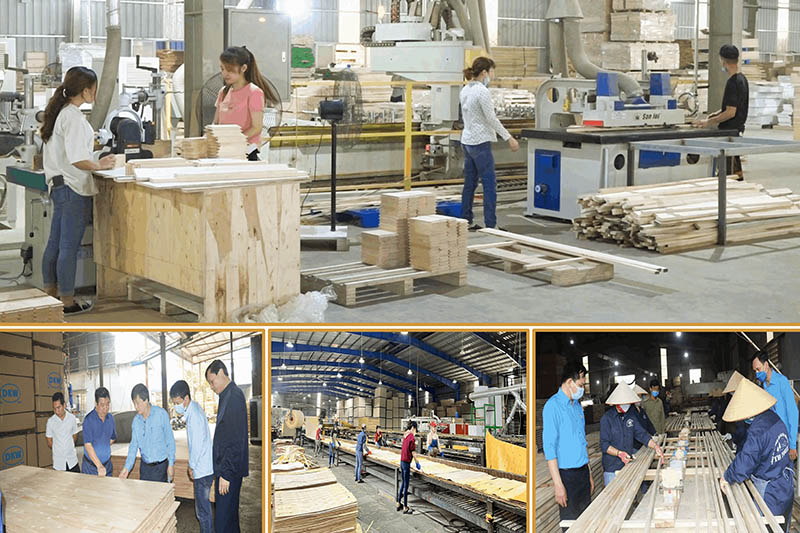
The processing market has not created enough strong momentum. The whole province has 708 forestry product processing facilities operating, but many facilities are still focusing on sawn timber, sawn boards, planks, peeling boards and products using small wood, not creating a stable demand for large wood.
In the period 2026-2030, Lao Cai continues to allocate funds for reforestation to support the development of large timber forests, and at the same time review land funds, select suitable crops and form concentrated raw material areas. The province also orients to increase links between forest growers and businesses, from planting, caring for, issuing certificates to processing and consumption.
By 2030, the province aims to maintain a scale of about 150,000ha of cinnamon, a dry bark output of about 50,000 tons/year and maintain and expand the area of cinnamon certified as sustainable forest and equivalent to over 50,000ha.


